
Big drop in house prices expected moving into next year
ANZ Bank says 'combination of restrictive interest rates, tax policy changes and global uncertainty have dampened sentiment'.

ONE of the big four banks has been forced to downgrade its housing market forecasts for 2027.
ANZ Bank released its latest research paper on Tuesday and said it was lowering housing price forecasts for capital city prices to
4.3 per cent for the remainder of this year and 3.4 per cent next year.
Previously, ANZ expected falls of 2.1 per cent in 2026 and 3.3 per cent in 2027. This would result in a peak-to-trough decline of 10.6 per cent across the capital cities.
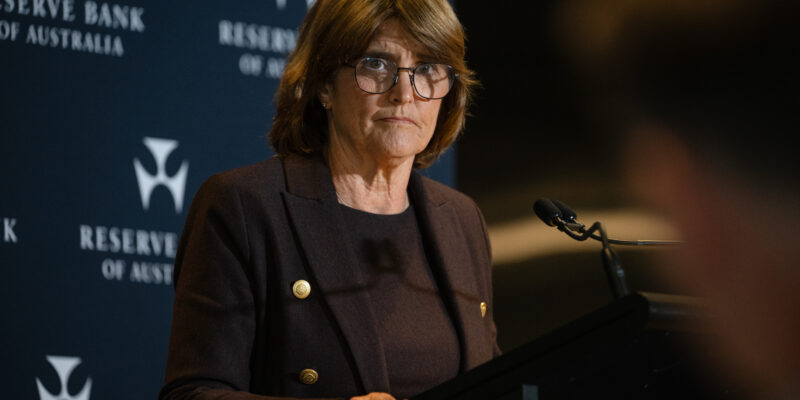
Chief economist Madeline Dunk said since ANZ’s last forecast update in June, the housing market has softened a little more than expected.
“Sydney and Melbourne prices have declined slightly more than our forecasts and prices in Brisbane and Perth have started falling earlier than we expected,” Dunk said.
“It is clear the combination of restrictive interest rates, recent tax policy changes and global uncertainty have dampened sentiment in the market.
“Auction clearance rates are very soft, coming in below 50 per cent for the past 10 weeks across the capitals.
“Despite some recent signs of stabilisation in clearance rates, the overall level is consistent with annualised housing price growth of around -10 per cent.”
Dunk said total listings are also picking up, despite new listings mostly following their seasonal trend decline.
“In light of this, we have slightly lowered our expectations for dwelling prices over the coming year,” she added.
“We expect capital city housing prices to fall 4.3 per cent this year and 3.4 per cent next year.
“For Sydney, we expect prices to fall 14.5 per cent peak-to-trough, while in Melbourne prices are expected to decline 12.8 per cent.
“The smaller capital cities have been more resilient but we expect peak-to-trough falls of around 7.9 per cent in Brisbane and 5.2 per cent in Perth.
“Adelaide should be more exposed, due to affordability constraints and supply and demand being more in balance than Perth and Brisbane. We are looking for Adelaide housing prices to ease 9.8 per cent from their peak.
“Given the broader supply backdrop, and the capacity constraints in the construction sector, we think it is hard to see housing prices falling for an extended period.”
Through the second half of 2027, Dunk expects dwelling prices to start recovering, supported by 50 basis points of rate cuts from the RBA. This should see capital city housing prices rise by 4.3 per cent in 2028.
“One area we expect to see a structural shift is in the split between investor and owner-occupier credit growth,” she said.
“Investor housing credit is likely to ease from 10.2 per cent year-on-year in Q2 2026 to -0.8% in early 2028, while owner-occupier credit should reach a low of 3.7 per cent year-on-year.”