
Retail sector bracing for economic pain
Economics expert 'expects to see some retailers go under and you might expect to see little or no growth in employment in retail'.
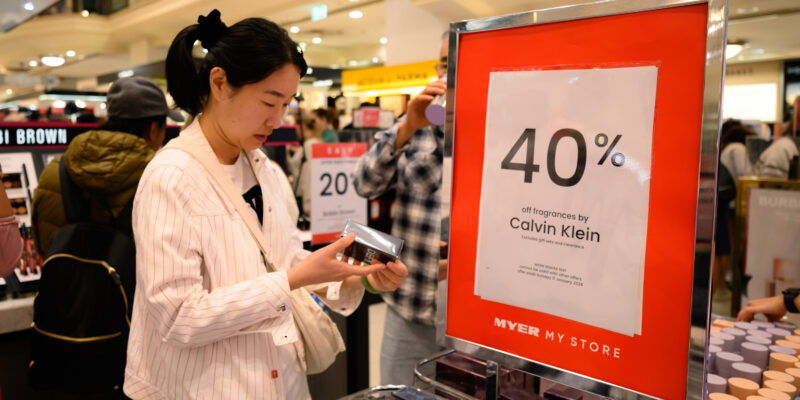
GROWTH in retail spending is expected to almost halve in the next financial year as households look to tighten their belts, a report suggests.
The expected pullback in the 12 months from July 2026 is unlikely to be as severe as the “retail recession” that hit during 2023 and 2024 but may play out in a similar manner, Deloitte Access Economics partner David Rumbens said.
“It’s not as bad as that period,” he said, reflecting on an era of almost eight per cent inflation and a retail sector marred by regular insolvencies.
“But it’s the same kind of dynamic at play: inflation’s too high, that’s eroding spending power, and the Reserve Bank has reacted.”
Real retail turnover growth is expected to slow from 2.8 per cent in 2025-26 to 1.5 per cent in 2026-27, Deloitte Access Economics’ most recent quarterly Retail Forecasts report found.
The report ties the pullback to economic pressures from the first half of calendar year 2026, including rising interest rates and declining real wages and house prices.
Supported by heavy end-of-financial-year discounting, consumer spending stayed resilient throughout the June quarter, the report found.
But growth in discretionary spending is expected to slow from 1.9 per cent in 2025-26 to 0.7 per cent in 2026-27, a delayed response to building economic pressures that is expected to impact non-essential retail purchases.
“The economic consequences of events over the first half of 2026 are starting to come home to roost for Australian households,” Rumbens said.
The retail sector should brace for some pain, with store closures and flat employment growth possible over the financial year, he said.
“You would expect to see some retailers go under and you might expect to see little or no growth in employment in retail.”
But the impacts will not be evenly spread, with big-ticket items tied to the housing market, including furniture and white goods, facing the greatest slowdown.
“Moving house is often a trigger for spending,” Rumbens said, adding fewer property transactions would likely compound the challenge.
Rumbens said the pain is likely to persist until inflation is brought back under control, a process he estimates will take at least a year.
Faced with stubborn inflation, the Reserve Bank implemented three consecutive rate hikes in the first half of 2026, with three of the four major banks expecting another by the end of the year.
“It’s not necessarily a forever phase,” Rumbens said of the forecasted retail slowdown.
“But it’s most likely a year of slower growth compared to what we’ve seen over the last 18 months.”