Economists warn One Nation scheme will be ‘disastrous’
Treasurer says super policy shows why 'One Nation poses an unacceptable and dangerous risk to Australian workers'.
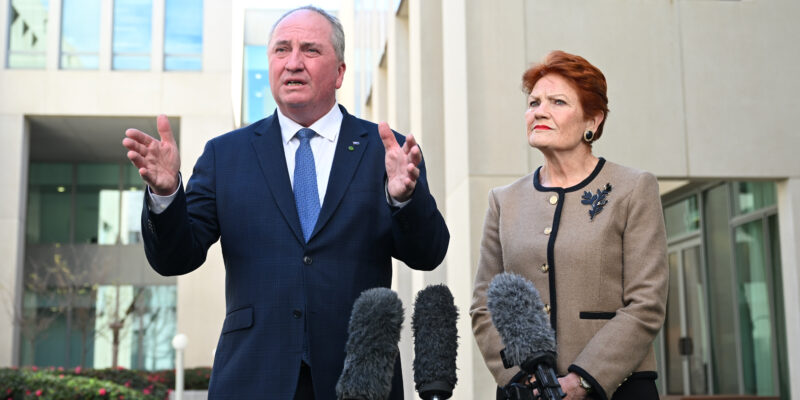
ABOUT seven million Australians would be able to access their super early to meet housing costs under a One Nation proposal economists warn would worsen inflation.
The cost-of-living policy would allow workers to divert one quarter of their super contributions towards their rent or mortgage for up to three years.
Employers would still be required to pay 12 per cent superannuation but super funds would then pay three per cent to people participating.
Australians were doing it tough and people should have a choice for how their superannuation was used, One Nation leader Pauline Hanson said.
“The cost of living is forcing people out of their rental accommodation,” she told reporters on Monday.
“People are living rough in their cars, couch surfing, don’t have homes, living in tents.
“This Labor Party has driven (the economy) into the ground and I believe that these people need a helping hand now”
Senator Hanson said One Nation had no intention to reduce the super contribution level and the proposal would be inflation neutral.
One Nation MP Barnaby Joyce said the inflationary impacts would be limited because, while there were no eligibility requirements, most people were not in housing stress and would opt not to access it.
“People are not stupid,” he said.
But economists said the scheme, which would give a median wage earner an extra $44 a week, would pump up house prices and inflation, making the Reserve Bank’s job harder.
“If take-up is anything like the 2020 early release scheme, billions a year would be pumped into household spending while inflation is 3.5 per cent, and the RBA has a tightening bias,” Swinburne economist Jason Tian said.
“That would keep rates higher for longer and hurt the very mortgage holders it targets.”
More than 60 years of evidence showed allowing people to spend more money on housing than they otherwise would – such as shared equity schemes and first home buyer grants – resulted in more expensive homes and fewer people owning them, independent economist Saul Eslake said.
Mary Delahunty, chief executive of the Association of Superannuation Funds of Australia, said it would be “economically disastrous”.
“When you pour more money into a high-inflation economy, it makes everything more expensive,” she said.
“This proposal would not alleviate the cost of living; it would drive the cost of living higher.”
Modelling by the Super Members Council showed a median full-time worker who withdrew three per cent of contributions for three years at age 25 would be $25,000 worse off by the time they retired.
Lower retirement balances would result in billions of dollars extra in aged pension bills, which would have to be funded by higher taxes or more spending cuts.
“There are smarter and better ways to help Australians struggling with housing costs – such as talking to your bank about relief options – and none of them involve telling Australians to raid their super and their futures,” council chief executive Misha Schubert said.
Superannuation can be accessed before retirement for compassionate reasons, such as for medical treatment, funeral costs or preventing a house being foreclosed.
Tax office figures show 67,900 early super releases were approved in 2024-25, amounting to just over $1.4 billion.
But Joyce said the process for people to access super during times of financial difficulty was convoluted.
Treasurer Jim Chalmers said the policy would make workers poorer as a result.
“It will cut your super. This means less money and less economic security for millions of Australian workers. This will end superannuation as we know it,” he told reporters in Canberra.
“This is exactly why One Nation poses an unacceptable and dangerous risk to Australian workers.”
Deputy opposition leader Jane Hume said there were unanswered questions surrounding Senator Hanson’s proposal but agreed the best indicator of economic security in retirement was owning your own home.