
It’s time to stand accountable over stamp duty
Real estate body says 'NSW Government has ducked and weaved Supreme Court scrutiny of its stamp duty collections'.
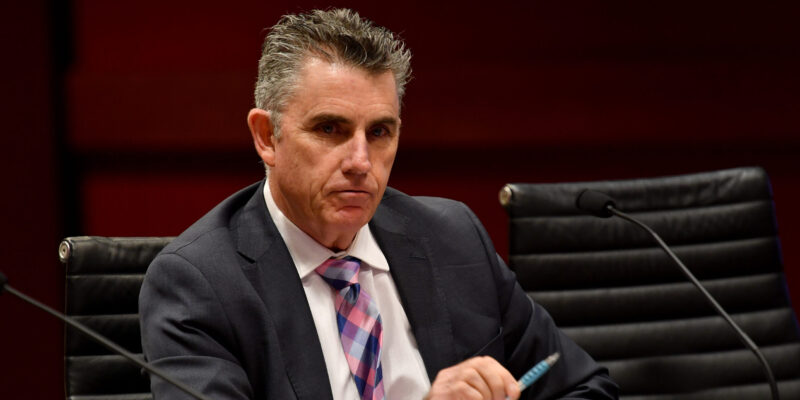
The Real Estate Institute of NSW believes “taxpayers deserve transparency” over NSW government stamp duty settings.
REINSW has welcomed the NSW opposition’s commitment to refer stamp duty settings to the Supreme Court, given thousands of taxpayers may have been overcharged, potentially amounting to billions of dollars in refunds owed.
Tim McKibbin, REINSW chief executive, said the Government’s refusal to refer the question of law regarding the correct interpretation of stamp duty indexation to the Supreme Court heightens suspicion over the potential refunds owed to taxpayers.
“The NSW Government has ducked and weaved Supreme Court scrutiny of its stamp duty collections,” McKibbin said.
“But this issue is not going away.”
REINSW has made a formal request to the Chief Commissioner of State Revenue (CCSR) to refer the question of law regarding the correct interpretation of the stamp duty indexation provisions to the NSW Supreme Court.
However, no formal response has been received.
Courtney Houssos, the NSW minister for finance, recently said in Budget Estimates: “I’m not going to require the court to use its valuable time, or the other resources of government, to seek clarity.”
McKibbin said: “This is an issue which affects everyone who purchases, or has purchased, a property in the state.”
“These taxpayers deserve transparency and for the chief commissioner to seek the advice of the NSW Supreme Court.”
Section 106 of the Taxation Administration Act allows the CCSR to state a case on any question of law concerning the assessment or refund of tax and forward it to the NSW Supreme Court for its opinion.
The failure to do so highlights the government’s uncertainty as to whether it has overcharged consumers, McKibbin said.
“The uncertainty is evident because Revenue NSW has adopted and applied two different interpretations of the provisions since their introduction,” he said.
“Recently, the minister for finance reaffirmed government’s refusal to seek Supreme Court clarification on the issue on the basis of cost.
“Ironically, seeking the opinion of the Supreme Court would cost less than the legal advice government has already incurred to date seeking to silence this issue.
“A proceeding under section 106 of the Taxation Administration Act would be the most cost-effective way of being certain of the correct interpretation of the stamp duty indexation provisions.
“Government’s primary function is to act in the best interests of the people of NSW.
“It is not to defend a position that potentially harms the interests of those people,” McKibbin concluded.