
Positive outlook but still many challenges awaiting
New report says Australians will enjoy much larger wages in 40 years from now but world economic concerns still pose a threat.
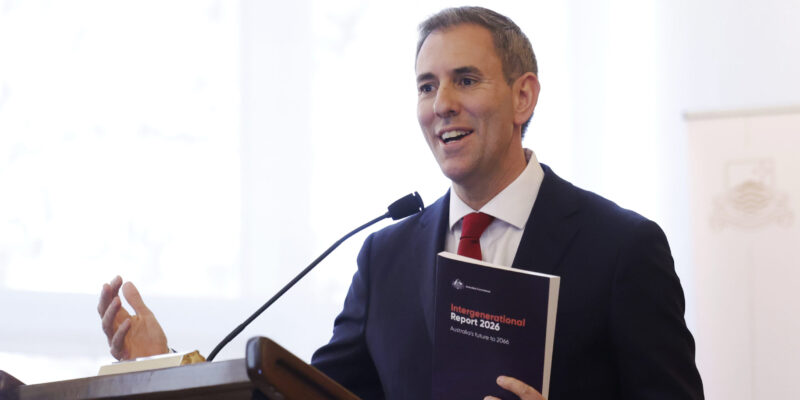
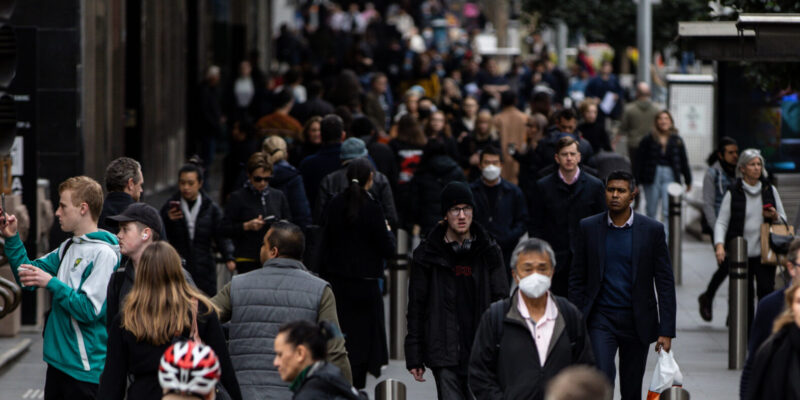
AUSTRALIANS can look forward to better health and living standards in 40 years but young workers will shoulder a larger burden propping up straining public finances.
On Monday, treasurer Jim Chalmers delivered a positive assessment of the nation’s prospects while warning of unprecedented challenges to coincide with the release of the nation’s latest Intergenerational Report.
In real terms, Australia’s economy in 2066 will be more than twice as large and the average Australian will enjoy 55 per cent higher income.
But an ageing population, turbulent global politics and an uncertain productivity outlook will place increasing pressure on young workers, according to the seventh edition of the Treasury assessment, which charts the impact of government policies four decades into the future.
“The effects of an ageing population will place increasing pressure on the tax and transfer system,” the report said.
By 2066, the average life expectancy will rise to 89.5 years for women and 86.1 years for men, up about four years from current levels, placing Australians among the world’s longest-lived populations.
But declining fertility and immigration as a share of population mean the proportion of over-65s to working-age Australians will rise from about 28 per cent to 39 per cent, requiring higher health and aged care payments.
As a result, income tax is projected to rise from 12.3 per cent of GDP to 14.1 per cent.
“This pressure will be primarily borne by working-age Australians,” the report said.
“As indirect taxes face structural decline, the share of tax receipts from personal income taxes is projected to rise.
“This combination of trends means that, over time, working-age Australians will support a growing number of older Australians who are living longer and driving demand for health and aged care services.”
But Chalmers said growing superannuation balances will provide older Australians with more security and reduce the strain on the federal Budget.
Age pension payments are expected to fall from 2.3 per cent of GDP to 1.8 per cent by 2066.
“No previous (report) has contended with global challenges this great, with politics this fraught or a future less certain,” the treasurer said in a speech coinciding with the release the report.
“The global and generational risks are serious but Australia’s opportunities are endless.”
The federal deficit is projected to blow out from one per cent of GDP to 1.8 per cent, although net debt is expected to ease from 18.8 per cent of GDP to 18.1 per cent.
However, the projections were underpinned by a rosy assumption that productivity growth would bounce back from the 0.3 per cent average over the past decade to 1.2 per cent within five years.
It is more optimistic than the Reserve Bank’s medium-term assumption of 0.7 per cent and has been questioned by several economists such as HSBC’s Paul Bloxham and veteran budget watcher Chris Richardson.
Under a less optimistic 0.8 per cent assumption, the average Australian’s standard of living would be $20,000 worse off in real terms than the baseline forecast for income per person of $149,500.
The gross debt to GDP ration would blow out to 55.9 per cent, compared to the baseline projection of 27.4 per cent.
Along with the government’s recent tweaks to national competition policy and red tape reduction, much of the productivity improvement was chalked up to AI.
While the world was becoming more dangerous, more unpredictable and more divided, technological advancements also provided the nation with greater opportunity, Chalmers said.
The nation faced a simple choice: “Keep up and succeed or lag and languish.”
That meant ensuring the accelerating pace of change – driven by rapid advancements in technology – was accompanied by an “accelerating pace of opportunity”.