
Now Coalition wants less people arriving
Opposition leader says 'we want people coming to this country who are committed to the future of our country'.
GRADUATE and bridging visas will essentially be scrapped under a radical pitch by the coalition to “regain control” of the migration system and stem the flow of votes to One Nation.
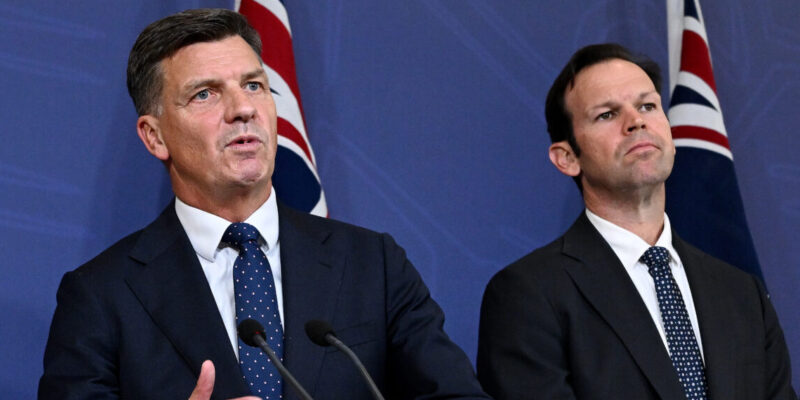
The coalition will reduce net overseas migration from its annual level of nearly 300,000 people to about 100,000 in the first year if it wins the next election, opposition leader Angus Taylor announced on Tuesday.
Net migration would then settle at 160,000 per year after four years, below Labor’s target of 225,000 per year.
Taylor said his policy represented the biggest cut to migration in Australia’s history but his targeted net migration intake is still higher than One Nation’s goal of 130,000 and the period of net negative migration during Covid.
The rise of Pauline Hanson’s party in the polls has hollowed out the coalition’s voter base and brought migration to the fore of political discourse.
The coalition’s plan echoes parts of One Nation’s proposal, including forcing prospective migrants to go offshore to submit a new visa application.
The policy is expected to curtail so-called “visa hopping” by forcing migrants to leave the country before they can apply for a new visa, limiting the ability for people to game the appeals system to extend their stay.
As a result, bridging visas would be virtually eliminated.
“We will regain control of our borders, we will regain control of immigration in this country, and we will ensure that immigration policy is in the interests of our great country and no one else,” Taylor told reporters in Sydney.
Reducing net migration would largely be achieved by cutting the stock of temporary visa holders – excluding New Zealanders – by about 650,000 over four years.
Under Labor, Australia had become a guest-worker economy, Taylor said.
“Australia should be a home, not a hotel,” he said.
“We want people coming to this country who are committed to the future of our country.”
The international education system would bear a large brunt of the cuts.
Temporary graduate visas would be abolished and student visas would be cut by 72,600 by 2031-32.
This will be achieved by limiting students’ abilities to bring along family members.
Opposition immigration spokesman Jonathon Duniam said he was confident the university sector could manage the reduction in lucrative foreign student fees.
“Where you see a majority or near-on majority, at least half of the student population being international students, that’s not what public universities were built for, and that needs to change,” he said.
The plan would boost the federal budget by about $260 million, according to undisclosed coalition estimates produced with the help of the Parliamentary Budget Office.
Taylor said the cuts to migration would have a positive impact on the economy by better targeting the skills Australia needed and bringing in more skilled workers.
But the coalition will not produce costings until closer to the 2028 election, once further forecasts to net overseas migration are confirmed by the government.
The humanitarian intake would be halved to 10,000 per year, and onshore applicants will have a maximum of 30 days to lodge an application.
Working holiday maker visas, which are highly relied upon by farmers and regional communities, will be cut by 23,700 by 2031-32, while fees would be raised for those coming to non-regional areas.
But the coalition will introduce an extra 15,000 skilled visas for major projects and a new agriculture visa from 2030.
Family reunion visas will be unchanged.
Senator Hanson said the coalition was planning to build more homes then bring in more people to compete for them.
“The coalition has turned up late to the grand final after both teams have headed back to the change rooms, waving a photocopy of One Nation’s immigration policy,” she wrote on X.