
Apartment availability in Brisbane reaching crisis point
Queensland capital failing to construct enough apartments to meet demand.
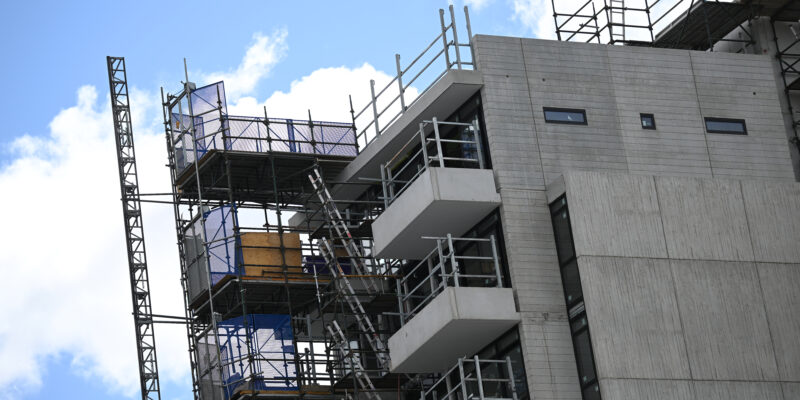
FINDING an apartment in Brisbane is getting increasingly more difficult, according to a new report released this week.
The Property Council of Australia report shows Brisbane is not delivering enough apartments to meet demand and construction feasibility remains the central constraint.
The report shows that while apartment launches and sales improved through late 2024 and 2025, this uplift has not translated into a sustained lift in construction, with many approved or marketed projects failing to proceed, the report said.
Under the current Shaping SEQ: South East Queensland Regional Plan 2023, Brisbane is required to deliver around 8000 attached dwellings per year to 2031 and more than 7100 per year beyond that.
Less than half of this target has been delivered each year since 2019.
Between 2020 and 2024, inner Brisbane delivered an average of just 1400 apartments per year.
While completions lifted to around 2550 apartments in 2025 and are forecast to approach 3000 in 2026, this still leaves an annual shortfall of 4000 to 5000 apartments.
Property Council Queensland executive director Jess Caire said governments had made meaningful and welcome inroads in recognising the housing challenge and progressing practical reforms but construction costs and delivery constraints continued to undermine supply.
“Over the years we’ve been collating this data, one thing has remained constant. Brisbane is not delivering enough apartments to meet demand and the gap is not narrowing – it’s widening,” Caire said.
“Even with the recent uptick in launches and sales, we are still nowhere near where we need to be.”
Caire said it was important to acknowledge the strong focus governments had placed on boosting housing supply but warned feasibility remained fundamentally broken.
“Credit where credit is due — there has been a swift and laser sharp focus on boosting housing supply at both state and local government levels,” she said.
“But the reality remains that feasibility is broken. The average existing unit in Brisbane is now worth $831,000, meaning it is more expensive to build new supply than to purchase existing stock.”
Sustained increases in construction costs were also shaping the type of product coming to market.
“Ensuring we can deliver apartment supply that is accessible to a broader buyer market, including first home buyers, downsizers and owner-occupiers, is essential if we are serious about improving availability.
“Given the enormity of the supply challenge we face, delivering projects of scale is essential and every available policy and taxation lever aimed at boosting apartment delivery must be pulled.”
Despite improved market activity, the research shows delivery capacity remains the key risk, with around 35 per cent of future apartment supply beyond 2027 assessed as moderate to high risk due to elevated construction costs, labour shortages, lengthy approval timeframes and difficulties locking in builders.
As Brisbane approaches the 2032 Olympic and Paralympic Games, competition for labour and materials is expected to intensify further.
Urbis director Paul Riga said the market remained constrained despite signs of improvement.
“While we’ve seen a welcome uplift in apartment launches and sales, this has not flowed through to construction at the scale required,” Riga said.
“Beyond 2027, a significant proportion of Brisbane’s apartment pipeline remains at risk and, without further action, the shortfall will persist.
The Property Council is calling for a suite of policy interventions to support the delivery of new housing, including:
- Further reform to state taxation settings to support institutional and international capital that underpins largescale apartment and build-to-rent projects;
- An annual commitment in the State Budget to unlock enabling infrastructure, including apartment projects beyond the Residential Activation Fund;
- Leveraging the upcoming review of regional plans to better coordinate planning and infrastructure delivery;
- Incentivising local governments to fast-track supply, including planning reform and infrastructure charges relief for critical projects; and
- Introducing off-the-plan stamp duty concessions for owner-occupiers purchasing apartments.