

Case for changes to CGT discounts is ‘overwhelming’
Research suggests Budget will be positively impacted by billions in forgone revenues.
Taxpayers could be missing out on almost $200 billion in forgone revenue over the next decade, as a result of property investor tax breaks, analysis shows.
Research published by the Parliamentary Budget Office on Friday, at the behest of the Greens, estimated the capital gains tax (CGT) discount and negative gearing deductions on investment properties would cost taxpayers more than $24 billion per year by 2035-36.
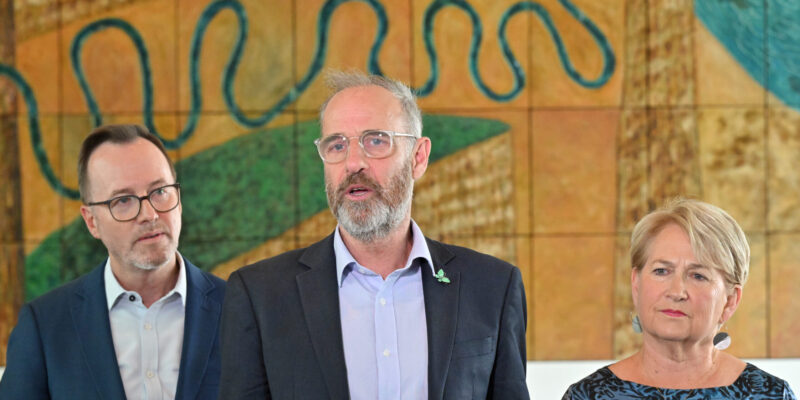
The findings were latched onto by Greens treasury spokesman Nick McKim, who is leading a Senate inquiry into the CGT discount and is set to deliver a report by March 17.
“Winding back the CGT discount would help renters, first-home buyers and the Budget,” he said.
“The evidence given to the Greens-led Senate inquiry has made the case for change overwhelming.”
The PBO found negative gearing and the CGT discount together would result in $15.4 billion in forgone revenue this financial year.
Since 2015-16, almost $110 billion has been forgone, with another $190 billion expected over the next 10 years.
However, Peter Tulip, chief economist at free-market think tank Centre For Independent Studies, warned reforming the CGT discount would be unlikely to recoup anywhere near that amount of revenue for the federal budget.
Most of the proposals flagged would bring in little extra revenue in the first few years because of elements grandfathering existing assets, he said.
Investors would also change their behaviour as a result of the new tax incentives, prioritising other assets or delaying sales to put off realising their gains, which would lead to less revenue.
As well as the cost to the Budget, advocates for change have pointed out the concession benefits overwhelmingly favour wealthier Australians.
Analysis by the Australian Council of Social Service, also released on Friday, found 22 per cent of all CGT discount expenditure accrued to Australia’s top five wealthiest electorates – all in Sydney and Melbourne.
“This is money that could be invested in social housing, essential services, income support and the communities that need support the most,” said ACOSS chief executive Cassandra Goldie.
“Instead, it’s being used to supercharge inequality.”
Wentworth, in Sydney’s eastern suburbs, accrued the greatest benefit, with the average resident receiving a CGT break of $13,450 per year.
Meanwhile, the western Sydney electorate of Blaxland, where the average taxable income is $53,542, receives an average CGT concession of $333.
Independent Wentworth MP Allegra Spender released a white paper calling for the CGT discount to be cut from 50 per cent to 30 per cent.
Dr Tulip said the most attractive model for reform would be a return to the pre-1999 tax regime, in which capital gains were discounted in line with inflation, so investors were only taxed on the real income they made from the asset.