
Small builders under pressure if wage rise is too high
HIA calls for modest hike in minimum wage in order to protect small builders and help ease the housing crisis.
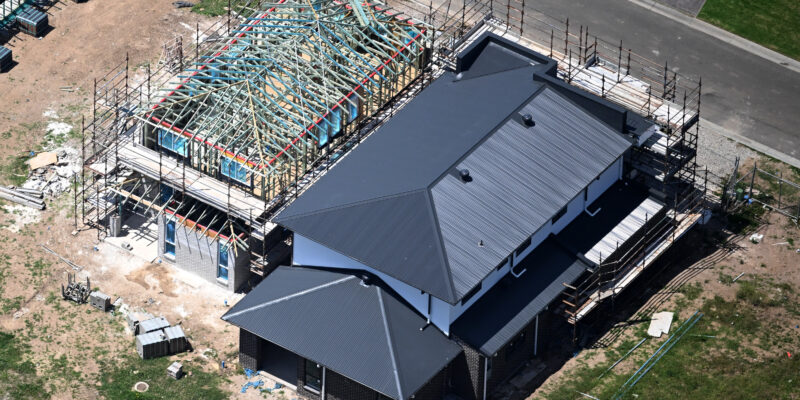
Anything but a modest rise to the national minimum wage runs the risk of “crushing the small builders Australia is counting on to solve the housing crisis”.
This is the view of the Housing Industry Association (HIA), which has lodged its initial submission to the Fair Work Commission’s 2026 Annual Wage Review (AWR), calling for a 3.5 per cent increase to the National Minimum Wage.
Stuart Collins, HIA senior executive director compliance & workplace relations, said the residential building industry is navigating an unprecedented convergence of cost pressures that no other sector is facing to the same degree.
And the AWR cannot be considered in isolation from the broader crisis confronting builders.
“Independent modelling shows governments are already adding more than half a million dollars to the cost of every house through taxes, charges and fees,” Collins said.
“Construction costs have risen 40 per cent since 2019. The Middle East conflict is now generating real, immediate fuel and materials cost increases that builders under fixed-price contracts cannot pass on to clients to account for the increases.
“These businesses are being squeezed from every direction. A wage determination above 3.5 per cent, on top of everything else, is not something the sector can absorb without dire consequences for housing supply.”
Australia built 174,730 new homes in the first year of the Federal Government’s National Housing Accord target of 240,000 homes per year for five years, meaning there is already a shortfall of around 65,000 homes.
“The residential building sector is made up of 97 per cent small businesses,” Collins said.
“These are sole traders and small companies already operating on thin margins, with no capacity to pass on mandated cost increases mid-project.
“When costs go up, apprentices are often the first to go and we cannot afford to lose a single worker right now.
“Construction trade apprenticeship commencements have already fallen 27 per cent in the year to June 2025. We need policies that make it easier to take on a trainee or apprentice, not harder.”
HIA’s submission draws on the Fair Work Commission’s own statistical data, which confirms construction profit margins are below their five-year average, while larger increases in prior years for the real wage catch-up case have been generally successful in their aim.
Further, the RBA’s forecasts project wage growth slowing to 3.1 per cent from June 2026, below the level HIA is endorsing.
“The Panel’s own data confirms that minimum wage households have experienced real income growth above CPI in the year to July 2025.
“The case for catch-up increases no longer applies with the same force. The 2026 determination should reflect that reality,” Collins said.
“HIA’s submission also formally places the Commission on notice of HIA’s intention to pursue a future application for differentiated award treatment for small residential building businesses, given the unique structural pressures the sector faces as the primary delivery mechanism for Australia’s housing supply.
“We are not arguing against fair wages for workers,” Collins said.
“We are saying that if governments want 1.2 million homes built, the industry needs to be sustainable and increases in wages must also be offset by removing the barriers that are making it impossible for small home builders to thrive.”