
Now playing
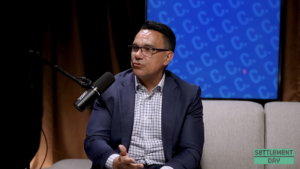
Settlement Day Ep.4 | From Strength to Strength
Episode overview
Settlement Day Episode 4 brings together leading business experts to explore how conveyancers and property professionals can move from day-to-day survival to sustainable growth.
From scaling a business and building the right team, to leadership, mindset and managing increasing compliance demands, this episode examines what it takes to grow stronger in a complex operating environment.
Hosted by Amber Sherlock, this episode features:
• Anna Samios – CEO & Founder, Performance 7
• Louise Connor – Corporate Edge
The discussion covers:
• Scaling Up: What it means in practice and how businesses can grow without burning out.
• Leadership & Mindset: Moving from doing the work to leading the business.
• Team & Culture: Building a “village” and empowering staff to step up.
• Barriers to Growth: Time pressure, delegation challenges and the risk of becoming the bottleneck.
• AI & Efficiency: Using technology to accelerate productivity and support growth.
Transcript
from strength to strength and building your business. With me are two of Australia’s top experts in that field.
Business coaches Anna Samios of Performance 7 and Louise Connor from Corporate Edge. Welcome both. It’s so
great to have you here. Now, many conveyances and property professionals tell us they’re overwhelmed with red
tape administration compliance and that is even before they start to do the work. So, let’s talk today about maybe
how they can overcome that. Let’s start with you Anna. You teach businesses about scaling up. So for those of you
who haven’t heard the term before, can you take us through what scaling up is? Yeah, nice. Thank you. Um, scaling up is
a methodology that’s come out of MIT’s birthing of giants program and Stanford University and it’s an amalgamation of
just tools that we use to facilitate great conversations to successfully and
sustainably grow a business. So I think a lot of people have got a dream to build a bigger business and to to scale
their companies but then got get stuck in between this is where the business is now and this is where I want to take the
business into the future. It’s how do we actually do that in a you know in a step-by-step process that doesn’t burn
everybody out and actually helps you succeed. So we we’ve got a methodology and a framework that we’ve been applying
um in Australia for the last 10 years. I think some of the most successful people who have implemented the framework are
obviously Christian Beck’s companies um leap infotra and the whole suite of companies you know Christian started the
you know his business and he had 25 employees when he started brought in the
scaling up methodology and of course the rest is history so it’s a framework it’s a scaffolding that we use to help
companies successfully scale now you ran an accounting firm then you’re a business coach but you have a
special interest in mentoring women Oh, I love it. I think um you know, I absolutely have a sweet spot for
professional services and especially women who are running um these businesses. And I I think there’s
myself, you know, I set up my first company when um with my husband Peter when I was 25. We had the
entrepreneurial seizure just, you know, 6 months after we got married. And um
you know I think as women we often go in and help businesses and help our partners succeed but then there was
always this burning passion for me. I actually wanted to do something on my own. So um yeah helping women and having
lived through that experience of two companies scaling them um has been
interesting is an different dynamic for women I think than men when they’re growing their businesses. We will chat a bit more about that
later. Let’s bring in Louise from Corporate Edge. Louise, your company has focused on behavioral change within
companies, promoting a village culture as you call it. Can you take us through more about that?
Yes. Well, thanks Amber. Um, really delighted to be here today. Um and absolutely loving to share and talk
about what the village culture really means because whenever we’re thinking big businesses or small businesses um
having that real connected community or the a group of people who really help you to be successful um is really at the
heart of our beliefs and the things that we work with uh customers and and clients on. Uh so I really echo uh
Anna’s uh sentiments there around thinking carefully about you know who are the people I’m bringing in to help
me scale my business. What is the culture that I need? And I think one of the things that we notice most whenever
we’re thinking about helping clients be the very best that they can be is what
are the mindsets and the approaches that I am taking because people can run a great business with two or three people
but how do I get it to 25 people and what’s the shift that needs to happen within me in order to really bring that
to life. Um, so I think um, from corporate edge we’re super lucky and
that we get to work with a really wide range of businesses, but at the heart of all of those is the behaviors of each
individual leader in the business. Um, and that’s something that we’re really excited to to bring to big business and
small. So what does a connected community look like? Well, the connected community really is a mindset that brings together
um you know the ultimate uh cause like what’s the reason that we started this business in the first place? What are
the things that whenever we are uh whenever we were dreaming big I loved how you said that Anna you know whenever
you sort of had that great ambition that real entrepreneurial mindset what was the reason that we started this business so what’s the cause that that that
brings us all together the second part is then the community that I create around that so you know who are the
people who are like-minded how do I create that sense of belonging that sense of inclusion that sense of
well-being really for people in my community um and then the third part is the communication so in what ways am I
communicating with my clients, with my stakeholders, with investors if I have them? Um, how am I bringing everybody
along and and really making that c the culture I guess of the of the
organization something that everyone quickly understands. They understand how I need to behave when I’m in this
culture. Um, and also they can really take ownership of that. uh which means that instead of you being the person
driving every decision and you being the person who everyone comes to for every decision, we start to get a whole
community of leaders who actually can make decisions in the best interest of the business because everyone’s aligned
and on the same page as that. So, it’s about seeing your company consistently grow to higher levels, but I know many
people listening will just know how hard it is and how long they work. How is
this achievable? either of you can answer this when they’re already feeling like they’re chasing their tail and
they’re working super long hours. Well, one of one of the key things that I hear whenever I’m working with businesses, business leaders, um, is
this understanding of how much are they taking on? Because especially at the beginning whenever you are the the key
person in a business, there aren’t, you know, a huge array of people to do things for you. Um, and then as you
bring people into the business to assist with that, it’s sometimes very difficult for business owners to let go of those
little jobs. Uh, so one of the key things that I hear all the time is people saying, you know what, it’s just quicker if I do this myself or you know
what, I’ll just I’ll just do that. Don’t you worry about it. And the mindset comes from a really great place. People
are really caring about the their employees and their team that they’ve built. However, what that ends up in is
that they they are overloaded and very very busy. Um, and through the best will
in the world, they don’t want to give their team too much because they don’t want the team to be over too busy and overwhelmed. But what we find is that,
you know, actually your team is bored because you’re doing all the work and you’re working weekends [snorts] and
nights and early mornings and all of the the different hours that God sends you and actually your team’s bored. So, you
think they’re busy, but in fact, the team’s bored. And so I think it’s this real mindset and you know one of our big
focus areas in behavior change is how do I start to really shift my mindset to
get the business that I want but yeah the you know if your team are are sort of knocking off straight at 5 and and
you’re still working until 9:00 at night. How do we start to rebalance that and start to rebalance
and nodding [laughter] you make some great points. I think um it is a real mindset shift and I think
people um especially if they you know professional service firm be it a conveyance or a legal firm whatever it
is when we’re selling human labor or hours our time our our hope is always to
kind of get in there and get the job done and help the customer as fast as we can and complete the task. Um, and
that’s great if you’re a doer, but at the moment where you actually need to lift and you know, you know, go from
being working in the business to working on the business, it is an absolute mind shift.
And I think one of the things that I like recommending and reminding people that, you know, sometimes people say,
“Oh, it’s faster for me to do it myself.” [laughter] And that’s a classic one, Anna. And I think the kind of thing really is is to
remember that when we were starting out as graduates or when we were starting out as our first job, we actually some
we slowed someone else down to teach us. So [clears throat] now probably it’s time for us to slow down and teach
someone else and pay it forward. Um so sure it’s faster for me to do it, but
that is not scalable. That thinking is not scalable. You cannot replicate and multiply if you’re the one always
hoarding onto that IP. Absolutely. And I actually try to encourage people to think about it to
assist them with that mindset because I think the mindset is I’m protecting my team which comes from a really good place.
However, I say you’re actually robbing them of an opportunity to learn and grow because this is how we learned. This is
how everybody had to scrape their knees on, you know, all these interesting little the old you boring tasks, all the doing.
But actually that is the thing that taught you how to become a better executive. It taught you how to be a
better business um owner. So you know how do we people listening to this that are going I don’t have time for this. But what
you’re saying is it’s not about time necessarily. It’s a mindset. Yeah. And prioritizing it. I think um
especially if you’re developing a professional service firm and you’re thinking about um you know one of your
roles as a business owner is to always maximize the valuation of your business at the point that you’re always doing
everything the value of your business declines because you have keyman risk or key person risk. So anyone coming in to
value your business is going to say you know am I buying a business or am I buying one personality and what is the
risk when that person leaves? So I think maybe in short term it might be faster
but the long-term ramifications for you know the valuation of your business and we know that the for a lot of people
apart from their home their business is their biggest asset. Yeah. So what are the little behaviors that we
have to bring in the change in the mindset to help us scale beyond where we are now and move to the next level.
Yeah. And can I sorry can I just say on that point what I would notice as well is that you become the bottleneck
and so you become actually what you think you’re saving the organization money or you’re saving your business
money actually you’re wasting money because people in your business are waiting to talk to you about the decision they’re waiting to see what you
think they’re waiting to see and then suddenly you’ve got 40 decisions to make in a week when actually you could narrow
that down to probably five key important decisions that you need to make and that cost of the waiting, the spinning the
wheels, people getting frustrated in your team, great people who you’ve got in your team, not being able to do the
job that you’ve employed them to do is very frustrating for people. Anna, you’ve talked about reducing the time it takes to manage your team by
80%. That’s a huge number. How is that possible? Oh, it’s very doable. I think the first
part um the first part you really have to do is just sit down with yourself and
you know obviously get someone to facilitate you come in and facilitate you but at the moment where you actually
craft what we refer to as a one-page strategic plan you get absolute clarity on what are the top priorities that need
to happen within the business I think a lot of people especially if they’re a technician or from a professional
service thing the to-do list is a massive shopping list how do we actually
when we’re curating the onepage strategic plan, place a bet on maybe one or two or three key priorities and know
that there are some critical things that we have to get done this quarter to move the business forward and to grow the
business and there are things that can probably wait for you know maybe until
next quarter. Once you have that clarity hand on heart of what that priority is
and you can only have that clarity and that hand of hand on heart moment when you actually go through the rigor of the
strategic planning process then you say okay these are the two or three things the team or and myself are going to
focus on this quarter. It means everything else will have to wait. When you prioritize those tasks, you then
have to calendar manage like anything. You know, um Aristotle said there is freedom through discipline.
The more disciplined you are, especially in that planning process and over our calendar and our behaviors and our
mindset and um self-t talk is a massive component here. So, I really applaud the
work that you do. Um you you free yourself up and then you just prioritize the real stuff
and delegate. You know, you delegate. Do not abdicate. Yeah. You know, and coach your team through it. If you’re a leader
and you have a team um that you’re supporting, the number one thing is is be available to coach them and support
them. Your job as a leader is to help them and and maybe clear the path that
if these are the two or three priorities that we’re working on, how do we clear the path for our team to make sure that
we succeed? So, Louise, just say I’ve done what Anna has told me to do and I’ve freed up some time. I’ve managed to free up some time.
Where would I be best to direct that time? Well, I think that the time is actually what Anna has outlined there, which is
the coaching and mentoring of your people because through that um allocation of jobs or allocation of
things for them to do, you’re giving them complete ownership of that. And that is terrifying to people. [laughter]
I mean, what if they muck it up? That’s exactly right. What if they make a total mess of it? Now, you’ve employed
this person. You’ve probably worked with them for a while. They’re completely bought in. They want to do the right
thing. Your job then becomes to help them to do the right thing and do it in
a way that’s up to your standard, that meets the needs, that achieves the goals, that’s on the strategic plan. So,
the role uh is is scary. It is scary. It almost feels like I’m stepping off and doing something completely different
because those technical skills that Anna was referring to, you know, those are the things that made you famous. Those
are the things that people go, you know what, like Louise is great at this. We should get her in to do this. And there’s a certain amount of your ego
that gets a little pat, you know, whenever that comes around. And so this is now like a reimagining of the role
that you’re playing in your business. Uh which is quite is terrifying. So I absolutely um have worked with many
leaders on that where they say, “Well, what am I going to do? If they’re all going to do this, what am I going to do?” And it’s like, well, your role now
is the CEO or your role now becomes the chief operating officer, which is making
sure that things are being done at the speed and the, you know, sometimes there’s going to be course corrections. I don’t know how many strategic plans
I’ve looked at and thought there’s a lot of things on there. I like your I like your number, Anna. Three is is a good
number of things to have for a quarter. Um, so is that your definition of leadership? Just doing the role that
you’re supposed to be doing. Absolutely. and making sure that people have then the skills and ability to do
the roles that they’re meant to be doing. Um, and if I need to step in and coach, if I need to step in and do a
little bit of mentoring, um, then I’m available to do that. So, I’m able to
keep my finger on the pulse. And I guess as we look at different styles of
organizations and different styles of businesses and different sizes of organizations, there are going to be
times where it’s not possible to completely give away all of the doing jobs. There are going to be some doing
jobs, but we need to be quite careful and strategic about what are those things that we hang on to. And then what
are the things that it’s absolutely appropriate that our finance coordinator or the finance person is going to do all
the data entry and they’re going to get it all up to a point and then you come in and do the approval and then you come
in and do the kind of the check as opposed to you saying I’ll just I’ll just help you with that. I’ll just I’ll
just enter [laughter] that for you. See how your strategy would work in big firms. Most conveyancing firms are are really only three to seven people. That
would be a pretty standard size. So, does that philosophy still work? Yeah, I think so. I think you just have
to really determine what’s the right balance between those technical specialty skills that I have and then
what we would say your visionary skills. So, that’s you know getting the right plan in place. So, taking the time, you
know, doing a strategy as Anna has suggested um and I completely endorse um
you know that is probably going to be a day’s work. It’s going to be time out of the build out of the out of the office
hopefully to to actually get your head into the right space, get the get the plan onto the page. So, you need to have
time to do that and you need to work out what’s the right balance between those two pieces going to be. Um, even if I’ve
got, you know, six or seven people, I still need to be in that leadership role. Sort of, you know, you’re
conducting as opposed to being in the choir. You know, you’re really, you’re looking at, are we on track? Can I see
where we’re headed? Am I flipping the pages for the choir or am I getting lost up in in the moment? And I think a lot
of particularly in small business where there are lots of jobs where we don’t, you know, we don’t have somebody who does marketing and someone who does the
website and somebody who does the finances and someone that’s all probably one person doing those things. It can be
very easy to uh to lose sight of that that big picture. Yeah. I think um you made a point
earlier on about um how your technical skills is almost and you get that
that rush that [laughter] reinforcement from the market that what you you know from a customer that what you’re doing is so
great and it’s like this magnetic thing that you really enjoy and then you decide to go out on your own and and set
up a business and hire people and yet everyone is still coming to you and I think there is a moment in time where in
the beginning it used to pat you how did you say it? It gives you pats your ego. [laughter] It pats your ego. I love it.
It pats your ego. But as you scale and organize, as you scale your business and as you grow, I think the bottleneck is
really apparent. And I think people sometimes resent that because they feel trapped then. And it’s that mindset
change that we’ve got to go through of I know I’ve got to slow down. This IP that I’ve got in my brain that
I’ve developed over decades, you know, it’s great. How do I start transferring it to other teams and leveraging it and
bringing in that power of not just one of me but 10 of me and and then coaching and supporting you
know um once the rubber hits the road reality really hits but being available for your team and not buried in the
work. So if we drilled it down even further Louise just say your company has two or three people or or even a sole trader
then how does that apply? Yeah, I think this is where we really need to draw on that connected community because even if
I’m a soul trader, there are a lot of other people out there for me to draw on
their knowledge and draw on their skills. And so as a you know really
understanding particularly as a soul trader maybe you’ve got one person helping or assisting you um you know
what is that cause? What is the reason as you said Anna you know you’ve come out of a business you really love or you’re excellent at this one thing but
is that is that your whole purpose of being whenever you went out in your own what was the what was the thing that
really thought you know what I’m going to be excellent at this and I see myself being able to do it on a wider scale or
do I want to stay in this just one man band kind of idea and either is fine but
it’s just understanding what is your ambition within that this podcast is proudly sponsored by
TriarchCH. Meet your Tranch 2 obligations with Triarch Compliance Center, your all-in-one AMLCTF solution.
Book a demo today at tricarch.com.au. Spend all day Saturday uh doing your
website, you know, like you know, getting your staff to do things perhaps that you’ve done yourself in the past, but then how do you
incentivize them to actually step up and do those extra roles perhaps? Louise
makes a really good point and I think from um managing your time and managing where you are and like from a practical
perspective of how you do it and find the time. One thing I did years back was I
actually pretended that my business was a paying client and I blocked out time in my calendar to
actually say the business is a paying client. It’s not going to move. It’s not
going to do anything else but you need to focus on it and go through the tasks
that you allocated so that you can get it there. I think people have ambition and a hope and a dream and maybe they
are starting up small but I think when they started their business they had a dream for something bigger and you know
this onepage strategic plan or a game plan whatever you want to call it I think there is a dream and a hope that
people have that sometimes it extinguishes because they are just buried in the dayto-day compliance and
paperwork but how do we actually lift them out of it and you need to really be disciplined in your calendar. Yeah.
And my recommendation is is block blockout time just like it was a paying customer. And I love that because I think that is
that real choice that you’re making. And that’s really powerful. You know, if we feel that things are happening to us,
that’s whenever we can get despondent and get bit defensive whenever when someone might help ask to help you. Um
whereas when I’m making a choice, I’m choosing to do this today. I’m choosing to have this as my paying client. then
that’s a quite an empowering way of thinking and it really helps reinforce that mindset of even though I might have
two people in my team, I’m still the CEO of this business and this business is almost my client. So, I really love that
as an idea. I think too the other point is like um sometimes from the isolation especially
if you’re working on your own and building up a community. One thing that really helped me was um I created a
mastermind group and I think sometimes the there’s a you don’t want to kind of
create a a community thing of people that are direct competitors to you in your own world. So I created a
mastermind group with other people similar to um what I was doing in the marketplace but international. So we
we’ve got people and we still get together every day um every Saturday when we can um just even if it’s a
check-in but this mastermind group of and it’s through um Northern America, South America and also through to
Southeast Asia. So we kind of cover the time zones we can but creating maybe even a virtual community. I know it
really helped me during co where we just doubled down and supported each other. There’s no conflict of interest. There’s
no competitive landscape. there are people out there who are looking who are just like you looking to connect.
Um and I think maybe be the first person to create that community and create that support for yourself. It’s very lonely
when you’re um a solo person with a bigger dream. Um surround yourself with
good people. There’s got to be for many small businesses, especially ones working out of their living room or
their office at home. It can be quite isolating. Annie, you talk about having a bee hag or a big hairy audacious goal
which similar similar to a northstar perhaps. What are some examples? Oh, good question. So, the bee hag
concept, it’s an ugly American term. It’s come out of Stanford University and Jim Collins’s work with good to great
where they research thousands of great businesses and what is the difference between a good business and a great
business. And one of the things that they identified that all of these businesses had a bee hag or a big hairy
audacious goal and it’s literally um like a north star. I like calling it our
southern cross for our Australian clients. What is this big guiding light? What is this difference that we want to
make on in the planet or we creating our business? What is our raise on detra? Um
and what is the impact that we’re going to make? It famously came out of um the
probably the most famous one was JFK’s example of you know by the end of the decade we’re going to land a man on the
moon and bring him home safely. That was the goal and then the question was well how did we do it and they
started reverse engineering um the goals and the actions that they had to take place. I think for the my favorite piece
of that phrase as ugly as it is is the big hairy it’s the audacious part. It is
a big hairy audacious goal. So it really challenges us when we’re putting together our game plan and and figuring
out where we want to take the business where you ask yourself as a business owner or as a founder. You have the
audacity to believe what? It’s not like an actual goal or an achievable goal.
It’s like an audacious goal. So, I’ve had, you know, we’ve challenged a lot of our clients and some of my favorite ones
have been I had I was working with one regional business and um he said, “Look,
Anna, all I really want is if I can create a business where we can create 50
sustainable jobs in the community so our kids don’t have to leave um and go to
the big smoke and we can retain our community, our community spirit. That would be great.” At the time he had 15
employees, but for him it was like quite audacious. I think for performance 7
I’ll share mine because I was really challenged. Like I’ve got a CEO mastermind group that I facilitate and
the interesting thing is when you share these concepts your your your CEOs start
pushing it back on you. So they started coaching me and the CEO group that I had was exit lassian at ex Twitter and um
some really interesting experience in the room and they said right miss what’s your new big hairy audacious goal and at
the time I had just come back from Paris where I’d gone with my daughter one of my dreams was to take my daughter for a
mother daughter trip to Paris which sounds rounded but at the time I went that that when is that going to happen
but you know you put it on paper you commit to it and somehow the universe brings it to life. And when I came back
from Paris, um I was talking to the CEOs and I said, “Do you know what I found really amazing? Louis Vuitton actually
gen and their stable of um brands generates 1% of France’s GDP.”
And I think how do you do that? So then they kind of pushed back on me and they said, “All right, you know, um my
original behag was to help 10 companies scale.” And I got to that pretty fast.
um interestingly applying the frameworks but then the big hairy audacious goal
had become achievable so it starts to fizzle out so you need to keep on set a
new one so then the next one that we created was um for performance 7 to be
the energy force that powers 1% of Australia’s GDP
and you’ve influenced by Elvie Hammet [laughter] um but I think it kind of it makes you
ass and but it starts to then structure a lot of your decision making when you’re strategic planning. It starts to
prioritize in a different way and bring a rigor to it. So it’s a very powerful mechanism when it’s facilitated
properly. Um I think deep down people have this dream and they have this audacious goal and um but putting the
structure around it you go that’s my you know stake in the sand. We’re talking about scaling businesses
Louise. in order to scale your business, what are the key drivers of success? Well, I think it’s absolutely um as Anna
has outlined for us, you know, it’s things like having a great clarity or having great clarity on that
focus of where do we want to go? Um making it as audacious and and big as
possible. Um and having the right people in your team to do that. And now whenever I say the team, I think we’re
using that team that term loosely. uh which so it might be the actual team who you employ but it might be a network of
uh support people or it might be a network of um other small businesses who are also aligned to that goal and I and
it comes down to the mindset the choices that I’m making daytoday week to week am I putting that time in my diary to do
the thinking around this and make sure that I’ve got the right people almost um getting into the helicopter you know and
having a look rather than if you’re in the you you know, in the trenches, in the field every day, it’s very, very
hard to see where you’re going. Um, and so you really need to schedule in that time to get into the helicopter and kind
of get up and have the aerial view of what’s happening with this business. You know, are things going in the right
direction? Are some of the decisions that we’ve made paying off or are we
running actually something that’s, you know, not on track and we need to pull back? Um, and you know, that will happen
at various volumes. I say, you know, some some smaller businesses, you might be making a decision that’s, you know,
$1,000 or $10,000 and some of the bigger businesses that we’re working with, you know, it might be $20 million that we’ve
invested and we’re going to pull back. But it actually doesn’t matter. I think the principles are very much the same
which is knowing where you’re going working out who the people are who you need to take there with you um and
making sure that we have got the good communication in in place so that we are
all aligned and keeping on track with working towards that goal. So if you as
the leader of that group of people or of that village as we like to call it, um
if you as the leader are making sure everyone’s working on that goal, then it means that your job becomes actually
relatively easy because it makes whenever you’re really clear on where you’re going, it actually helps clarify complex even complex
decisions can actually become boiled down to is this taking us in the right direction. And so I think there’s
there’s sort of not it’s not a complex model even though it feels it when you’re in the in the in the midst of it.
Anna, yeah, you get Yeah. There’s there’s a there’s a dynamic that’s happening as you’re growing your business. Um getting very
very clear on the culture and that includes the definition of success which is where the B hag is really powerful.
But also the counterbalance is always cash flow. Yes. So, as leaders, we’re kind of balancing out preserving a fantastic
culture and building this great community or a village um of our people and things that actually honor our
spirit as founders of the business. And then the other side is cash flow and and
um you know that that cash flow literacy that we need. I know quite often we sit there and look at financial statements
and we look at profit and losses and you know the all the boring stuff that we have to do but the reality is is the
businesses that are really successful in scaling um master cash flow. Yes.
And I wanted to talk about barriers. So that would be a classic one. Yeah. So because growth sucks cash.
Growth sucks cash like there’s no tomorrow. And especially if you’re adding in overhead or perhaps um labor
that is not um you know invoice generating it’s not income generating it’s not billable labor. So a lot of
people have this definition that I’m scaling my business therefore it must be I’m growing more people I’m adding more
people and it’s the more people I have you know the the ego kind of expands
with the bigger your team is and what we’re seeing a a we’re seeing a lot into the marketplace now is um you’re
bringing in a great team and you you hire your people but we’re actually seeing how are we supplementing now that
that with AI and AI agents and what is our policy around the AI and the AI
agents that we’re developing and we’re actually seeing a supercharge in the definition of growing a business because
when we’re bringing in an AI or an AI agent, some people are fearing their roles but effectively it’s supplementing
and it’s complementing us. So it’s actually supercharging. If we embrace the technology, we can actually
obviously you can you can make more money and therefore you can earn more money. Um um and you know you can ask
for more money because you’re actually far more productive. So um if you can reduce the costs and and you know the
costs that actually suck cash flow and use something a bit cheaper or um
and more effective in powering the business then you can grow. Louise, would you agree with Anna’s
assessment of AI in terms of it being complimentary to a business? Absolutely. And and we’re very much
seeing it as that accelerator. So we’re very much saying um it’s never going to take away it’s never going to replace
the really great connection that people have and you know one of the trends that we’ve absolutely seen in 2026 has been
people coming back into the office. Initially it was sort of forced but I think there’s been an absolute um
passion for people coming back in really working together and and learning together. You know that one of the great
things about a village is it’s a great place to learn from each other. Um and there was a feeling that you know things
like those mentoring relationships or that coaching that Anna talked about at the beginning you know that doesn’t
happen as readily when you are doing it on a team’s call or a um a zoom call.
Um, so those little incidental moments are absolutely really what we get from the connection and I think AI is then
abs taking away some of those jobs that maybe would take me half a day to write a pack of you know to present to the
board and it’s giving me a framework to do that very very quickly. Um, so yeah, we’re absolutely seeing AI as a as a
huge as a driving force for good and for also accelerating some of those trickier
decisions that we’ve had to make or helping us think through them in a different way. It’s a great It augments
what we do and I think but it could never take away um our ability to critically think.
Absolutely. You know, our ability as humans to be creative and imagine
is something that’s just glorious to our own neuronet network. So I think we can
fear it. Um and yes, you know, it has to come in within parameters. There’s definitely, you know, there’s there are
issues with it. Um but I think if we embrace it from a workflow perspective
and we embrace it to help us do um our work more efficiently you know those you
know that editing and you know the stuff that we’re seeing that it can become quite laborious. I think it’s a real
accelerator um for businesses. It pre preserves cash flow and then you can
reallocate that cash money or those resources perhaps into marketing perhaps into promoting your business more
developing these communities and funding things activities that are actually going to scale your business Anna’s
identified cash flow as one of the barriers to scaling. Is there anything else that you can identify? I I would say that one of the things is
just your own mindset. So I think that scaling you you can have the dream but we really need to think about what’s the
behavior that on a day-to-day week-toeek basis I am demonstrating with my team because you can say to your team this is
my big goal this is the things that we’re going to do and they get really excited they are inspired by your vision
they get on board they’re motivated and then your behavior is the thing that is like a little pothole that they think oh
well that you wanted me to you want us to go to in this direction but you’re not helping
do that like uh then I I’ll just have another look at that. I’ll just before we send that out to the client, I’ll
just have a quick look at it or no, just send that to me for approval. Um and so I think these barriers of the mindset
and the way that the behavior that you demonstrate on a day-to-day basis can be the thing that inadvertently and I
really want to stress that I know it comes from a good place particularly with people are founders of businesses
comes from a great place. They want to do the right thing. They’re doing it because they’re trying to protect that brand or that vision that they have.
However, it is actually really the counterproductive piece because it’s a
choice that we have to make of like how how am I going to show up as the leader of this team and really shifting the
mindset to being um someone who is enabling as opposed to doing all the
stuff. So, this question is for either of you. We’ve been told by smaller conveyances they must change or grow or risk being
overwhelmed. There’s a lot of red tape at the moment. they got AMLCTF compliance. So, I’d like to get your
thoughts if they’d be better off considering perhaps merging or entering a franchise agreement. I mean, we talk
about scaling. Is is that the sort of option that you’d look at? Do you want I’ll go for this one? Um, I
think the first step is there there are always lots of opportunities out there where you can take your business and
we’ve got to, you know, there’s like a shopping list of things that we could do and take it. I think the first bit is to
sit down with yourself or with the team and actually facilitate what is your true sense of where you want to take
this business. You have to honor your own um dream of where you wanted to be your business and um and give that its
rightful airspace to kind of say this is when I set up the business. This is what I was hoping to achieve.
Okay, where could I take it? I know I’ve got all these roadblocks and challenges that are stopping me from actually
achieving it. But if I go back to when I was when I had that moment that I wanted to start this business, what is it that
I wanted to achieve? Get it in a game plan um or or a strategic plan. Look at
it. Sometimes it takes time. They marinade. These kind of plans, you know, they take time.
I might say a glass of wine can sometimes help with courage. You know, a glass of sparkling can sometimes um
help. And then if one of the choices comes out there and your your your hope is kind of saying, you know what,
franchise looks like it might be an option for me to research, then go ahead. But don’t feel like you have to
fall and make a choice. I think you you are always in control of your fate.
Yeah. Don’t take control of it. Go through the rigor, the process of it
and and challenge yourself. Dare, you know, dare to dream big. Absolutely. And I would say if it if the
franchise arrangement complements the set of skills that you have or perhaps
enables you then to not do some things that perhaps you don’t have strengths in then that would ended up being quite a
good partnership. But if it is doing things that actually you love doing then
you really have to think well is this helping me meet my goals? Is this helping me? Is this a model that’s going
to work for me as I move forwards here? So, I think it really is that self-reflection back back to the old
self-reflection, [laughter] self-awareness and mindset. Be true to yourself and and and give
yourself time to think it out without any influence from other people. I think one of the mistakes a lot of business
owners make um is they’re asking everybody else for advice, whether
they’re qualified for advice or not. So I think carefully curating the people
that you’re going to ask for advice who have demonstrated [clears throat] success or you feel like they’ve done
something like that. Listen to them. But don’t go around asking every person who
can breathe for advice if they don’t have relevant experience to guide you. And just on on that piece as you’re
doing that thinking you know you you said there get in a room with yourself. I would actually encourage you to get in
a room with someone who’s going to challenge your thinking as well. because it’s very hard to reach that
audacious goal that you talked of earlier, Anna. I find it’s very hard to do that by yourself
because you will always edit to something that you think is achievable. Um, and so it’s really it can be really
helpful. You know, that one person in your life who says, “Come on, I think you can do better than that.” Or, “I think I’ve seen you do I’ve seen you do
harder things than that.” you want that person to be in the room with you so that you can set something that kind of
gives you that little thrill or that sort of thinking of I don’t think I would be able to do that. Well, you know
that you’re near something that’s the right the right level. Um and so I think it is it’s surrounding yourself with
people who are not just no I think that would be enough. I think you did. [laughter]
Look, we’re almost out of time. Before we go today, Annard, if for people listening and watching, can you give us
some key suggestions for scaling up and growing your business? I think the first piece is absolutely take control of your
calendar and be ruthless with it. The second one is if you can get a great EA
or a VA and train them up really effectively, not only from a business perspective, from a personal piece
thing. Um, it does actually free up the clutter in your mind of all the things you have to try and remember.
Build a really strong team. I mean, as a CEO, your number one task is actually
player selection. Mhm. Your number one task is to actually find and recruit and retain great people who
believe in the same behag and want to preserve the same culture as yourself. And then lastly, get into the market.
You know, you can’t grow a business with your feet under a desk. You need to get out there and network and promote and
and be with be. We were born in communities and I think with this working from home and also this um
hybrid way of working isn’t always the best um for our um our mindsets and our
personalities. So I think get out there and the business will come. I promise you
Louise some key suggestions um quite similar which is you know get really clear on what it is that you want
and don’t limit yourself with perhaps things that have happened in the past.
Um, I’d also start to build a bit of self-awareness around what are some of the things that I might be doing at the
moment that are holding me back. So, you know, what are the what are those little
discussions that you’re having with yourself around it’d be quicker if I did it myself or you know what, I don’t
think I’ve really got time to train this person or they didn’t do a very good job last time so I’m not going to let them do it this time. What’s the choice that
you’re making? And then finally, really tapping into that network of people who
are already in your life. And if you don’t have them, then seek them out. What are some of those things to to create that community, to keep
challenging you, and also to see what’s possible? Some great advice, Anna and Louise. Thank you so much for joining us on
Settlement Day. Thanks very much, Amber. Thanks, Anna. Great. Thanks,
More from Settlement Day
Settlement Day Ep.6 | The Federal Budget Property Backlash
Settlement Day Ep.5 | Safe as Houses
Settlement Day Ep.3 | The Business of Property
Settlement Day Ep.2 | AI, Property & Conveyancing
Settlement Day Ep.1 | Special Update: AML/CTF, AUSTRAC & Tranche 2 Reforms