
NSW stamp duty error ‘must be rectified’
Peak real estate body calls on government to be transparent about overcharge as it prepares for state budget.
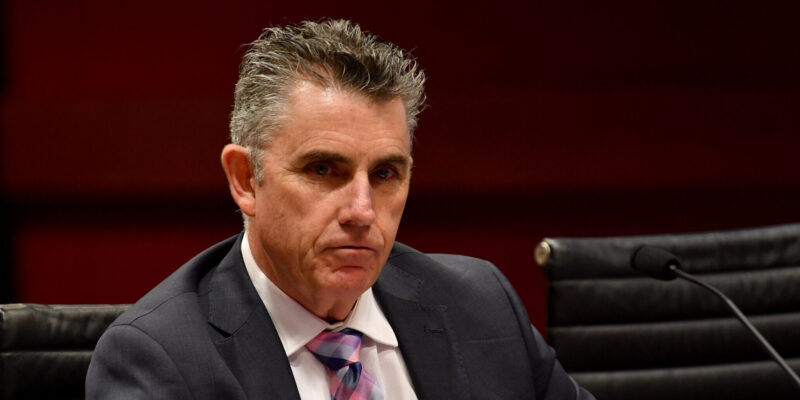
THE Real Estate Institute of NSW has urged the state treasurer not to “bury his head in the sand” in finalising this month’s Budget.
“With the treasurer currently preparing the state’s budget, and with a very real possibility the government will have to refund about $1 billion because of overcharging stamp duty, it’s reasonable to expect him to lean into the issue,” REINSW chief executive Tim McKibbin said.
“REINSW has pointed out the potential error in stamp duty collection based on expert advice. To immediately dismiss this possibility on the basis that no-one has raised the issue previously misses the point. Someone has to be first.
“The treasurer cannot bury his head in the sand. If government has collected more stamp duty than it should have, it is an error which must be rectified.
“Government says it regularly consults with tax practitioners but, as I understand it, this consultation is one-way.
“These practitioners do not get to look under the hood. It is time for complete transparency,” McKibbin said.
In the interest of transparency, REINSW is calling on the treasurer to publish his calculations and interpretation of the applicable law for the following:
1. The tax brackets between July 1 2021 and February 2022.
2. What did Revenue NSW get wrong on the July 1 2021? and
3. The calculation of the tax brackets from February 2022 to now.
“Without the transparency consumers require and deserve, it has been necessary for REINSW to reverse engineer the outcome to determine government’s methodology. That process suggests the refund to consumers is in the ballpark of $1 billion,” McKibbin
said.
“It is concerning that Treasury came out immediately to declare its calculations are correct, despite the government acknowledging its original adjusted amounts for 2021-22 were incorrect.
“In these circumstances, it is reasonable to expect the government to have taken a little longer to consider the issue.
“The application of the legislation is complex and, if the interpretation is called into question, then it would be prudent for Treasury to take some time and care before having a ‘spokesperson’ respond,” he said.
Despite its unlimited resources, McKibbin points out the government is not infallible in its calculations and interpretations of the law.
“There is a precedent for error in the government’s property tax collection.
“Treasury previously applied surcharges to citizens of eight foreign countries who bought and owned homes in NSW before it was later determined, due to double tax agreements with those countries, that those surcharges were prohibited.
“The issue had to be subsequently remedied by retrospective federal legislation endorsed by the High Court,” McKibbin said.