
Policy shifts see investors move to commercial property
Expert says 'commercial property has a higher return' and 'negative gearing still applies to the sector'.

RECENT tax policy changes set out in the Federal Budget are prompting Australian property investors to reassess long-held strategies, according to Commonwealth Bank economic research.
And it says investors are increasingly poised to shift their money from residential into commercial assets.
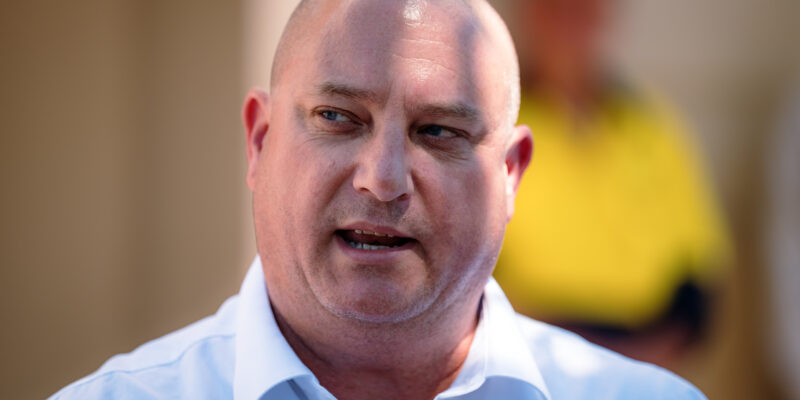
“More broadly, property investors are navigating a complex environment as policy changes, interest rates and market dynamics converge,” CommBank director of commercial property research Kevin Stanley said.
“These are kind of once-in-a-generation decisions that need to be made.”
Stanley said there had been “a very significant investment into the residential sector” over the past year.
But with the end of negative gearing, he said it really does beg the question: ‘Where will that capital go and where will those investors go?’
“One of the biggest possibilities is that formerly residential investors will start to look increasingly at commercial property,” Stanley said.
“It means really a time for investors to stop, reflect, do some research and figure out which part of the investment landscape they want to focus on.”
Stanley said changes to the residential investment landscape are likely to affect rental supply in the near term.
“The pool of rental properties is likely to shrink … and you could see the vacancy rates in residential stay quite low and the upward pressure on rents continue for the foreseeable future,” he said.
Investors may also be less inclined to put money into new-build housing supply due to long development timeframes.
“New buildings could take a couple of years,” he said, noting many investors “don’t want to wait” and prefer to “get their properties on the market virtually straight away”.
As economic and market conditions shift, the commercial sector offers investors a different way into property, Stanley said.
“Commercial property… has a higher return and has more stable returns, longer-term leases. You’re locked in,” he said, adding that negative gearing “still applies” to the sector.
Private investors remain central. “It tends to really be the foundation of commercial property investing year in and year out. So far in 2026, private buyers account for about 33 per cent of the market.”
These private investors typically focus on assets like smaller warehouses, smaller shops and childcare centres, which can have an average sale price of under $5 million.
Across Australia’s commercial property market, transaction activity for properties priced above $1 million has moderated up to the end of April amid the changing conditions of 2026, Stanley said.
“For the market to still be tracking just 12 per cent below where it was last year is actually not a bad result,” he said, citing interest rate increases and global uncertainty as examples of the headwinds investors were facing.
But commercial property’s ability to generate income continued to support the sector.
“Rents continue to increase across all of the property sectors incrementally, while yields are relatively stable at the moment,” he said.
Within commercial property, retail is one segment performing strongly, Stanley said
“The overall vacancy rate in shopping centres around Australia is below five per cent,” he said, pointing to strong population growth and limited new supply.
For investors, this was a “structurally perfect combination” of strong demand and constrained supply.