
Confidence readings punctuate lull in economic calendar
Consumer and business sentiment surveys are the highlight of an otherwise quiet week on the economic front in Australia, as global turmoil casts a shadow.
CENTRAL bankers in Australia will scrutinise consumer and business confidence figures amid a dearth of hard economic data this week.
Sentiment has plummeted among households and employers since the outbreak of the conflict in the Middle East in late February.
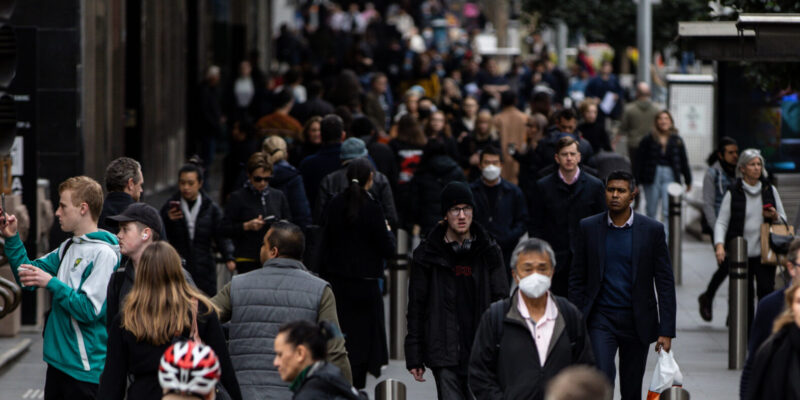
The Westpac-Melbourne Institute consumer confidence survey, due to be released on Tuesday, will give a sense of how much global uncertainty and the federal budget continue to weigh on spending decisions and inflation expectations.
Also on Tuesday, NAB’s business sentiment survey will provide a read on the extent to which businesses are passing on cost pressures.
Financial markets are fully priced in for the Reserve Bank to hold the cash rate at 4.35 per cent at its June meeting, but one more rate hike is still expected by the end of the year.
The RBA will mull over recent inflation and economic growth figures as it prepares for its next interest rates meeting on June 15-16.
The annual consumer price index fell to 4.2 per cent in April and GDP growth slowed to 0.3 per cent in the March quarter, which were promising signs for the RBA’s fight against inflation, at face value.
But a slight rise in underlying inflation showed there is still cause for concern, especially with no signs the Strait of Hormuz will be open to shipping any time soon.
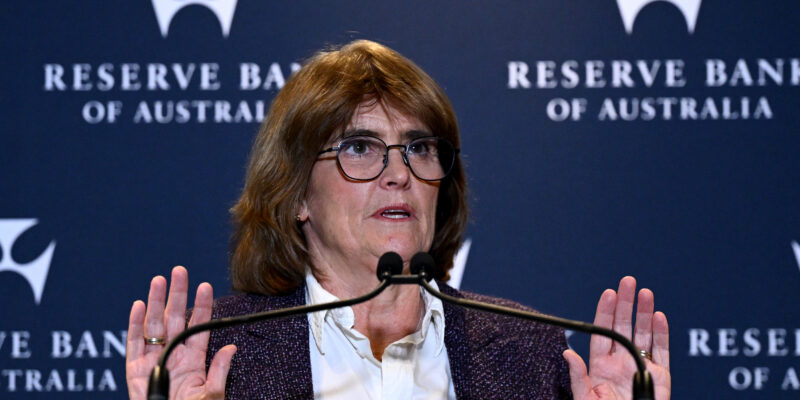
Speaking before a parliamentary committee in Canberra last week, Reserve Bank governor Michele Bullock downplayed fears Australia is headed for a recession.
The economy was still expected to keep expanding, despite the bank’s three rate hikes so far in 2026 and the impact of the Iran war.
In Canada, where the central bank is tipped to keep its benchmark borrowing rate on hold at 2.25 per cent on Wednesday, the economy has already entered a technical recession – meaning two quarters of negative economic growth.
The European Central Bank, however, is expected to hike rates by 25 basis points to 2.25 per cent on Thursday, as policymakers in Frankfurt try to balance rising inflation with a softening economy.
Wall Street’s nine-week winning streak has meanwhile ended with a thud as red-hot technology stocks suffered their largest daily decline since April 2025 after a hot May jobs report fuelled fears of a hawkish policy pivot from the US Federal Reserve.
The Dow Jones fell 695.15 points, or 1.35 per cent, to close Friday at 50,866.78, the S&P 500 shed 2.64 per cent to land at 7,383.74 and the Nasdaq lost 4.18 per cent to 25,709.43.
Domestically, traders can expect a sea of red when they return to their desks following a three-day weekend for the King’s Birthday public holiday.
Australian share futures plunged 117 points, or 1.35 per cent, to 16,558.
The S&P/ASX200 fell 61 points on Friday, down 0.7 per cent, to 8,625.1, as the broader All Ordinaries also lost 61 points, or 0.68 per cent, to 8,855.9.