
Global economic body weighs in on Australian rate rises
The OECD expects Australia's economic growth rate to slow to 1.8 per cent in 2027, which might require the Reserve Bank to lower interest rates.
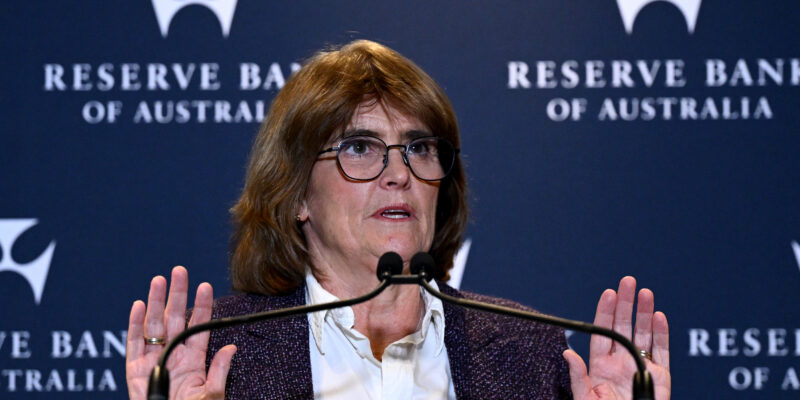
A GLOBAL economic body is urging the Reserve Bank not to raise interest rates again unless inflation expectations become untethered.
As the economy slows due to the global energy shock, the central bank may even be required to cut interest rates, the Organization for Economic Co-operation and Development said.
In its quarterly economic outlook on Wednesday, the Paris-based organisation – led by former Australian finance minister Mathias Cormann – said Australia’s economy had “considerable momentum” leading up to the Middle East conflict.
But Australia’s gross domestic product growth rate would slow to 1.9 percent in 2026 and 1.8 percent in 2027, in year-average terms, largely due to the energy shock.
The Australian Bureau of Statistics reported GDP grew at 2.5 per cent in the 12 months to March
In May, the RBA also forecast GDP growth to average 1.9 per cent in 2026 but predicted an even slower growth rate of 1.3 per cent in 2027.
The OECD predicted inflation of 4.4 per cent in 2026, higher than the RBA’s forecast of 4 percent, and 2.6 percent in 2027.
As inflation subsides, the RBA should unwind some of the three interest rate hikes it had already delivered this year, the OECD said.
“Monetary policy should only be further tightened if inflation expectations become unanchored, threatening a prolonged inflationary episode despite the growth slowdown,” the report said.
“Conditional on expectations remaining anchored, an easing of policy may be needed as economic slack gathers.”
In a speech on Tuesday, Reserve Bank board member Ian Harper said inflation expectations over a 10-year period were starting to rise, reiterating similar concerns from RBA officials about expectations becoming unanchored.
The OECD also warned that if the impacts of the oil price spike on the rest of the economy were larger than projected, it could mean even higher interest rates or no rate cuts in 2027, which would further dampen growth over the two years.
Australia’s fiscal health was relatively robust, compared to other OECD countries, and the Middle East shock was not expected to have a major impact on budget outcomes, given Australia benefits from higher commodity prices.
But the OECD still urged Australian governments to bank revenue windfalls from the conflict and to limit temporary support measures for affected sectors.
“Any fiscal support that countries provide in response to the shock needs to be targeted towards those most in need and temporary, to avoid a further increase in public debt and preserve incentives to save energy,” Mr Cormann said.
The organisation also highlighted Australia’s heavy reliance on diesel imports and recommended speeding up the renewable transition.
“Australia’s vulnerability to fuel supply disruptions underlines the case for accelerating progress with electric vehicle adoption and renewables generation, with improved grid links and increased storage capacity,” the report said.
“Other needed policies, such as easing restrictive land-use regulation, especially in urban areas, could also help to curb fuel consumption and improve energy security, while at the same time boosting productivity growth and addressing affordability challenges.”
Australia’s unemployment rate was forecast to rise to 4.6 per cent in 2027, from 4.5 per cent currently.