
Household spending continues ‘theme of resilience’
Commonwealth Bank says there are 'no clear signs of rapid deceleration' in the spending habits of Australians.

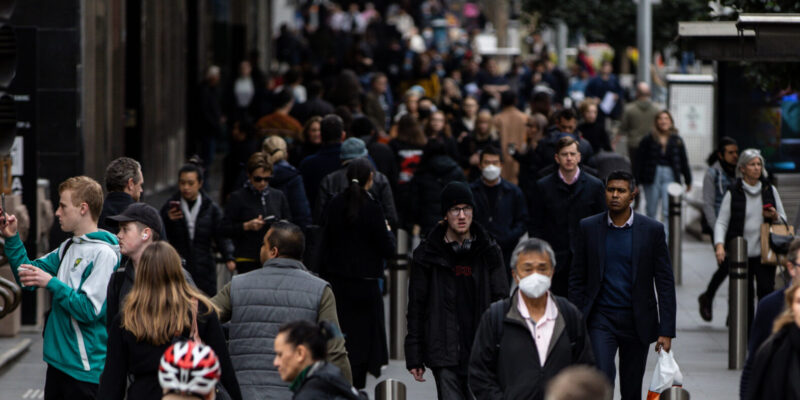
HOUSEHOLD spending has continued to grow, according to new data from the Commonwealth Bank.
CBA’s high-frequency spending data showed household spending grew by 5.7 per cent over the year in the four weeks to May 23.
Retail spending grew by 6.5 per cent and spending on eating and drinking out grew by 8.5 per cent.
“The theme of resilience continued into late May,” CBA senior economist Ashwin Clarke said, with no clear signs of a rapid deceleration outside travel.
Travel spending remained weak, with annual growth flat.
The softness was led by cruise lines, travel agencies and travel insurance. Accommodation and commercial airline spending growth also remained weak, although both were stronger than in April.
Clarke said that improvement may reflect abnormally high refunds in April because of the Iran war, which dragged recorded spending lower.
“There are clear signs of a slowdown in the housing market led by Sydney and Melbourne,” Clarke said.
“National housing prices were flat over May, with Sydney prices falling by 0.9 per cent over the month and Melbourne prices falling by 0.8 per cent. Auction clearance rates remained at very low levels.”
There is a well-established link between housing wealth and spending, known as the wealth effect.
Based on RBA research, the categories most affected tend to be motor vehicle sales, furnishings and household equipment, and clothing and footwear.
“So far there is no evidence of a pullback in these categories,” Clarke said, including in NSW and Victoria, though he noted it often takes several months for lower housing prices to flow through to spending.
Clarke said end of financial year sales will be “an important test” for the homewares and appliances category, although June may still be too early to see the effect of lower home prices on spending.
Households have been spending a similar share of their budget on petrol for several weeks, in line with 2025 levels.
That largely reflects lower petrol prices, which have fallen from recent peaks after the fuel excise cut.
Diesel prices remain elevated and Clarke said that is expected to eventually push up prices for consumers as businesses pass on higher costs.
Spending on utilities has also remained materially stronger than 2025 because government electricity rebates have expired