

Message to Federal Govt: We don’t have enough homes
Housing Industry Association says Budget measures don't address fundamental issue of housing supply.
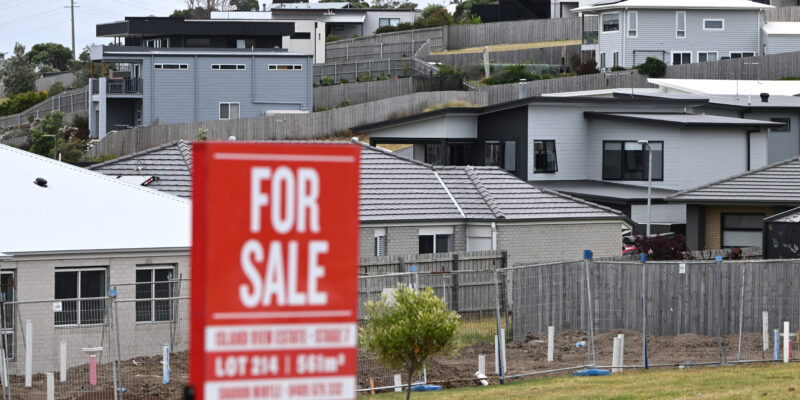
THE Federal Government’s housing legislation should include additional measures to offset the decline in housing supply caused by the changes to negative gearing, according to the Housing Industry Australia.
The Budget papers acknowledge that restricting negative gearing to new homes will reduce housing supply by around 35,000 homes over the next decade.
“This regressive step is not offset by policies announced last year or those introduced by state governments,” Tim Reardon, HIA’s chief economist, said.
“The 65,000 additional homes referred to in the Budget include programs previously announced, or supply that won’t be delivered for many years.
“The government has correctly identified that Australia has a housing supply problem.”
Consider the problem as follows: Australia is trying to squeeze 11 million households into 10 million homes.
“It doesn’t matter how you adjust the share of ‘renters v owners’, the result remains the same, we don’t have enough homes,” Reardon said.
“The essential nature of housing and its scarcity will see prices rise and homes increasingly owned by wealthier households until there are enough homes.
“The Budget estimates that 75,000 more first home buyers will be able to enter the market but it could be many more than that, without the additional tax imposts.
“The goal of government shouldn’t be to find new ways of taxing homes and making the problem worse. The government needs policies that more than offset the reduction in supply from their tax changes.”
Reardon said there are four practical measures that the government can implement which will improve the supply response.
These include changing the depreciation schedule for new home building, allowing a level playing field for investment from all sources, focus on infrastructure and allow all new builds, including knockdown-rebuilds, to access negative gearing.
Change the depreciation schedule
A key factor that attracts investors to new home building is the ability to depreciate the investment. They cannot depreciate an established home.
“Accelerated depreciation would improve the attraction of investing in newly constructed homes, without impacting revenue over the life of the asset.
“Housing investment competes with every other asset class in the economy,” Reardon said.
“The logic error in the Budget is that it assumes investors can only invest in new or existing homes, when they can invest in shares, commercial property or other industries.
“So limiting negative gearing to new homes still disincentivises investment in new homes, leading to fewer new homes being built.
“The changes to negative gearing increase the relative attractiveness of shares, commercial property and superannuation compared with investment in new residential homes.”
The industry and the Henry tax review have cautioned against making the problem worse by increasing the taxes on investors. Paul Keating highlighted that negative gearing increases supply of housing when he re-introduced it in 1987.
“This is one of the very few measures that encourages investors to choose newly constructed housing over alternative assets,” Reardon added.
Level playing field for investment
Foreign investors have been prohibited from purchasing established homes in Australia since the 1970s, with very good reason, the HIA said.
“But over the past decade, Australia has also progressively forced foreign superannuation companies and banks out of the new home build market in Australia,” Reardon said.
“Historically, foreign investment in newly constructed housing was encouraged because it increased housing supply, without adding to demand.
“Since 2014, a combination of additional foreign investor taxes, FIRB fees and tighter regulation have substantially reduced foreign investment in new housing projects.
“Governments are attempting to increase housing supply while simultaneously restricting access to large pools of investment capital capable of funding new housing construction.
“Importantly, foreign superannuation companies and banks do not live in Australia. Foreign investment in new housing increases the number of homes available for Australians to purchase or rent without adding to demand.”
Reardon added the key housing problem is not who funds construction but whether enough homes are built.
“The need for new sources of investment in new home building is going to be increasingly important as ‘mum and dad’ investors reduce participation following the changes to negative gearing,” he said.
“Current policy settings increasingly assume Australian superannuation funds and institutional investors will fill this gap.
“That transition isn’t guaranteed and will take time.
“Australia’s housing shortage is unlikely to be resolved by relying on a single source of investment capital.
“A more responsive housing system will require domestic investors, institutional capital and foreign investment all contributing to the delivery of new homes.”
One-for-one knockdown-rebuilds should qualify
The HIA is also calling for the government to ensure the legislation permits all new homes to be negatively geared.
Under the proposed legislation:
- replacing one dwelling with multiple dwellings qualifies as a new build, in most circumstances,
- but replacing an ageing home with one brand new detached dwelling generally does not.
“This creates the bizarre outcome where a new home built to modern seven-star energy standards is treated as though it were an established dwelling,” Reardon said.
“In many established suburbs, planning rules do not permit duplexes or apartment redevelopment. A one-for-one replacement can be the only lawful redevelopment pathway available.
“That means older one-star rental homes will remain in the market longer because the tax system discourages reinvestment,” he added.
“Treating all newly constructed homes, as a new home for tax purposes, removes additional distortions to the housing market.”
Housing affordability still depends on supply
Reardon said the central risk of the legislation remains that reducing investor participation in an undersupplied housing market ultimately worsens affordability over time.
“Australia’s housing challenge remains fundamentally one of supply and demand,” he said.
“There are not enough homes for our existing population. On top of this, each year for the next four years it is expected that more households will form than homes will be delivered to market.
“In this situation prices and rents will continue to rise regardless of who owns the homes.
“If the Budget measures are to pass, then 35,000 new homes will be removed from future supply. We cannot tax our way to increased housing supply,” Reardon concluded.