

AUSTRALIA’S strong jobs market has been a silver lining for households squeezed by high inflation and interest rates in recent months.
But steadily rising unemployment is threatening to compound the nation’s economic misery, hitting a three-year high, the Committee for Economic Development of Australia (CEDA) says.
The think tank’s “misery index”, which tracks the sum of inflation, interest rates and unemployment, is back near post-pandemic highs and expected to stay well above recent historical averages until at least the end of 2028.
§ Prices and mortgage repayments squeeze households
The Reserve Bank has lifted interest rates four times in 2026 to a 15-year high, while consumer prices have surged by four per cent over the past year, driven by higher oil prices and tech investment.
“Households have been squeezed from two sides this year, with prices and mortgage repayments both rising,” CEDA head of economics Liam Dillon said.
“A resilient jobs market has been the main thing holding many families together.”
But unemployment has started creeping up too.
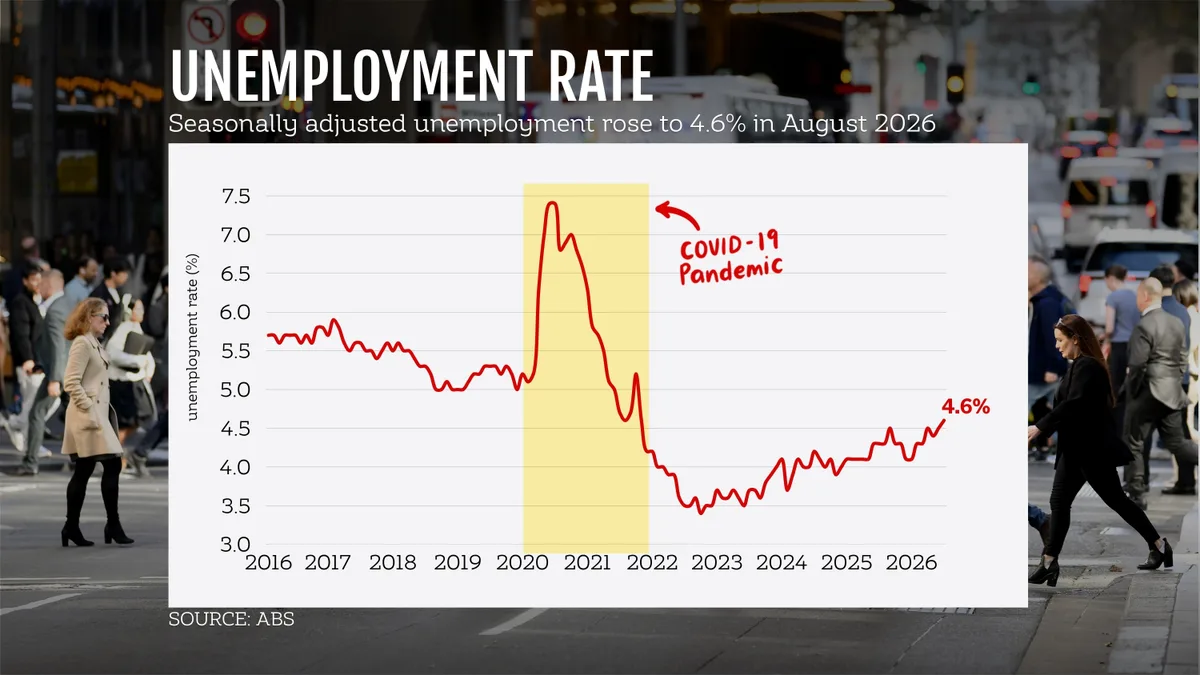
While the labour market has remained resilient, with another 177,000 jobs added to the economy since the start of the year, more people have been forced to look for work or second jobs to help weather stubborn cost-of-living pressures, said report author Daniel Beadle.
Analysts at JP Morgan expect Australian Bureau of Statistics data on Thursday to show the unemployment rate held steady at 4.6 per cent in September, its highest level since November 2021.
The jobless rate has risen by 0.5 percentage points since the start of the year and is already above the RBA’s forecast for 4.5 per cent in the December quarter.
§ Middle East conflict adds to economic risks
The International Monetary Fund projected Australia’s unemployment rate to hit 4.7 per cent in 2027 in its latest World Economic Outlook on Tuesday.
While the economy was proving resilient to the Middle East oil shock, vulnerabilities were growing, it said in a report.
“A prolonged stalemate or further escalation in the Middle East could keep energy and food prices elevated and volatile, revive inflationary pressures, worsen fiscal and external balances, and weigh on growth.”
§ Chalmers to urge an end to the Middle East conflict
Treasurer Jim Chalmers will fly to Bangkok on Thursday to join finance ministers from around the world at the IMF-World Bank annual meetings.
There he will urge for an end to the Middle East conflict, which is “having a devastating economic impact and is pushing up fuel prices, inflation and interest rates around the world”.
Frequently asked questions
What does the misery index measure?
What unemployment rate do analysts expect for September?
Why are more people looking for work despite job growth?
In this story