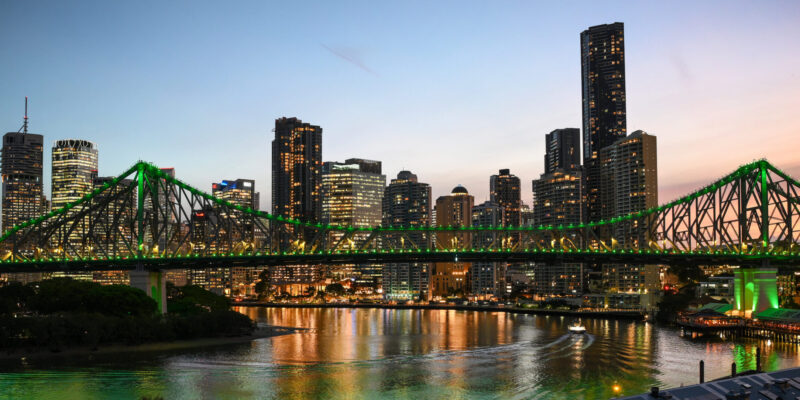

Not ten pound airfare but concept is similar
Wealth expert believes housing supply issue can be greatly improved with more emphasis on attracting skilled migrant workers.

SHORTLY following the end of the Second World War, the Australian Government instigated a migration scheme to attract skilled workers to our shores.
The primary goal was to rapidly boost Australia’s population and supply an urgent influx of skilled labour and tradespeople to build infrastructure and fuel post-war manufacturing.
There are now calls for the Albanese Government to implement something similar.
David Simon, executive director and principal advisor at Integral Private Wealth, believes a modern-day version of the “ten pound” tradie is needed.
“Australia has announced a target of 1.2 million new homes over five years. The problem is not the ambition, it is the workforce,” Simon said.
“To reach the target, quarterly construction must rise from about 43,000 homes to 60,000, an increase of almost 40 per cent.
“Yet, BuildSkills Australia estimates normal training and recruitment may add only 23,000 residential construction workers by 2029.
“Australia would still need another 116,700. In round numbers, we need almost 140,000 additional workers.
“Housing also competes with roads, energy, water and public infrastructure for the same skills.
“Infrastructure Australia estimated a shortage of 141,000 workers in October 2025, potentially exceeding 300,000 by mid-2027.”
Simon said Australia has faced a similar challenge before.
“After World War II, large migration programs brought workers who built homes, factories, dams, railways and power projects,” he added.
“Around 70,000 migrants helped construct the Snowy Mountains Scheme.
“The result was not merely population growth. It expanded Australia’s productive capacity.”
Simon suggests a modern response may be a dedicated “ten pound tradie” program.
“Not a return to the policies of the 1940s and certainly not a ten pound airfare,” he said, referring to the 1940s scheme offering British skilled workers migration to Australia for only 10 pounds.
“It would recruit qualified construction workers, assess skills before departure, coordinate licencing, support relocation and connect people with verified vacancies.
“Australian wages, safety standards and worker protections would remain essential.”
Simon said migration alone will not solve the problem.
“Australia must improve apprenticeship completion, attract more women into construction and use modern building methods,” he added.
“BuildSkills estimates that matching female participation in manufacturing could add 51,000 workers.
“A five per cent productivity improvement could provide capacity equivalent to another 30,000.”
For property investors, the shortage helps explain why supply remains constrained, Simon said.
“Scarce labour raises costs, delays projects and pressures developer margins,” he added.
“That may support rents and establish property values, while increasing the risks attached to new developments.
“Australia has a 1.2 million home target. What it still lacks is a 140,000 worker plan.
“Perhaps it is time for the “ten pound tradie”.”
David Simon will be a guest speaker at the What’s Next? event on November 17. Go to https://www.australianconveyancer.com.au/event/whats-next-2026/ to get your ticket.