Turn to your Granny for a little bit of extra income
More homeowners are building a small second dwelling, driven by solid rental returns and more relaxed planning rules, according to property experts.
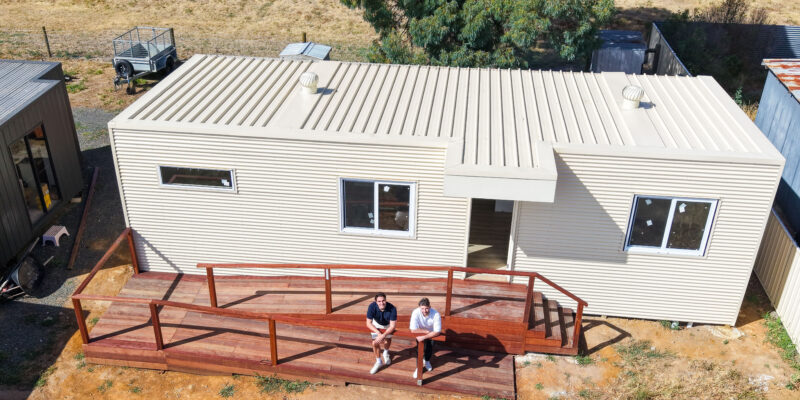
GRANNY flats are becoming more common in Australian backyards as robust rental returns and cuts to red tape fuels demand, real estate experts said.
Melbourne-based Maple Property Group said one in 10 clients were looking at building a granny flat – a small second dwelling – due to faster approvals and high rental yields.
The market segment is booming, with industry data showing rental returns on granny flats in Sydney and Melbourne reached $350-$600 a week in December.
Maple CEO Beau Arfi said the phenomenon was linked to the country’s housing squeeze.
“Migration level is really high, so there’s a lot of people coming into the country. That’s the first part – the demand is there,” Arfi said.
“The perfect storm of it all is that the (housing) supply isn’t there too.”
Another contributor was law changes in in Victoria, NSW, Queensland, South Australia and Western Australia that slashed red tape on build approvals.
In Victoria, interest had surged since the state government passed laws creating “some of the most favourable and flexible laws in this space,” Arfi said.
“It becomes a lot easier now for people who are living in their own home, who have a bit of space in their back yard to generate some income from their second dwelling.
“Previously you weren’t able to lease out any granny flat or any second dwelling on your property. It was only for those people who were family members or carers.”
Construction costs are usually around $180,000, making it an affordable option for property owners in many parts of the country, he added.
“If somebody can build something on their property foe $180,000 they don’t have to rent it out for $600 a week of $350 a week, it could be that they go ‘well I’m not in the best area I’m in an ok area and I’m renting it out for $270’.”
There was also upside for tenants amidst a tough rental market, the property expert said.
He added for less than around $1100 a month, tenants “could live in a nice quite new clean property rather than perhaps being banged up in an apartment in the CBD”.
While Victoria’s rules on granny flats changed a couple of years ago, he said “people are only starting to wake up to this now”.
Looking ahead, he suspected more changes could be brought in that would boost the allowable size of granny flat builds and further stoke demand.
In Sydney, Fox Auctions founder Jack Harris said interest in granny flats was also on the rise, which attributed it to a “dual-income strategy” being pursued by many homeowners.
“Over the past 12 months, I have noticed a significant surge in demand for houses featuring granny flats, primarily driven by investors seeking additional rental income,” Harris said.
“In the current Sydney market, it is not uncommon to see more than 15 registered bidders at auctions for ‘House & GF’ opportunities.
“One owner I know realised a $555,000 profit over just six years simply by adding a secondary dwelling to their property.”
One “strategy for success” was to acquire “ready-made” dual-occupancy properties or those with potential for dual-occupancy conversion, according to Harris.
The approach was attractive because the barriers to entry were very low.
He pointed to the Blacktown local government area in Sydney where the eligibility threshold for a development application was a block of at least 450 square metres, with a 12m frontage.
“Construction remains a cost-effective way to manufacture equity. A high-quality, turn-key granny flat currently costs between $200,000 and $300,000,” Harris said.
“If a primary residence generates $700 per week and the granny flat contributes an extra $400 to $500, total rental income reaches approximately $1200 per week. On the right purchase price, this can represent an impressive 7% annual yield.”
A key tip for those considering building a granny flat is to focus on build quality.
“I have seen many sub-par builds that actually cause buyers to steer clear. Aesthetic and structural quality matters,” he said.
“Consult with engineers, surveyors and certifiers from the outset and prioritise compliance/ Always ensure you have full council approval to protect your resale value.”
When it came to building the second dwelling, his advice was to “choose wisely”.
“Partner with a reputable builder who specialises in secondary dwellings.”