
Labor to better protect your super against dodgy schemes
Assistant treasurer says 'reforms are designed to disrupt some of the most damaging business models operating in the system'.
LABOR will not increase how much superannuation employers must pay workers, instead focusing on reforms to stamp out “predatory” practices used to lure people to put retirement savings into risky investments.
The superannuation guarantee rate – the minimum percentage of a worker’s earnings that employers must pay into a retirement fund – is 12 per cent and there have been calls within Labor to raise the rate to 15 per cent.
While rebuffing the need to increase the guarantee rate, the government is doubling down on its defence of the superannuation system amid calls from One Nation to allow workers to withdraw funds before retirement to help pay off mortgages.
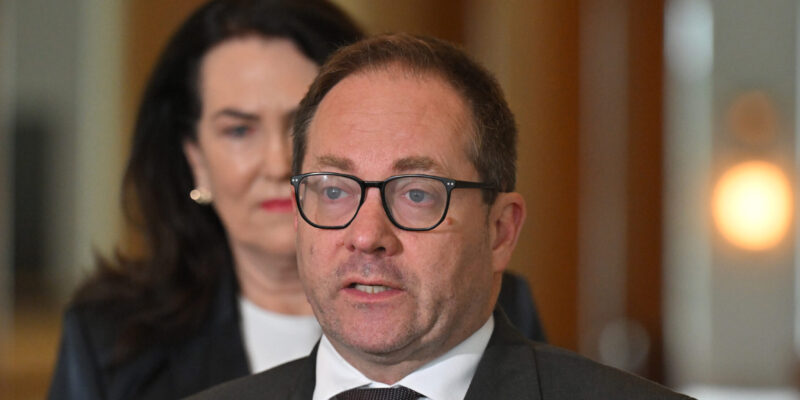
“There’s no plans to lift the super guarantee,” assistant Treasurer Daniel Mulino, who will unveil the long-awaited consumer protection reforms later on Wednesday, told ABC’s Radio National.
“Getting it to 12 per cent was the work of Labor governments over a very long period of time and, I might say, it was fought tooth and nail every step of the way by the opposition.
“But that is now putting people in a very strong position … at 12 per cent now across a person’s entire working life will mean that so many people will retire with very strong balances.”
The government’s reforms to tackle predatory practices, to be announced by Mulino in a speech to the National Press Club on Wednesday, follow the collapse of two investment funds that wiped out more than $1 billion in retirement savings.
Among the measures is a crackdown on lead generators, who used social media, online ads and cold calls to lure people into putting their retirement savings into risky investments, such as the now-collapsed Shield and First Guardian managed investment schemes.
Unlicensed real time communication about superannuation will be banned while licensees will be required to take reasonable steps to ensure lead generation activities comply with legal requirements.
The anti‑hawking regime will also be bolstered, with stronger consent requirements, limiting the exemption for financial advisors to existing clients and harsher penalties for breaches.
“These reforms are designed to disrupt some of the most damaging business models operating in the system today,” Mulino said.
”They target the point at which consumers are first exposed to harm and reduce the ability of bad actors to gain access to consumers in the first place.”
The Financial Advice Association of Australia has previously called on Labor to crack down on the practices, which can steer consumers towards inappropriate financial products.
The Shield and First Guardian fund collapses showed how devastating high-pressure sales tactics can be when unregulated.
“Around 12,000 Australians lost, in some cases, all their retirement savings after being targeted by sales processes that looked and felt like advice,” FAAA chief executive Sarah Abood said.
”Consumers need stronger protections against predatory lead generation, while still being able to find the right adviser for them.”
Abood called on Mulino to make the compensation scheme of last resort (CSLR) sustainable, so the costs do not continue to drive up the price of advice.
She also urged him to finish off the financial advice reforms started by his predecessor Stephen Jones, called the Delivering Better Financial Outcomes package, and deliver the simpler, more efficient advice system that was promised.
In April, Treasury released a consultation paper floating the possibility of making self-managed super funds contribute to the CSLR, which is increasing in cost substantially.