
More people starting to return to open homes
Real estate group says 'conditions remain much weaker but buyer demand is no longer deteriorating at the same pace'.
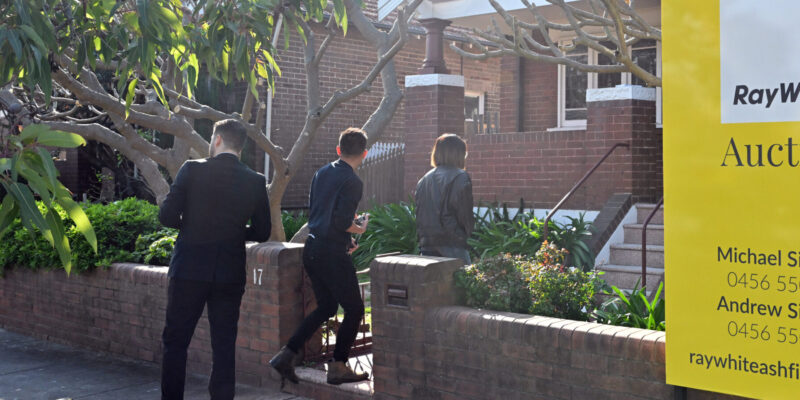
THE housing downturn is starting to shift, according to leading real estate agency Ray White Group.
Premium markets, which have experienced some of the largest price falls over the past year, are beginning to stabilise, while demand is weakening across a number of more affordable, investor-heavy markets, Ray White said.
Cotality data shows national house values fell 3.3 per cent over the three months to August, led by Sydney and Melbourne. More recent indicators, however, suggest the premium end is beginning to turn.
“Our open home data is providing one of the clearest early signals,” Ray White chief economist Nerida Conisbee said.
“We track around 13,000 open homes each week, giving us a timely read on buyer activity.
“National attendance fell sharply through the first half of the year, from around 4.5 people per open in January to close to two by July.
“Since then, the decline has stopped and attendance has edged back up to around 2.2 people per open.
“Conditions remain much weaker than earlier in the year but buyer demand is no longer deteriorating at the same pace.”
Conisbee said the improvement is becoming more apparent at the capital city level.
“Sydney is now averaging 2.3 attendees per open home, around 0.2 higher than immediately before the Budget, while Melbourne, at 2.2, has recovered to roughly its pre-Budget level,” she said.
“The more recent movement is stronger again: over the past eight weeks, attendance has risen by 0.31 in Sydney and 0.17 in Melbourne.
“Sydney is already showing a clear recovery in buyer engagement, while Melbourne increasingly looks as though it is moving from stabilisation towards an upswing.
“Brisbane, Adelaide and Perth, by comparison, remain well below their pre-Budget levels.”
Conisbee said some of the strongest increases since the Budget have been in premium Sydney and Melbourne markets.
“Sydney’s Eastern Suburbs has added 0.8 attendees per open, while Melbourne Inner South, North Sydney and Hornsby and Melbourne Inner East are each up around 0.6.
“These are also areas that have experienced some of the largest price corrections over the past year.”
At the same time, many of the largest falls in attendance are occurring in more affordable markets.
“Adelaide South is down 2.9 attendees per open, Perth North West 2.4, Perth North East 1.7 and Cairns 1.4,” Conisbee added.
“There are exceptions, but the broad shift is becoming increasingly evident: buyer engagement is strengthening in markets where prices have already adjusted significantly, while it is weakening across a number of areas that had previously been relatively resilient.
“This is consistent with the impact we expected from the Federal Budget.
“The changes to negative gearing and capital gains tax reduce the attractiveness of established housing to investors and the effect is greatest in markets where investors represent a larger share of demand.
“Affordable areas initially held up better on price but they are now losing an important source of buyers as investor activity retreats.
“At the same time, the larger price adjustment at the premium end is beginning to bring owner-occupiers back.
“Importantly, that divergence has become more pronounced in recent weeks, with the rebound in areas such as the Eastern Suburbs, Melbourne Inner South and North Sydney and Hornsby accelerating.”
Conisbee said the pricing data is now beginning to support “what we are seeing at open homes”.
“Premium Sydney markets, which were still falling in July, recorded some of the strongest monthly price growth in August,” she added.
“Eastern Suburbs prices rose 1.1 per cent, North Sydney and Hornsby 1.0 per cent, while Ryde, Inner West and the Northern Beaches were all up around 0.8 per cent.
“Annual declines remain substantial, generally between six and eight per cent, so this is still an early shift rather than a full recovery.
“Nevertheless, it is encouraging that the same areas recording stronger buyer attendance are now also showing firmer prices.
“It remains a fragile recovery, particularly at the premium end where borrowing capacity is highly sensitive to interest rates, and a deterioration in the rate outlook could slow the momentum. But the direction is becoming more positive.”