
Sydney leads the way in housing vacancy rates
Report finds that 'If the seasonal lift in rents fails to materialise in the larger capitals, the rental upswing in those cities is over'.
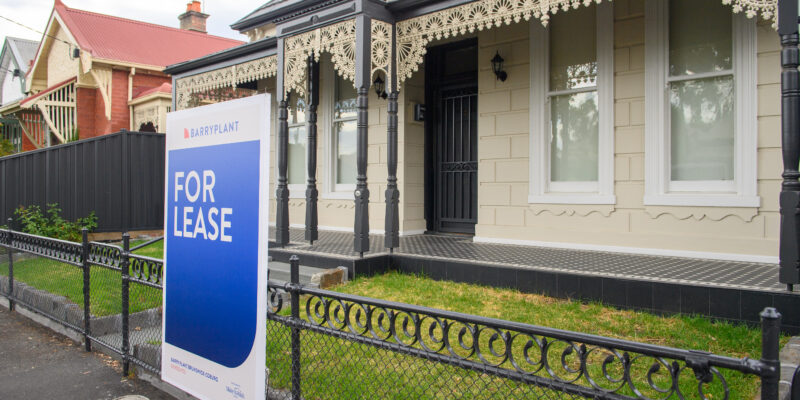
SYDNEY has recorded the largest annual increase in available housing stock, according to a new report from SQM Research.
Australia’s national residential vacancy rate held at 1.3 per cent in August 2026, unchanged from July, with 41,039 residential vacancies recorded.
Against August 2025, vacancies are up by around 3300 dwellings (8.7 per cent) and the national rate has moved up from 1.2 per cent.
In Sydney, the vacancy rate held at 1.7 per cent for the month, with 12,821 dwellings available. A year ago the rate was 1.4 per cent.
Vacancies are 26 per cent higher than in August 2025, the largest annual increase in available stock of any capital city.
Melbourne’s vacancy rate rose to 1.8 per cent from 1.7 per cent in July, with 9534 vacancies recorded. The rate is unchanged from a year ago and Melbourne now has the second-highest vacancy rate of the capitals after Canberra.
The vacancy rate was unchanged at 0.9 per cent in Brisbane, with 3090 dwellings available. Vacancies are 10 per cent lower than a year ago.
Perth’s vacancy rate held at 0.6 per cent, with 1192 dwellings available. Vacancies are 14 per cent below August 2025.
In Adelaide, the vacancy rate was unchanged at 0.6 per cent, with 1019 dwellings available. Vacancies are 19 per cent below a year ago.
The vacancy rate in Canberra rose to 2.1 per cent from 1.8 per cent in July, with 1264 vacancies recorded and vacancies are 29 per cent higher than a year ago, making it the highest vacancy rate of any capital city.
“The national vacancy rate is 1.3 per cent but that hides a market moving in two directions,” said Louis Christopher, managing director of SQM Research.
“Sydney has 26 per cent more vacancies than a year ago and Canberra 29 per cent more, while Brisbane, Perth, Adelaide and Darwin have fewer than they did last August.
“The annual rent figure of 7.3 per cent is history. It reflects increases that have already stopped.
“National rents were flat over the month and Sydney house rents fell.
“Some of this is the usual winter lull, so the test is spring: asking rents normally firm from October into the summer leasing season.
“Our expectation for the lead-up to summer is that the national vacancy rate drifts up towards 1.4 per cent to 1.5 per cent by December on the usual seasonal rise in listings, with Sydney at or above 1.9 per cent.
“Rents in Brisbane, Perth and Adelaide still have room to firm. Sydney, Melbourne and Canberra do not and we expect Sydney house rents to be the first to record annual growth below three per cent.
“If the seasonal lift in rents fails to materialise in the larger capitals, the rental upswing in those cities is over.
“Nationally, annual rental growth is likely to slow to the mid-single digits by year-end even with a normal seasonal firming, simply because the strong months of late 2025 drop out of the calculation.
“The smaller capitals have not yet built enough stock to give tenants relief.”
National combined advertised rents were flat over the 30 days to September 4. House rents fell 0.1 per cent and unit rents rose 0.2 per cent.
Combined rents remain 7.3 per cent higher than a year ago, but that annual figure reflects increases that have already occurred.
“If the current pause continues, the annual rate will fall mechanically over coming months as the strong months of late 2025 drop out of the calculation,” Christopher said.
The national combined advertised rent now stands at $701.53 per week, while the capital city average sits at $793.76 per week.
“Winter is seasonally the softest period for asking rents, so a flat August is not by itself conclusive. The test is the coming spring and summer leasing season: asking rents normally firm from October into December and January.
“If that seasonal lift does not appear in the larger capitals, the rental upswing in those cities is over,” Christopher concluded.