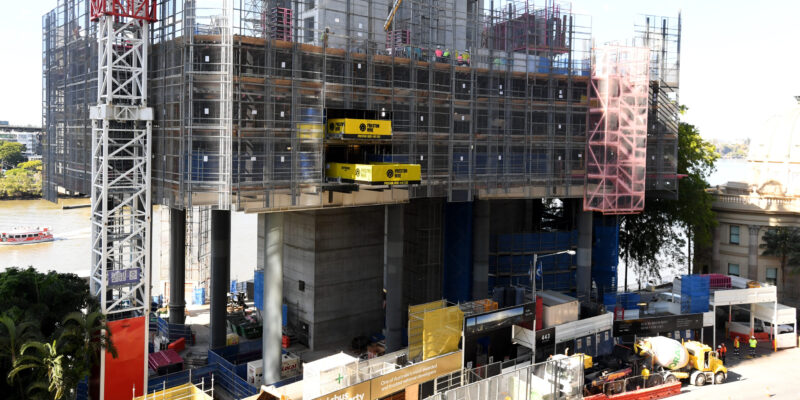

Discretionary tax changes ‘a catastrophe for housing supply’
Major advocacy groups come together in condemnation of government's proposed tax reforms.
AUSTRALIA’s most influential property advocacy groups have joined forces to condemn the Federal Government’s proposed discretionary tax changes.
New polling has found more than 60 per cent of small-to-medium residential and commercial property developers anticipate the discretionary trust tax changes will affect the timing and viability of their projects.
Among developers expecting an impact, 37 per cent said one or more projects would be cancelled entirely.
The Accent Research polling was commissioned jointly by the Housing Industry Association, Master Builders Australia, the Property Council of Australia, the Real Estate Institute of Australia and the Urban Development Institute of Australia.
It found the proposed discretionary trust reforms are likely to have significant consequences for housing delivery, development activity and small business investment.
The Federal Government announced in the Budget it intends to apply a minimum 30 per cent tax rate to discretionary trust distributions.
The survey found discretionary trusts are widely used across the small and medium business sector, with almost three in 10 businesses using trusts to operate their business, hold assets and manage risk.
Within the property sector, discretionary trusts are commonly used to operate businesses, hold ownership interests and ring-fence development land and real estate assets from commercial risk.
Among those that use discretionary trusts, 77 per cent reported reduced confidence as a result of the proposed changes.
The reforms are also prompting many businesses to reconsider future investment decisions.
Almost half of business owners aware of the proposed trust changes said they were considering at least one response, including reducing investment, restructuring their business or deferring expansion plans.
More broadly, business sentiment has deteriorated sharply.
More than half of business owners (54 per cent) said the proposed tax changes had reduced confidence in the outlook for their industry, while just three per cent reported increased confidence.
The survey canvassed the views of almost 1200 small and medium business owners on the impact of discretionary trust reforms and other proposed tax changes on Australian businesses.
“New home sales have fallen for the last four months, after the taxation changes for investors in the Budget,” said Jocelyn Martin, HIA managing director.
“New trust rules for builders and developers will now see viability of other projects under threat. Australia cannot tax its way to 1.2 million homes.”
Denita Wawn, Master Builders Australia CEO, said: “At a time when we have a housing supply crisis, these changes would hamstring the very businesses that are central to the solution.”
“The consequences of this poor policy will not only impact these businesses, it will also flow on to home buyers and renters.”
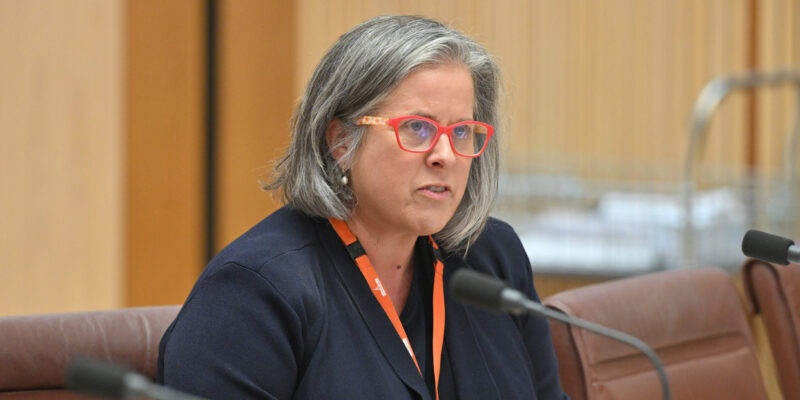
Mike Zorbas, Property Council chief executive, said the tax changes would be a catastrophe for housing supply.
“Almost one in four property and development companies believe many of their projects will be cancelled as a result of the government’s new taxes,” Zorbas said.
“Housing supply depends on market confidence, investment and projects stacking up commercially.
“Right now buyer confidence and project feasibility is at a low water mark in key markets across the country.
“And that is before the next interest rate rise.”
Jacob Caine, REIA president, said small and medium developers are a critical part of Australia’s housing pipeline.
“When policy changes undermine their confidence or capacity to proceed, the consequences extend well beyond individual businesses,” Caine said.
“Projects delayed or cancelled today mean fewer homes reaching buyers and renters tomorrow.
“With Australia already facing a serious housing shortage, government policy should support investment and housing delivery, rather than create further uncertainty for the businesses supplying new homes.”
Oscar Stanley, UDIA president, said: “Housing is built on confidence and capital, if we keep making both harder to find, then eventually the homes disappear from the pipeline.”
“The National Housing Accord will ultimately be won or lost in thousands of individual investment decisions.
“It is crucial then that government policy needs to encourage those decisions, not discourage them.”