
Slow and steady rise in number of houses being built
But completed dwelling numbers still fall well short of where they need to be if National Housing Accord target is to be met.
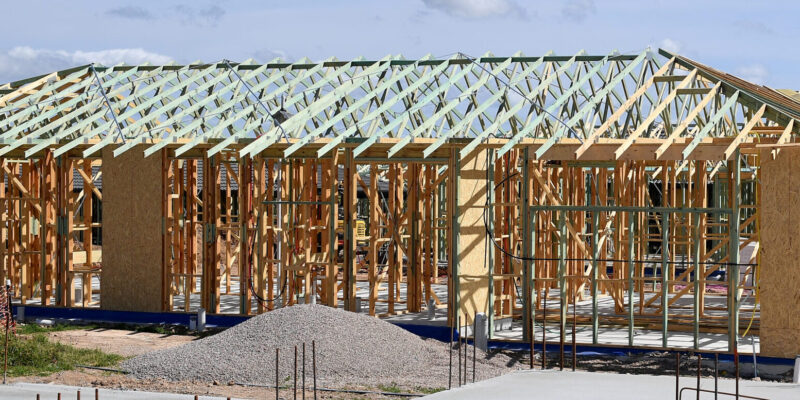
AUSTRALIA’s goal of building 1.2 million homes in five years has fallen further out of reach, despite the housing pipeline swelling to a record high.
The nation completed 355,817 dwellings in the first two years of the National Housing Accord, which started in July 2024.
By the end of June 2026, Australia needed to have built 480,000 new homes to be on track to hit the target by mid-2029, meaning the sector is short 124,183 homes.
The industry is picking up pace, at least.
The Australian Bureau of Statistics on Wednesday reported 47,168 homes were built in the June quarter.
While that’s below the required run rate of about 70,000, it’s better than the 44,592 dwellings completed in the three months ended March.
The total number of dwellings commenced in the quarter also rose.
New housing starts were up seven per cent to 52,201, driven by an 11.6 per cent jump in detached houses, while apartments and townhouses were basically unchanged.
Total dwellings under construction climbed to 248,733 – the highest number on record.
Treasurer Jim Chalmers and housing minister Clare O’Neil said the strengthening building activity figures contrasted with falling commencements and completions when Labor came to office in 2022.
“These are encouraging numbers but we know they can bounce around from quarter to quarter and that there’s more work to do,” they said in a statement.
But falling house prices, driven by rising interest rates and changes to property investor tax breaks, would likely cause growth in dwelling investment to soften, CBA associate economist Lucinda Jerogin said.
Master Builders Australia forecasts Australia would fall short of the housing accord target by 262,000 homes.
More recent housing indicators suggested conditions had deteriorated since the end of June and the outlook for new projects was becoming increasingly challenging, Master Builders chief executive Denita Wawn said.
“Recent policy decisions have been death by a thousand cuts for small building businesses at exactly the time Australia needs them delivering more homes and critical infrastructure,” she said.
Commonwealth Bank chief executive Matt Comyn told ABC radio he did not expect the housing market to bottom out until well into 2027.
With data centre investment also fuelling a surge in non-residential construction, the total value of work done climbed to $45.8 billion in the quarter, 10 per cent higher than the June quarter 2025.
The data centre project pipeline grew by 20.1 per cent in the June quarter, following a 62.6 per cent surge in the first quarter, Jerogin said.
“It places the pipeline at almost four times its size compared to a year ago. The data centre building pipeline is now more than twice as large as that of office buildings,” she said
“As a share of GDP, data centre projects have risen from just 0.4 per cent two years ago to now account for 2.5 per cent.”
Combined with purchases of IT equipment to fit out the data centres – which is a much larger share of total investment – the total feasible pipeline is estimated to be about $220 billion.
But the data centre build-out has heightened competition for in-demand construction workers and made it harder for home builders to find the skills they need.
The Housing Industry Association and the National Electrical and Communications Association recently warned data centres were placing unprecedented pressure on an already stretched construction workforce.
They called on the government to increase investment in apprenticeships and accelerate skilled migration pathways for priority occupations.
The federal coalition announced on Tuesday it would lift Australia’s skilled migrant intake and prioritise construction trades, while slashing the overall stock of temporary migrants by 650,000 over four years, if it won the next election.