
Housing undersupply contributes to inflation pressures
Peak housing body calls for government to remove barriers which are stopping homes being built
The Housing Industry Association (HIA) has called on the Federal Government to use the 2026–27 Budget as a reset on housing policy, warning Australia’s housing shortage is now a structural economic challenge.
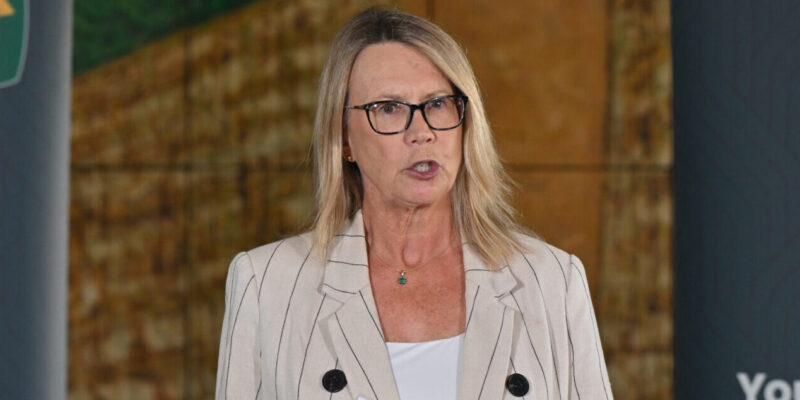
“HIA’s 2026-27 pre-budget submission outlines a suite of supply-side reforms across taxation, finance, infrastructure, planning, skills and regulation to support delivery of the Government’s target of 1.2 million homes by 2029,” HIA managing director Jocelyn Martin said.
“Importantly, it highlights that persistent housing undersupply is contributing to inflation pressures, worsening rental conditions and constraining economic growth.
“Housing supply is no longer a cyclical issue, it is a macroeconomic problem. If we want to ease inflation, improve productivity and restore affordability, we must remove the barriers preventing new homes from being built.
“Housing is already one of the most heavily taxed sectors in the economy. Further tax changes, including to negative gearing or capital gains tax, would undermine investment, reduce feasibility and worsen affordability.”
HIA is also warning restrictions on lending are locking first home buyers out of the market and adding pressure to rents without addressing the underlying supply problem.
“To unlock stalled apartment projects, HIA has proposed a national program to expand state-based pre-sale finance guarantee schemes.
“Across the country there are projects ready to go but stuck because of financing constraints. This is a solvable problem if housing supply is treated as a national priority.
“We estimate that the nation could need as much as a $5 billion boost to ‘last-mile’ enabling infrastructure funding to get homes shovel-ready sooner.
“Addressing construction workforce shortages is also central to lifting supply.”
HIA has called for the long-term continuation of employer apprentice incentives, funding for pre-apprenticeship programs, targeted trade migration pathways and improved skills recognition processes for migrants.
“Housing targets will not be met without a larger workforce. Business as usual will not deliver the trades numbers Australia needs,” Martin said.
HIA has also urged the Government to reduce regulatory burden by moving the National Construction Code to a five-year amendment cycle, providing free access to Australian Standards and cutting cumulative red, white and green tape adding unnecessary cost to new homes.
“The 2026–27 Budget will be a test of whether housing supply is taken seriously. The focus must be on stability, coordination and reforms that increase supply, not measures suppressing it,” Martin said.