
New tax: It won’t hurt the wealthy but it will help first home buyers
A proposed levy on the country's richest land holders could make massive savings on stamp duty costs.
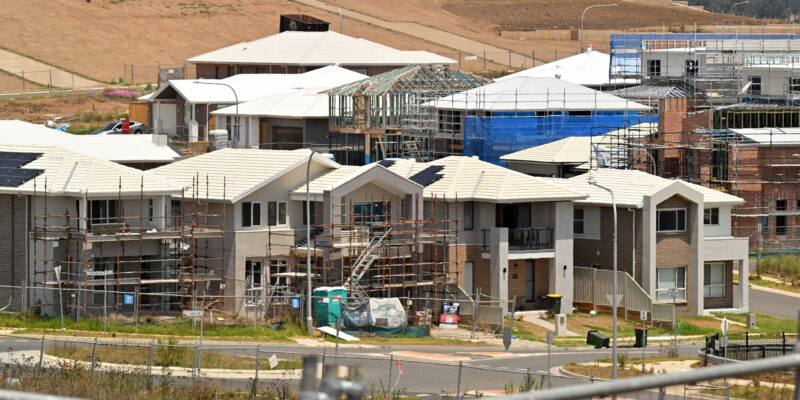
A NEW levy on the nation’s richest land holders has the potential of returning over $3 billion towards lessening stamp duty for first home buyers.
The McKell Institute released a major new policy proposal calling for a national levy on ultra-wealthy land holders, with all revenue returned to states to fund stamp duty cuts for first home buyers, movers and downsizers who buy new dwellings.
The Extreme Land Wealth Levy (ELWL) would apply to individuals and their spouses holding land portfolios valued at $20 million or more, capturing only the top one per cent of households by wealth.
Taxing land values between $20 million and $50 million at 0.75 per cent and land values of over $50 million at 1.25 per cent could see $3 billion raised annually, the report said.
Every dollar raised could then be returned to the states and territories on a per capita basis on the condition it is used to reduce stamp duty rates for people buying a new home.
Investors would not receive stamp duty reductions.
McKell Institute chief economist Alison Pennington said the concentration of land wealth among a small group of individuals was a key driver of rising wealth inequality in Australia that demanded a policy response.
“Average workers are forced to hand over one-quarter of their pay packet every fortnight, while ultra-wealthy landholders quietly accumulate millions of dollars in unearned gains that remain untaxed for decades,” Pennington said.
“Average working people can’t be expected to swallow this indefinitely.
“The ELWL would be meaningless to the ultra-wealthy individuals affected but would make a real difference to homebuyers struggling to afford their home, cutting stamp duty while boosting supply.”
The ELWL would operate as a Commonwealth-administered levy using existing state land valuation systems.
It would apply to land value only, not buildings or improvements.
A person holding a land portfolio with an assessable value of $21 million would pay just $7500 per year. A portfolio with an assessable land value of $50 million would attract $225,000 per year.
The principal place of residence is exempt unless its land value exceeds $20 million.
Genuine primary production land would also be excluded, with an activity test to prevent hobby farm avoidance.
Qualifying build-to-rent developments are also exempt and land being genuinely developed for new housing can access a time-limited deferral.
Pennington said the proposal addressed a fundamental unfairness in the tax system.
“The rise in land values is largely due to collective investment by taxpayers through public infrastructure, services and the productive effort of local workers but the benefits are unfairly privately retained. This surcharge would return some of that value to the public,” she said.
She said the proposal would work with existing state systems, giving states a strong incentive to participate.
“States would face a simple choice: share data with the Commonwealth and receive funding to cut stamp duty for owner-occupiers or opt out for the express purpose of shielding high-net-worth landholders at the expense of everyone else,” Pennington added.
“Australia already has a world-class form of wealth tax in state land taxes. What’s missing is a national system to account for ultra-wealthy landholders exploiting trusts and company structures to avoid tax, often with portfolios spread across multiple states. The ELWS solves that problem.
“Land taxes are among the most efficient taxes available.
“A tax on land cannot result in less land being available and it does not penalise improvements or productive investment.
“In fact, it can encourage landowners to develop vacant or underutilised land, increasing housing supply.”