
War in Middle East could bring tax reform in Australia
Analysts now not sure if rates will rise on Tuesday due to the global instability.
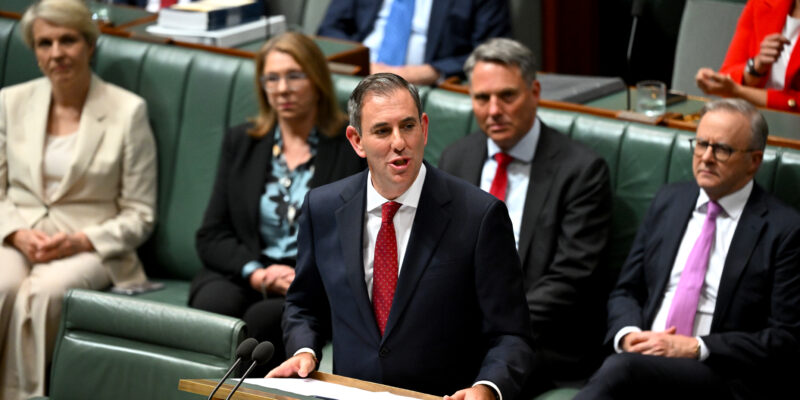
Treasurer Jim Chalmers will argue conflict in the Middle East and its impact on the Australian economy justify fast-tracking tax reform, as households brace for higher interest rates.
The Reserve Bank had been widely tipped to keep interest rates on hold at its Tuesday meeting but skyrocketing fuel prices caused by the US-led war on Iran have changed forecasts.
The big four banks expect a rate rise this week and another in May, which would bring the cash rate to where it was before the Reserve Bank first began cutting rates in February 2025.
Soaring fuel prices had treasury forecasting inflation in the “mid to high fours” range, Chalmers said.
But while growth could be hit, there were no expectations Australia would enter a recession.
“I see developments around the world and pressures on Australians here at home not as a reason to go slower but a reason to go further and that’s the approach that I’ll be taking to the deliberations that I lead with the cabinet colleagues,” the treasurer told Sky News on Sunday.
“I’ll be working up a number of reform packages for this Budget and they’ll be focused on savings, they’ll be focused on productivity.
“I’ll give colleagues a whole bunch of options when it comes to tax reform.”
The Reserve Bank should leave the cash rate on hold at 3.85 per cent, AMP chief economist Shane Oliver said.
“There’s a strong argument to wait for some of the dust to settle until May,” he said.
Oliver said if petrol prices continue at their current average of $2.26 a litre, inflation could reach about five per cent – well outside the Reserve Bank’s target band.
He said any tax reform needed to be implemented as part of a broader package or Australians would face higher taxes.
Nationals leader Matt Canavan said Labor’s spending had placed Australia in a much weaker position.
“This is why it’s so important for a government to be able to take the sometimes tough decisions that deliver better results for the Australian people,” he told Sky News on Sunday.
“The government has not been saving for a rainy day, and a rainy day has arrived, and we don’t really have a roof over our heads.”
Greens leader Larissa Waters said Australia must use every diplomatic lever available to pressure the US into ending its war against Iran.
“The RBA should not lift rates when this latest inflation pressure is a supply side mess caused by a pointless war that rate rises can’t stop,” she said.
“The RBA must not punish people for inflation caused by an illegal war that Labor is supporting.”