
Melbourne is firmly on track to overtake Sydney
ABS figures show the Victorian capital is closing the margin when it comes to population in our biggest cities.
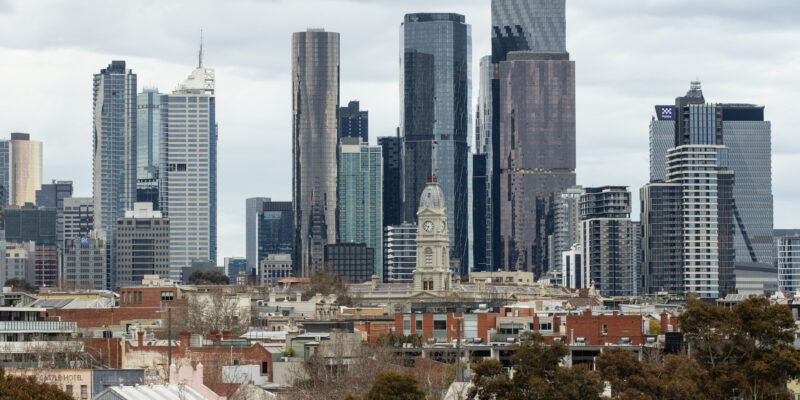
Sydney could well be in danger of losing its crown as Australia’s most populous city.
According to the Australian Bureau of Statistics, the population of nation’s capital cities grew by almost 325,000 people in the 2024-25 financial year.
While Sydney remains the biggest city with 5,638,800 people, Melbourne is now well and truly snapping at its heels.
The southern capital now has 5,435,600 residents, just 203,200 fewer than Sydney.
Melbourne also grew faster, adding 105,000 people to Sydney’s 75,200. That’s a growth rate of two per cent compared to Sydney’s 1.4 per cent.
Phil Browning, ABS head of demography, said overall capital city growth was 1.8 per cent.
That’s almost 100,000 people fewer than in 2023–24, when capital cities grew by 2.3 per cent.
“Overseas migration remained the main driver of capital city growth despite falling by 109,400 people compared with the previous year,” Browning said.
Perth had the highest growth rate of all capitals (2.4 per cent), followed by Brisbane (2.1 per cent) and Melbourne’s two per cent.
Darwin was the only capital that grew faster (1.7 per cent) than the previous year (1.5 per cent).
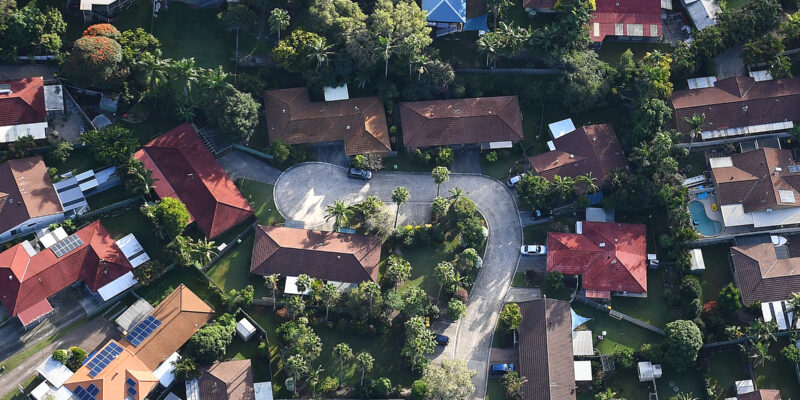
“The largest growth areas were mostly in outer-suburban parts of the capital cities,” Browning added.
Sydney’s largest growing area was Box Hill-Nelson in the city’s northwest, while Melbourne’s was Rockbank-Mount Cottrell to the west.
Brisbane’s boom area was Ripley, Adelaide’s was Munno Para West-Angle Vale and it was Alkimos-Eglinton in Perth.
Hobart saw its biggest growth in Rokeby, Darwin in Berrimah and Canberra in Taylor.