
Addressing rising prices is key to solving housing crisis
New report shows building more apartments won't necessarily help housing situation unless rising home prices stall.
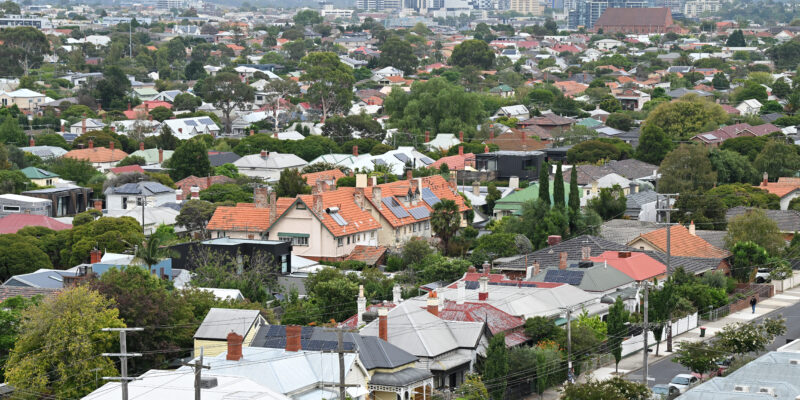
BUILDING more apartments will not solve Australia’s housing affordability crisis unless policymakers address rising house prices and investor activity, new research from the University of NSW shows.
The UNSW report shows Australia’s housing affordability crisis is being driven less by a shortage of apartments than by system-wide price pressures originating in the market for freestanding homes.
The study challenges a key assumption underpinning current housing policy: that increasing apartment supply will substantially improve affordability.
UNSW researchers analysed housing data across Sydney, Melbourne, Brisbane, Perth and Adelaide over nearly three decades.
They found price movements are led by the house market, affecting the whole system, including apartments – a process known as a spillover.
“House prices are driving the whole system,” said study co-author Professor Chyi Lin Lee, from UNSW’s School of Built Environment.
“When house prices move, they significantly affect units, but not the other way around.”
While most analyses treat housing as a single market, the UNSW study separates it into two segments, detached houses and units, and tracks how price shocks move between them.
The researchers developed a “two-market spillover model” to examine how price changes interact across geography and dwelling type. The results show the two sectors behave very differently.
“Houses and units are not interchangeable and this challenges the idea that boosting apartment supply alone will improve affordability,” Lee said.
“The assumption that units can substitute for houses at scale doesn’t hold in the data. Instead, the widening gap between house and unit prices reflects deeper structural forces, particularly how price pressures originate in the house market and spread across the system.”
The study finds houses are the primary driver of price movements across Australia’s housing system.
Price increases in houses generate significantly stronger ripple effects, or spillovers, than those in the unit market. These spillovers push up unit prices and spread across cities.
“The reverse relationship is far weaker,” Lee said. “Movements in unit prices have little influence on house prices.”
In effect, the unit market follows, while the house market leads.
“This asymmetry helps explain why house prices have grown much faster than unit prices,” Lee explained.
The gap widened sharply during the Covid-19 pandemic.
The study also found most housing spillovers are national rather than local.
Nearly 80 per cent of price spillovers occur between cities rather than within them, a pattern the researchers say cannot be explained by normal housing demand.
“Because Australia’s capital cities are widely dispersed, cross-city price movements are unlikely to reflect typical housing needs. Instead, they indicate investors shifting capital between markets in search of higher returns,” Lee said.
This pattern is particularly evident in the detached housing sector.
“Inter-city spillovers are consistent with investment-driven behaviour,” he said, adding to evidence that housing is increasingly functioning as a financial asset.
This creates a cycle where price growth attracts investment, transmitting pressures nationally and worsening affordability.
The UNSW research highlights that not all cities play equal roles. Sydney and Melbourne remain influential but Perth has emerged as a major source of price spillovers since the pandemic.
Adelaide, by contrast, is largely a “receiver”, with price movements shaped by larger markets. This shows the housing market operates as a single, interconnected system.
“What happens in Sydney or Melbourne doesn’t stay there,” Lee said. “It flows through to other cities.”
The findings challenge the view that increasing the supply of units will significantly ease housing pressures. While units are typically more affordable, their limited influence means they do not drive broader market trends.
“Focusing on unit supply alone is unlikely to address the systemic drivers of price growth,” Lee said.
“Because houses influence both their own segment and the unit market, affordability pressures can persist even with increased apartment supply.
“In other words, you can build more units but if house prices keep rising, affordability will continue to deteriorate.”
The UNSW research suggests current policy settings, heavily focused on increasing supply, may be missing the core driver of the problem. Stronger demand-side measures targeting investment in houses are needed, according to Lee.
“Potential approaches include tightening investor lending, adjusting tax settings, and improving coordination across states,” he said.
The dominance of inter-city spillovers also suggests that isolated, state-level responses may be insufficient.
“Localised policies may have limited impact in a highly interconnected system,” Lee said. “Without tackling investor-driven demand, supply-side solutions alone are unlikely to restore affordability.”
The UNSW findings reframe Australia’s housing crisis as a structural imbalance, not just a supply shortfall.
It is driven by investment activity, linkages between cities, and the dominant role of houses in transmitting price shocks.
For policymakers, the message is clear: fixing the housing crisis will require more than building more units alone.
#This story first appeared on the University of NSW website.