

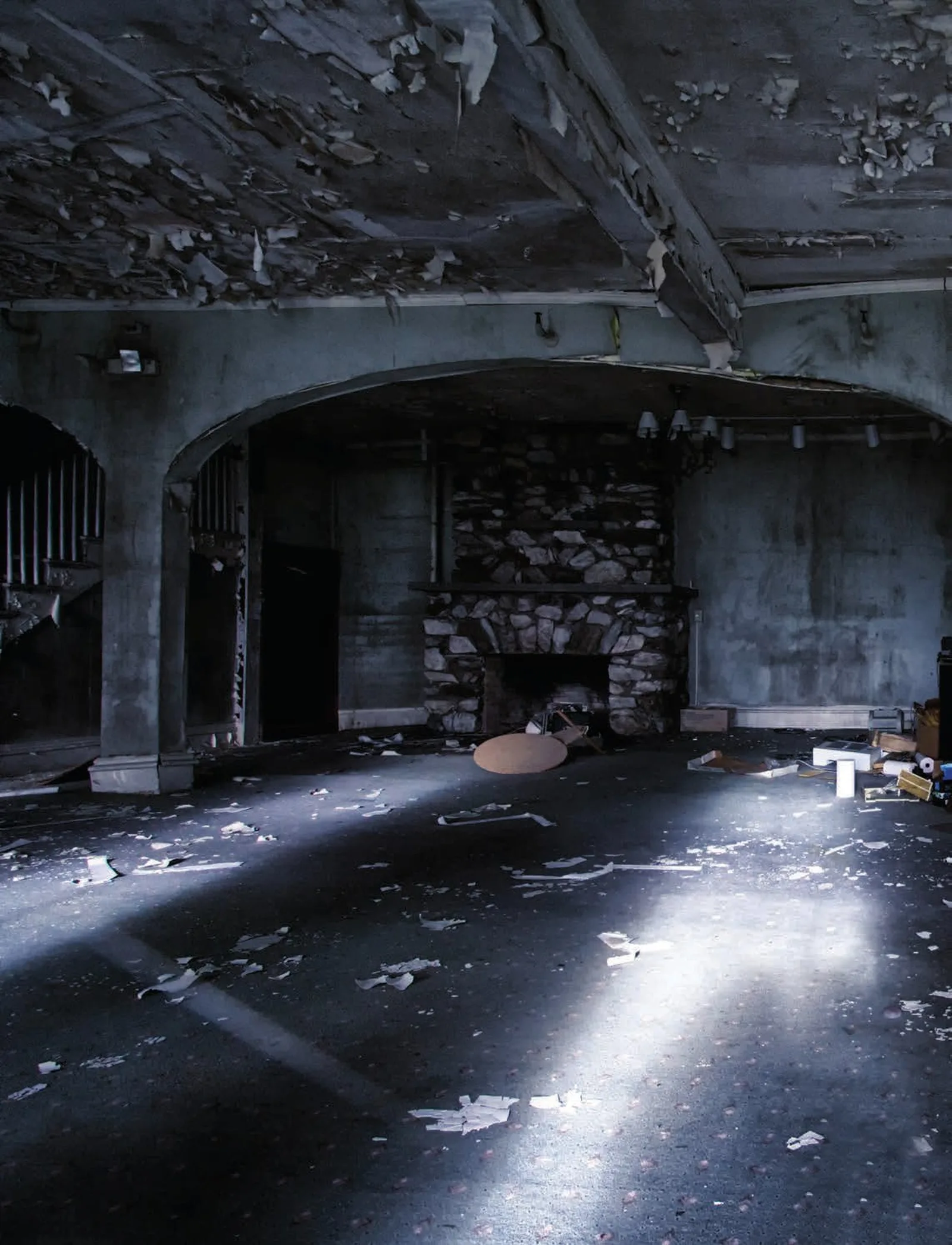
Some come with horrible histories: the scenes of violent, traumatic and criminal acts. Murders, drive-by shootings, use as drug labs.
Or with nasty neighbours, even the paranormal: things that go bump in the night.
It’s what’s known as “stigmatised property”. Selling one can prove a minefield for conveyancers, lawyers and real estate agents.
There’s no general rule that says you must reveal a property’s negative reputation.
But under federal consumer law, vendors and agents are barred from engaging in misleading or deceptive conduct.
And agents must disclose what is considered a “material fact” that could influence a buyer’s decision.
“Material fact is one of the most misunderstood concepts in real estate,” says Stewart Bunn, of First National Real Estate.
“It’s not limited to structural or environmental issues – it extends to anything that could influence a buyer’s or tenant’s decision.
“Agents who fail to recognise that can expose themselves and their vendors to unnecessary risk.”
In some states, agents must reveal if there has been a murder or manslaughter in the home within the past five years.
In Sydney, the prospective buyers of a house where Sef Gonzales murdered his parents and sister in 2001 recovered an $80,000 deposit, saying they hadn’t been told about it. The agents were fined $21,000.
However, suicide and death from old age are not generally considered material facts.
Disclosure is also required if the property has been used to process an illegal drug or plant within the past two years: i.e. it’s been a meth lab or grow house.
If a buyer asks a direct question about the property’s history, they deserve an honest answer.
“Openness ensures fairness for all parties,” adds Bunn.
But an agent should not disclose information about a property’s dark history without the vendor’s permission, which could be a breach of trust.
It’s not just criminality or violence within the dwelling that need to be considered.
It might have been home to a notorious character, have “the neighbour from hell”, a known sex offender or a loud rock band living nearby.
Less likely but still important to some buyers will be feng shui or harmonious design – and any suggestion of a “haunted house”.
Several agents have convincing stories about strange apparitions, voices, a giggling girl and the face of an elderly woman looming inside a deceased estate.
“On asking the buyer whether they had ever felt a presence,” one Victorian agent reported, “she replied, ‘Oh, you mean the old lady?’”
Another had a tenant who quit because of a ghostly cat.
“Whether you believe in ghosts or not, there’s nothing supernatural about an agent’s duty to disclose,” says Bunn.
“What matters is whether a reasonable person would see the property’s history as material to their decision.
“Agents who understand that principle protect not just their clients but their own professional standing.”
§ WHO YOU GONNA CALL?
One “haunted house” famed in the United States is a five-bed riverside Victorian in Nyack, New York, about 40km north of Manhattan.
It became the focus of the 1991 Stambovsky v Ackley case, known as the “Ghostbusters” ruling.
Owner Helen Ackley had publicised the home as being haunted, citing paranormal activity such as a shaking bed.
When she sold to Jeffrey Stambovsky in 1989, she failed to disclose its reputation.
Stambovsky sought to cancel the contract and retrieve his deposit.
A judge sided with him, finding Ackley had a duty to disclose the reputation she’d created, stating: “As a matter of law, the house is haunted.”
The New York Supreme Court ruling is still cited in US property cases and debated at law schools.
The tastefully renovated home has since had several owners including a filmmaker, a songwriter and a musician.
None have complained of poltergeists. “They’ve just said it’s a very special home: warm, cosy and safe,” says local agent Nancy Blaker Weber.