

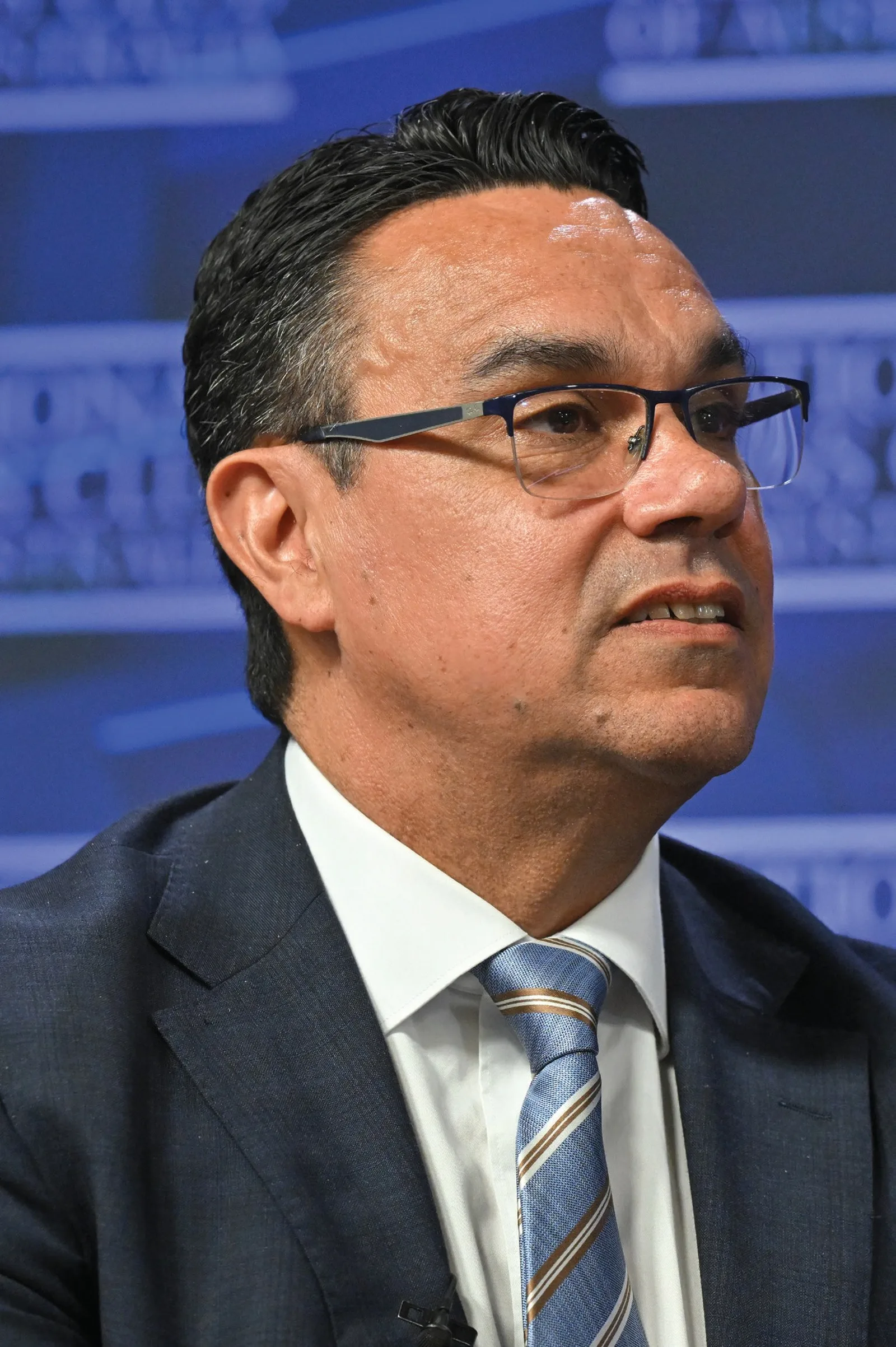
THE man overseeing Tranche 2 anti-money laundering laws has declared: “There is no reason these reforms should send conveyancers to the wall.” In an exclusive interview with Australian Conveyancer, AUSTRAC chief executive Brendan Thomas says he wants to allay fears that incoming laws will add an untenable burden to the industry.
And, he says, AUSTRAC is there to help the thousands of small businesses who are counting down to July 1 next year when the anti-money laundering, counter-terrorism financing (AML/CTF) reforms come into force. “We want to make this transition as easy as possible. We don’t expect you to do it alone,” he said, taking the opportunity to use Australian Conveyancer to address the sector personally.
Under-development starter packs will help sole practitioners and small businesses deal with the changes. And an online portal to report suspicious behaviour will be available, according to Thomas, who suggested that it will be easier than reporting “something to the police”.
But while conveyancers are waiting for those, the CEO urged them “to familiarise themselves with money laundering techniques so they can begin to understand how criminals might abuse conveyancing services.”
Responding to a widely held fear that Tranche 2 will see an exodus of practitioners because of extra compliance costs and the possibility of huge $19,000 a day penalties Thomas insisted that was not the case.
“We expect people to put forward their best effort in complying with the law, just as you would for any other law,” he said. “AUSTRAC does not expect businesses to eliminate money laundering.
“Let me be clear – we will not penalise a business that, despite having an appropriate AML/CTF program, is unknowingly exploited to launder money. We’re focused on helping entities build capability. But if there’s no attempt to comply – or if our intelligence shows involvement in criminal activity – that’s when we’ll act.
“If you’re genuinely trying to do the right thing, you will not be on our radar.”
The expectation, he says, is that conveyancers understand the risks, take reasonable steps to know your customers, and report suspicious matters.
But for those who do not take the reforms seriously, AUSTRAC will come down hard – and will name and shame. “When we think a business is not taking its legal responsibilities seriously, and we feel the need to take some kind of enforcement action, yes we do usually publish that information,” he said.
Thomas is confident most of the work conveyancers need to do is quite straightforward, with the AUSTRAC starter kits helping them to enrol by March 31 – and to build an AML program.
Know-your-customer – or KYC – due diligence is “not a new concept for conveyancers,” he insists. But practitioners will need to report things to AUSTRAC that “don’t seem right”.
He went on: “Businesses have a good sense of when something doesn’t add up in a transaction. You are not expected to prove wrongdoing. It’s not the same as reporting something to the police. We are asking you to report suspicions to us. We’ll provide the avenue to do that online.”
While AUSTRAC will be providing online help, Thomas did warn that conveyancers should not offload their responsibilities to a technology provider.
“You can get people to help you, whether that’s technology or advice, and many businesses, including some of Australia’s largest ones, do that,” he said.
“Your legal responsibility is yours alone, you can’t outsource that. If you do get external help, make sure it’s good.”
Third party advisors or tech systems are only ever part of a solution, according to Thomas. “We want to avoid that sense of false confidence, especially for the convey ancers and other new T2 businesses that are looking at AML/CTF compliance for the first time,” he said.
For Thomas, who has been in the AUSTRAC role for 18 months, the scale of the AML task in Australia is immense. “It’s just emphasised the scale of the problem of money laundering in Australia,” he said.
The ill-gotten gains of drug traffickers, people traffickers, scammers, tax fraudsters – from overseas criminals as well as home-grown gangs – is disrupting the economy, he said. “It is a real problem and has real consequences,” he said of the professional syndicates laundering money.
“The goal of the reforms is simple: to stop criminals from exploiting legitimate business in order to clean their dirty money. The reforms are not about increasing regulatory burden – they’re about safeguarding our communities.
“By bringing conveyancers into our reporting population, we’re making it much harder for criminals to take advantage of legitimate businesses.
“For decades we’ve been out of step with international standards, leaving key gatekeeper professions outside of the anti-money laundering framework. The reforms bring us into line with 200 other jurisdictions. It’s one of the most significant upgrades to our financial crime defences in 20 years.”
Tackling the issue of Australia being tarred with the same brush as Haiti and Madagascar, Thomas pointed out that to be seen alongside those states would have a significant impact on the economy. If Australia was grey listed – as it is known – it would signal to the world that financial crime controls aren’t up to scratch.
“That signal would have huge economic impacts,” he said. “It could drive up costs for business, slow down cross border transactions and make it harder to attract international investment.” Scan the QR code to read the full Q&A with the AUSTRAC boss on the Australian