
New property data shows record house price decline
Expert says 'we need to make some robust policy decisions that are not going to be popular at a national level'.
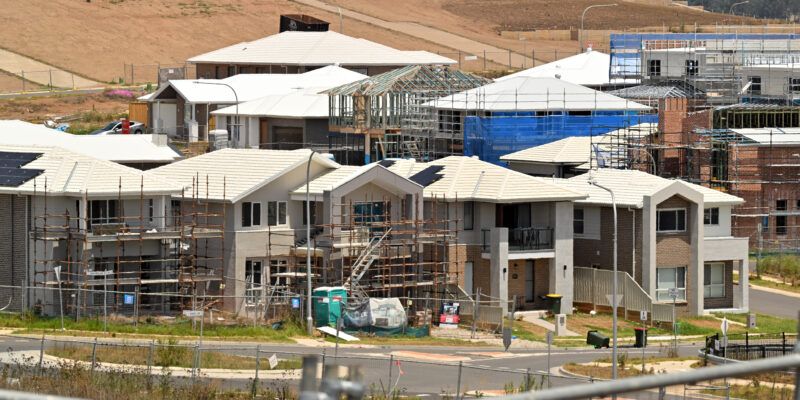
AUSTRALIA’s residential property market logged a record price fall in the September quarter, Domain president Jason Pellegrino said, adding to mounting concerns about the sector.
Addressing the Property Council of Australia’s Property Congress on Wednesday, Pellegrino, head of the CoStar-owned property marketplace, said the yet-to-be released data was the biggest quarterly decline on record.
“We’re going to report in the residential property market in Australia the quarterly house price decline of 4.7 per cent, the largest quarterly decline we’ve ever seen in the data point,” he said in pre-releasing the figures.
The “deeply rare” data showed price decline in all capital cities, Pellegrino said.
The scope of capital city falls had not occurred for 15 years “and before that it was close to two decades”, he added.
“So, it’s bad,” the Domain boss said in a session that included JLL chief executive Selina Short.
The comments follow downbeat June quarter data from Domain, which showed that combined capital city house prices fell 1.4 per cent and unit prices were down 1.2 per cent.
In July, Domain said there had been a “clear shift in market conditions,” with higher interest rates, affordability pressures and weaker buyer confidence driving increasingly different outcomes across cities, property types and buyer segments.
Investors and first-home buyers were getting more price-sensitive and selective, as higher borrowing costs, policy uncertainty and softer prices reduced purchasing urgency, it said.
This month, the Australian Property Institute predicted house prices could fall eight per cent to 11 per cent from their March heights before starting to rebound in 2027.
Pellegrino said boosting productivity was key to Australia’s long-term economic health.
“This has been a simmering economic issue for longer than we all want to admit,” he said.
“When I look forward, we have to make some hard calls, and we need to make some robust policy decisions that are not going to be popular at a national level and at a state level for us to actually re-emerge.”
He argued that lifting productivity – which official data showed fell over the year to the June quarter by 0.2 per cent – would help “radically transform” the nation.
“We just need to admit that economically, we are not doing that now,” he said.
But he cautioned that reform had to be carefully done.
“Let’s do everything we can. I want to do everything I can, so my kids have every opportunity that I had in the housing market and that I have every opportunity that my parents had, so that I think rests with us as well.”
Short, in her address, said embracing AI was critical to meeting the productivity challenge.
She said to get a 1.2 per cent bump in productivity, the country needed to do more than build data centres.
“We have to adopt it,” she said. “I would encourage you to look at Singapore as a great example of a nation that is building a national plan around AI,” she said.
She urged firms to “find the three biggest time sinks in your business and put AI on it”.
“Track the hours, train the people and look at the productivity impact it can deliver for your business.”