
Nothing Trump-like about new immigration policy
Minister says 'this is not the sort of operation that some people have seen on TV happening in other countries'.
A PLAN to round up and detain migrants who over-stay their visas is not borrowing from US President Donald Trump’s playbook, Labor insists.
Humanitarian groups have bristled at the scheme announced by immigration minister Tony Burke on Thursday, aimed at drawing down the roughly 77,000 unlawful non-citizens in Australia.
More of those people will now be placed in detention for a matter of weeks, Burke said, encouraging them and others to leave of their own accord.
The plan is a reversion to pre-2015 settings, according to the minister, before a shake-up largely limited migration detention to criminals, not visa over-stayers.
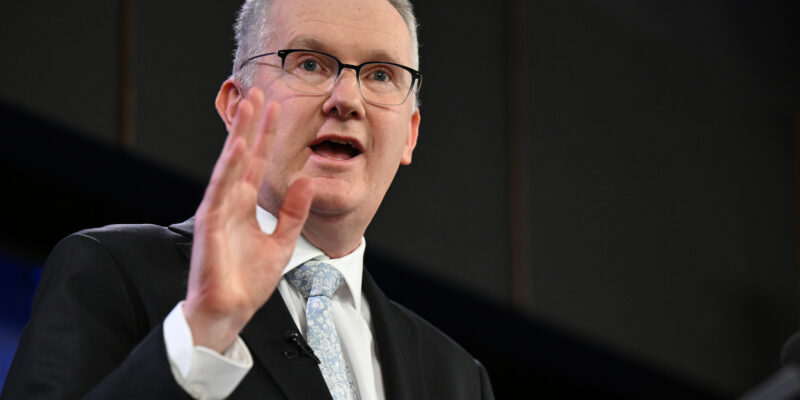
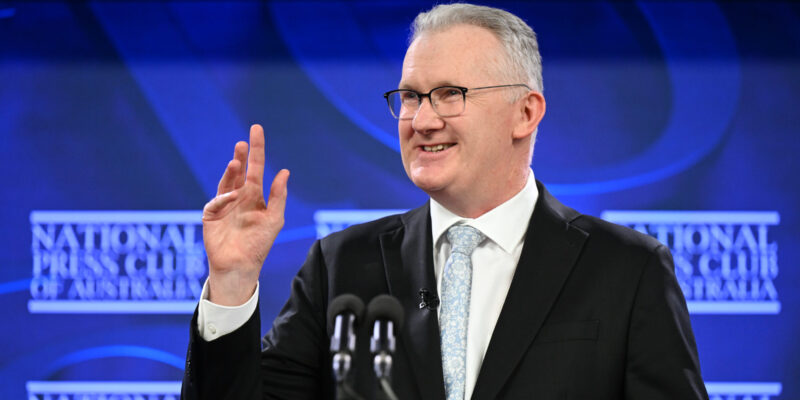
“This is not the sort of operation that some people have seen on TV happening in other countries,” Burke told Canberra’s National Press Club, making a cloaked reference to the US Immigration and Customs Enforcement (ICE)’s rough and much-publicised raids, detentions and deportations.
Whether children would be detained or separated from family members was not outlined by Burke.
Australia’s pre-2015 migration detention regime placed kids in a “horrific pipeline,” former head of the Australian Human Rights Commission Gillian Triggs said.
“There were 1100 children held in detention without education, for more than a year and longer for some, but detained indefinitely,” Dr Triggs said, referencing a 2014 report published by the commission.
“Most of those children were severely mentally and physically ill … the damage that was done to children and families is well documented, and probably unique globally.”
The report helped spur significant reductions in the number of migrant children detained in Australia.
In the intervening decade, indefinite detention without reasonable prospect of being returned to one’s own country has been outlawed by a landmark 2023 High Court decision, but it’s unclear how that might apply to this change.
Labor’s plan would also involve hiring 100 new compliance officers and freeing up 250 beds, as well as potentially repurposing a 100-bed quarantine facility near Melbourne Airport used during the Covid-19 pandemic.
Filling all that new capacity would almost double Australia’s migrant detention population of 1100, according to figures from the Refugee Council of Australia.
Those figures drew inevitable comparisons to shocking ICE-driven crackdowns in the United States, Asylum Seeker Resource Centre chief executive Kon Karapanagiotidis said.
“No matter who is in power, rounding people up, locking people up in detention centres is brutal,” he said.
“Why would you be building that sort of capacity if you weren’t also considering detaining whole families?”
Burke described the proposed new system as “modest”.
“When people overstay, they come into detention, you give them a bridging visa first, at the end of the bridging visa, they come into detention and then they leave,” he told the ABC’s 7.30 on Thursday.
“Overstayers at the moment have just had an attitude of ‘well, what are you going to do?’ If you don’t have a visa in Australia, then you should leave.”
WHAT IS THE SYSTEM LIKE NOW?
* Australia’s population growth due to migration, called net overseas migration, has consistently exceeded Labor’s forecasts since it came to power in 2022.
* Under heavy political pressure, the government has slammed the brakes on working holiday visas and started prioritising applications from onshore migrants.
* But migrants can still game the system by appealing visa decisions via the Administrative Reviews Tribunal, which can take up to eight years, while living and working in Australia on bridging visas, critics argue.
* Businesses, farmers and the health sector have long complained about staff shortages due to poorly calibrated skilled migration pathways accompanied by underinvestment in training Australians and poor workforce planning.
* They have strongly cautioned politicians against chasing a desired lower net overseas migration figure without considering economic impacts.
WHERE DO THE OTHER PARTIES STAND?
* The opposition wants net overseas migration to fall to about 170,000 a year, in line with housing construction.
* Negotiations between prime minister Anthony Albanese and opposition leader Angus Taylor stalled in the week to September 11, meaning Labor’s changes will probably be limited to measures that do not need to pass parliament.
* One Nation on Monday unveiled its own migration plan, which would temporarily turn Australia’s migration intake negative before settling it at 130,000 a year.
* Industry leaders and politicians said One Nation’s proposal would run a “wrecking ball” through the economy, exacerbate workforce shortages and cause a recession.