
Offshore cash a necessity not a hindrance – HIA report
Foreign investment should be seen as a requirement for major housing developments rather than a handbrake on new projects.
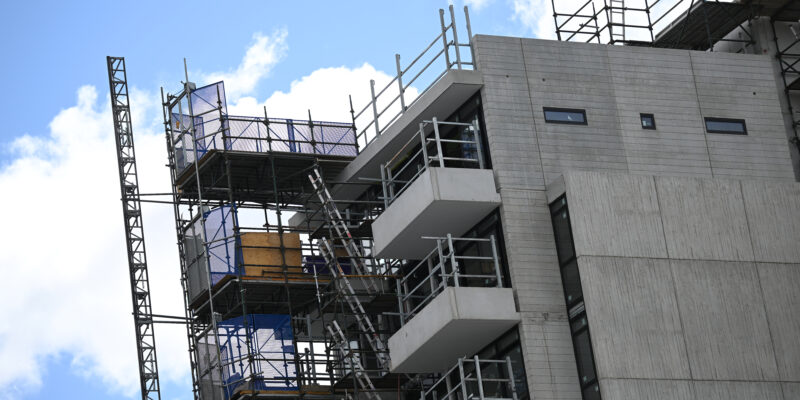
CONSTRAINTS on the level of foreign investment have seen a slowdown in the number of apartment and multi-unit developments, according to a recent Housing Industry of Australia report.
Many of these projects often required funds from foreign investment to be able to finish the building works, both in equity and in pre-sales.
But the tightening of state and federal regulations around foreign investment in recent years has affected the levels to which offshore investors can fund these projects.
The HIA report said multi-unit commencements peaked in 2016 but have halved in the years since because of constraints placed on foreign investment.
“By increasing costs and complexity for foreign investors, state surcharges have reduced the availability of both pre-sales and development equity, making it harder for projects to reach financial close,’’ the report said.
“Detached housing has also been affected, particularly where overseas-owned volume builders face higher land acquisition costs when delivering new homes.’’
Australia has long had a strong foreign investment framework. Since 1975, Australian Government law has prohibited non-resident foreign investors from purchasing established dwellings.
“Foreign capital has instead been channelled toward the construction of new homes, allowing investment to add to supply without competing with Australians for existing housing and without adding to demand for homes.
“This framework remains firmly in place under the Foreign Acquisitions and Takeovers Act 1975. From the mid-2010s, however, this framework was overlaid with a growing suite of additional rules.
“State and territory governments introduced stamp duty and land tax surcharges on foreign investors, while the Australian Government increased application fees and introduced vacancy charges.
“These measures were introduced rapidly, escalated over time and were applied broadly, with little differentiation between speculative activity and investment that directly delivers new housing.”
The report also found that foreign investor taxes have no meaningful effect on demand for established dwellings or directly on established home prices.
“Foreign investors have been prohibited from buying established homes for almost five decades and temporary resident purchases are small and tightly regulated.
“Improved compliance mechanisms further constrain the scope for non-compliant activity. These taxes cannot therefore improve affordability in established housing markets.”
Although foreign investor taxes were introduced as revenue measures, transparency around actual collections is limited.
Once forgone construction activity and reduced GST, income tax, payroll tax and company tax are considered, there is a growing risk that these policies are revenue negative, particularly for the Australian Government.
The report concludes that foreign investor taxes have become one of the most damaging own goals in Australian housing policy.
It calls on the Australian Government to initiate a National Review, in cooperation with states and territories, to assess the impact of these taxes on housing supply and public revenue and to restore a nationally coherent framework that supports, rather than constrains, the delivery of new homes.