
People are thinking twice about spending their money
Consumer sentiment is weaker but discretionary spending is not 'falling off a cliff in Australia'.
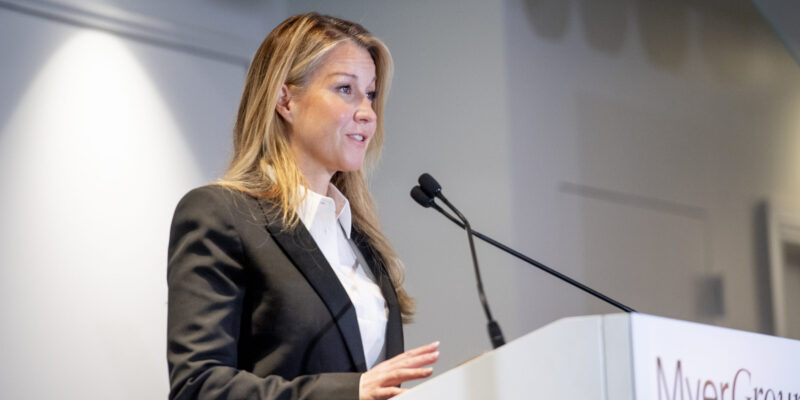
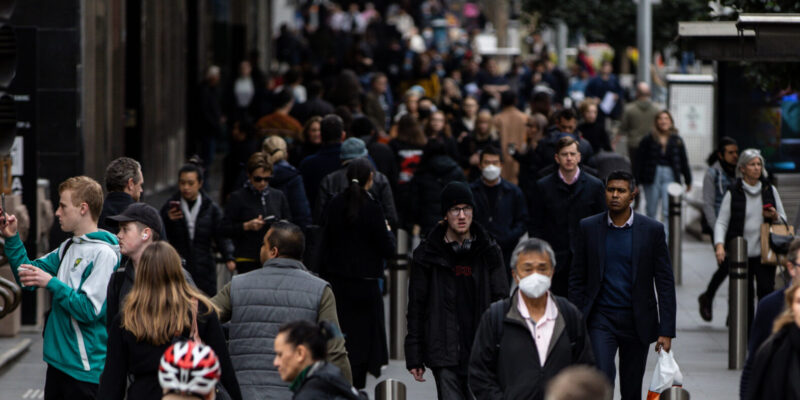
CONSUMER spending has tanked in recent weeks as households cut back because of higher fuel prices, interest rate hikes and a weaker housing market, according to a leading department store chain.
Myer Group, which operates the namesake department store and five clothing chains, said sustained cost-of-living pressures had driven consumer sentiment to its lowest level in recent times.
Trading had been mixed during the second half, with a strong recovery in May followed by a renewed slump in June and July, the retailer said on Monday.
A warmer than average start to winter in most of Australia’s major cities had also reduced spending, Myer said.
The second half had been characterised by a volatile and significantly more challenging retail environment than in the previous two half-year periods, executive chairwoman Olivia Wirth said.
Myer had observed a material downturn in consumer sentiment, particularly in June and July, resulting in weaker discretionary spending, she added.
The group had tried to stimulate through promotional activity but it wasn’t enough to offset the weak underlying consumer spending.
AMP deputy chief economist Diana Mousina said she wasn’t surprised by Myer’s comments about consumer sentiment.
Australia’s most widely used gauge of consumer sentiment also showed shoppers were deeply pessimistic, she said.
The Westpac-Melbourne Institute Consumer Index, based on a monthly survey of 1200 adults, has lately given readouts among the lowest levels in its 50-year history.
“It’s around recessionary levels, it has bounced around a bit, but still associated with levels you would normally see in a recession,” Mousina said.
But despite shoppers’ sour sentiment, consumer spending was still holding up across the board, Mousina added.
“Discretionary is still under a little bit of pressure but I wouldn’t say discretionary spending is falling off a cliff in Australia,” she said.
“It’s actually been holding up relatively well, given the very poor sentiment surveys.”
Department stores have been under pressure for a number of years because of competition, Mousina noted.
Despite Myer’s struggles towards the end of its financial year, which ended July 25, its total sales for the period were slightly better than the previous year.
It had $4.09 billion in sales, up 0.3 per cent from 2024-25, driven by strong growth in home, women’s wear and kids categories. Same-store sales were up 0.7 per cent.
Myer’s sales were up 0.7 per cent, while sales at the group’s clothing stores were down 1.3 per cent, with Just Jeans doing well and women’s workwear and fashion chain Portmans particularly lagging.
During the year, Myer closed 38 stores in its apparel brand division, while opening 14 new ones.