
Reserve Bank is still ‘unsure’ about another rate rise
Deputy governor says judging the right balance on interest rates is how the RBA 'earns its money'
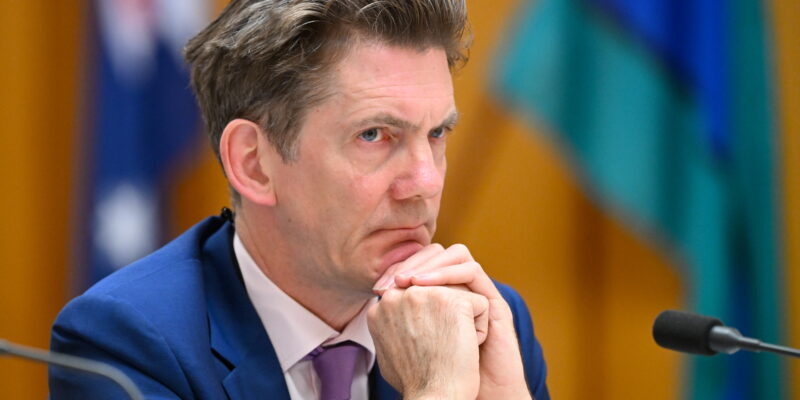
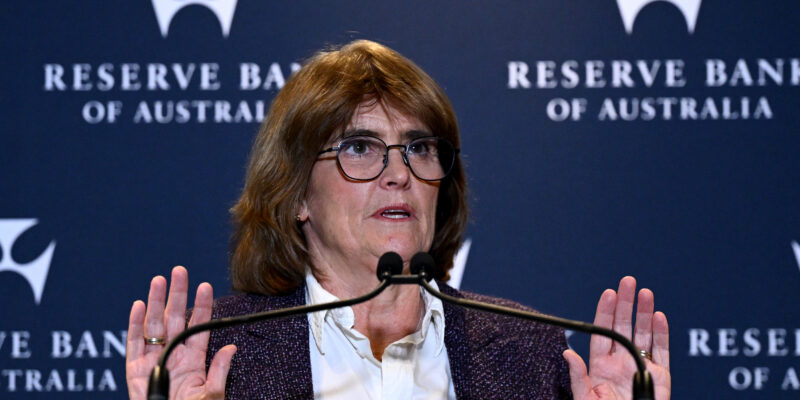
The Reserve Bank board will have to earn its money to navigate Australia through a “nightmare” stagflation shock, a top central bank official said as confidence tanks and prices soar.
The RBA is still “feeling its way” through the energy crisis and what it meant for inflation, deputy governor Andrew Hauser told a New York University financial event on Tuesday.
The Reserve Bank raised interest rates in back-to-back meetings in February and March, after already-elevated inflation was compounded by the US-Israeli attacks on Iran and subsequent closure of the Strait of Hormuz.
With higher fuel costs leading to price increases across the board, economists predict governor Michele Bullock will oversee a third consecutive cash rate rise to 4.35 per cent in May.
Hauser said the RBA was unsure whether rates were high enough to get inflation under control.
But the prospect of higher inflationary pressures combining with falling economic activity was a “central banker’s nightmare”.
“Judging the balance between those two is, I guess, how we earn our money,” he said.
The bank was closely watching to what extent businesses were able to pass through cost increases to customers.
Some models showed a visible shock like the Middle East crisis, that impacted every company’s cost base, giving firms an opportunity to pass through price rises they might otherwise had found difficult, Hauser said.
“If that’s the case, we’ll have to react to that, but I don’t know that we’ve seen enough yet to be sure.”
Data from the Australian Securities and Investments Commission showed the number of new companies registering with the regulator rose to 90,000 over the first quarter of 2026.
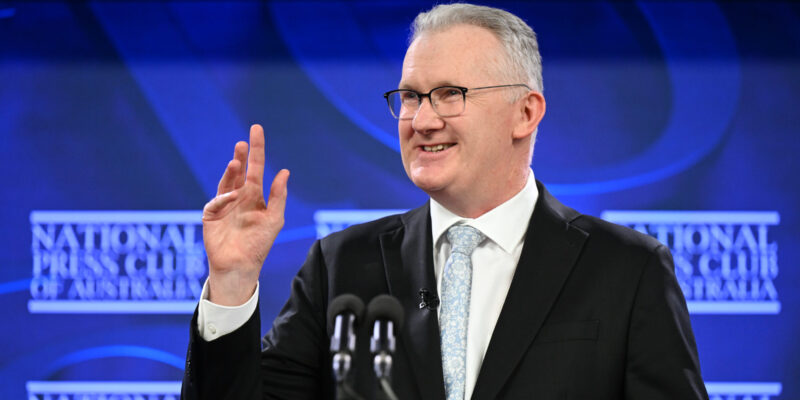
The figures were an encouraging sign Australia’s small business sector remained strong, Small Business Minister Anne Aly said.
That optimism looks fragile.
Business confidence plunged in the second-biggest fall on record in March, NAB’s monthly business survey found.
The 29-point decline took the index deep into pessimistic territory.
Falls of that magnitude had previously only been seen during the Global Financial Crisis and the onset of COVID-19, NAB head of Australian economics Gareth Spence said.
But conditions remained relatively resilient, indicating the pass through from the shock to actual activity will take some time.
Forward-looking measures suggest the deterioration in conditions is on the way.
Forward orders fell six points, wiping away gains made since the start of 2026, while purchase cost growth rose three per cent in quarterly terms, double the rate recorded in February.
“That does accord with some of the anecdotal evidence we’re hearing and seeing through our customers,” Spence said.
“People are looking to pass on the costs where they can this time.”
But how much firms can pass through costs also depends on how resilient consumers remain.
The two RBA rate hikes and the Iran war precipitated the sharpest plunge in consumer confidence since the onset of COVID, according to Westpac and the Melbourne Institute.
Their consumer sentiment index declined 12.5 per cent to 80.1 points in April, near historic lows but still above the beginning of the pandemic and the 1980s and early 1990s recessions.
However, households were coming into the conflict in relatively healthy shape.
“If the consumer carries the momentum that it had late last year, (businesses) may be able to pass on a little bit more of those cost pressures,” Spence said.
Commonwealth Bank transaction data showed spending continued to be resilient so far in 2026, partly because of higher spending on petrol and utilities, CBA senior economists Ashwin Clarke and Trent Saunders said.