
‘Softer than we thought’: RBA’s admission on inflation
The Reserve Bank's chief economist has admitted inflation predictions came in lower than expected due to volatility with the fuel market.
SURPRISE inflation data, which came in lower than expected and below the central bank’s own forecasts, was due to softer fuel prices, according to the RBA’s chief economist.
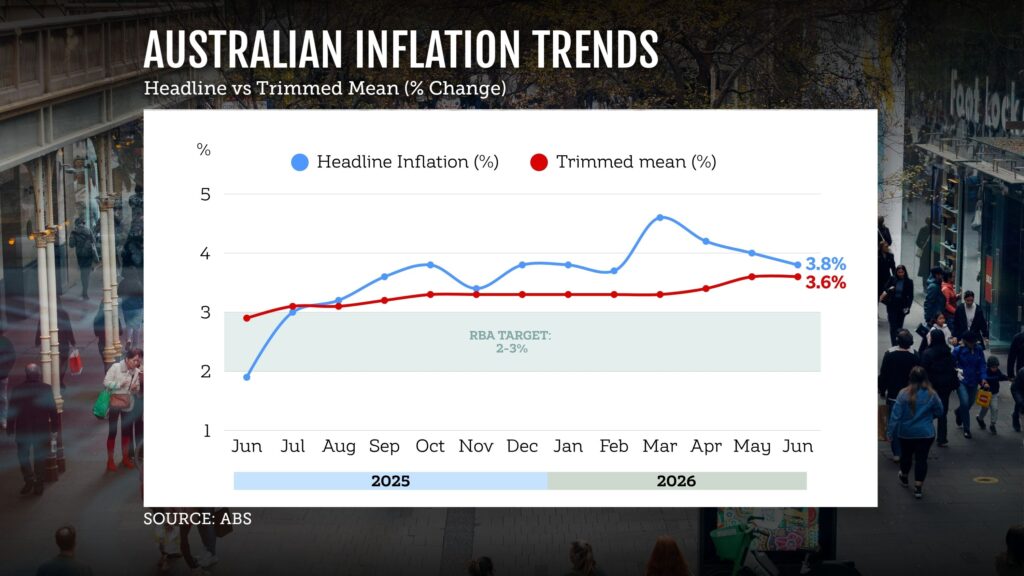
Figures released on Wednesday revealed headline inflation for June fell from four per cent to 3.8 per cent, the lowest level since the start of the US-Iran war in February.
Trimmed mean inflation, the preferred measure for the RBA, remained steady at 3.6 per cent, below the central bank’s prediction of 3.8 per cent.
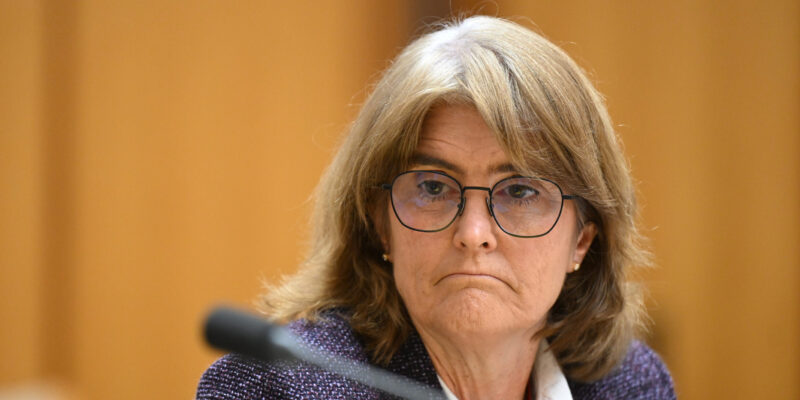
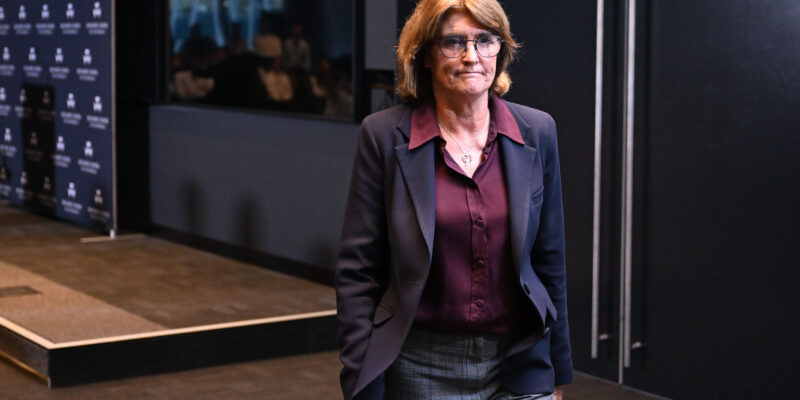
But the bank’s chief economist and assistant governor Sarah Hunter said it was not a forecast miss.
“It was certainly a touch softer than we thought, though some of those domestic components in (the figures) were actually pretty much what we expected to see,” she told a fireside chat at the Barrenjoey Economics Forum in Sydney on Thursday.
“There are always ‘ons and offs’ in the data, and there’s always something that comes in a bit stronger, a bit weaker when you get into the absolute guts of the categories.”
Ms Hunter said June’s lower-than-expected oil prices were among the contributors to inflation numbers coming in below forecasts.
Higher oil prices in July have now led to a rise in short-term inflation expectations, she said.
“Petrol is a salient price, particularly for households. Unsurprising, we all drive past a petrol station every day,” she said.
Despite the inflation figures coming down, they remain well above the Reserve Bank’s target band of between two and three per cent.
“We obviously want to get inflation back down. And what we want to make sure is we don’t see higher expectations become embedded.”
However, the June data has eased fears of the central bank lifting interest rates again when its board next meets on August 10 and 11.
The RBA has increased interest rates to 4.35 per cent after three hikes so far in 2026.
But Ms Hunter would not be drawn on what the bank’s likely outcome would be at its next rates meeting.
“I’m not going to speculate on the meeting,” she said.
“Some of those domestic components in (inflation figures) were actually pretty much what we expected to see. But the markets are pricing moves all the time.”
The chief economist also warned about the impact of AI data centre growth on the economy, saying it was adding to pressure in the construction sector.
“Data centres in particular do seem to be coming through very, very rapidly,” she said.
“We’ve recently even just stood up an entire team to try and help us (understand the data centre pipeline) internally because we do think it’s going to be important in the next couple of years.”