Strong growth in start of dwellings but not in completion
ABS report shows trend upwards in commencement of dwellings but completion rates are down year on year.
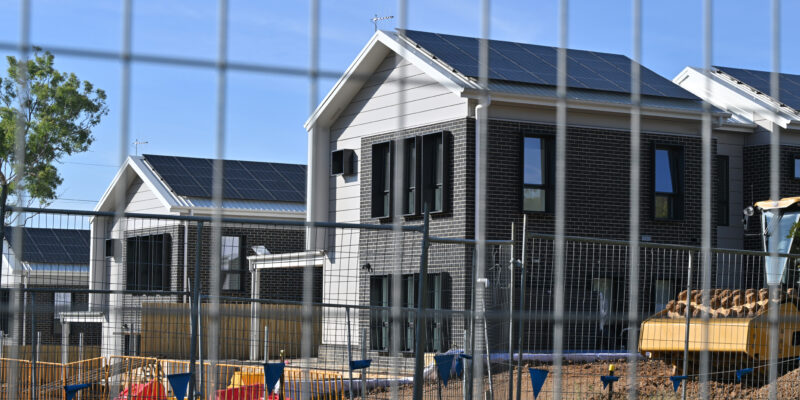
THE Property Council of Australia said the latest ABS Building Activity data shows housing activity easing, reinforcing the need for governments to act decisively to lift productivity and remove barriers to delivery if Australia is to meet its housing targets.
Matthew Kandelaars, Property Council’s executive director policy and advocacy, said the data reflects a system that is approving and starting more projects but struggling to get homes built at the pace required to meet National Housing Accord targets.
“With no state currently on track to meet its housing target, stronger commencements alone will not close the supply gap if fewer homes are being completed,” Kandelaars said.
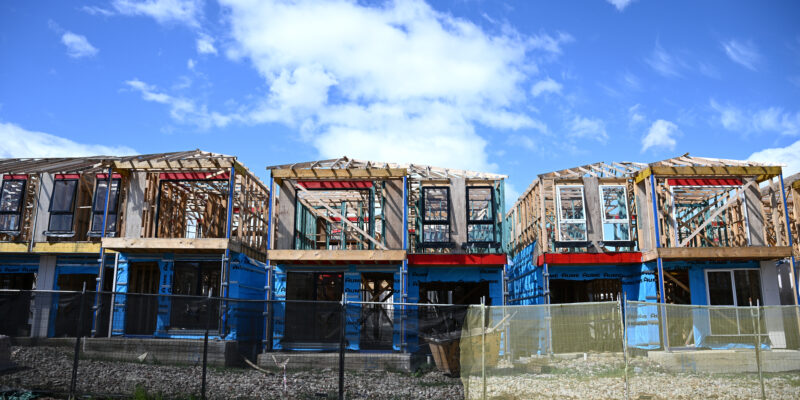
The number of dwellings commenced nationally rose strongly at the end of last year but was even higher than the same time in 2024, according to the Australian Bureau of Statistics.
A report released on Wednesday by the ABS showed he number of dwellings that had started lifted 8 per cent in the quarter September to December 2025.
But on a year-on-year basis, dwelling commencements had grown by 26.1 per cent.
New private sector houses actually dropped by 0.9 per cent in that same quarter but new private sector other than residential rose 23.4 per cent to 23,849.
NSW led the way by recording 16,272 new dwelling commencements, up from 12,638 the previous quarter and 10,630 at the end of 2024.
Victoria was pretty line ball, having 13,489 at the end of 2025 compared to 13,552 the previous quarter.
Queensland, South Australia and Western Australia all showed slight increases.
The total number of new houses under construction was 88,630, up from 84,955 at the end of 2024.
But the number of dwellings completed showed a decline year on year.
In December 2025, total dwellings completed was 43,536, down 3.9 per cent in the corresponding quarter in 2024. All states showed a drop in completions except South Australia.
The total value of work done hit $43.9 million, a 7.5 increase year on year.
Kandelaars said that while the National Housing Accord targets have seen improvements to planning approvals, the challenge now sits between approvals and commencements, and then completions.
“The constraint on housing supply sits after planning approval, with post-permit processes, lack of housing-enabling infrastructure, slow coordination with utilities and rising costs all reducing the rate at which approved projects are completed,” he said.
Housing Industry Association chief economist Tom Devitt said the numbers showed the continuing recovery in home building from previous decade lows.
“Home building activity picked up in 2025 on the back of declining interest rates and low unemployment across the country,” Devitt said.
“With interest rates on the way back up, the task of increasing supply will depend on governments reducing the cost of delivering new homes to market in other ways.
“This includes reducing taxes on housing, not increasing them. Housing is one of the most heavily taxed items in our economy along with the ‘sin taxes’ of alcohol and tobacco.
“Recent discussion around increasing capital gains tax on investors and winding back negative gearing is pointing the conversation in precisely the wrong direction.
“The logic that taxing investors in the established market will force investors to build new homes is flawed.
“New housing becomes existing housing. Investors in new housing supply know that they will effectively incur such a tax when they sell their property, deterring them from investing in that new supply in the first place, even though the tax was directed at the established market.
“This will worsen affordability, reinforcing the inequity in housing whereby the wealthiest Australians with pre-existing assets and borrowing power are increasingly the only ones able to access the market.”
Devitt said if governments want to address this inequity in the housing market, then they need to increase supply.
“If the government wants to raise more revenue, then they need to build more homes. Around $200,000 is raised in direct tax imposts alone from each new house – even more in some markets.
“Raising more revenue through capital gains tax might have a short term benefit to the federal Budget but risks the loss of other tax revenues such as stamp duty and GST to the states as well as exacerbating the inequity in the housing market.
“In the last year, investors were responsible for over 40 per cent of new home building across Australia.
“Attempts to tax them out of the housing market will reduce the supply of new homes without affecting housing demand,” Devitt said.