
Unique reason why Sydney prices have slumped the most
Economist says 'decade of accumulated growth left Sydney the most leveraged market in the country'.
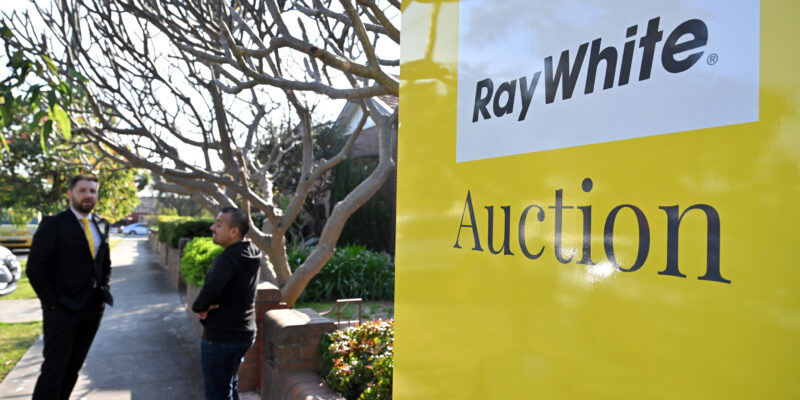
HOUSE prices in Sydney have “fallen more quickly and decisively than most would have expected”, according to a leading real estate agency.
Ray White Group said Sydney house prices have fallen by five per cent from this time last year, the largest annual price drop among major cities.
“This isn’t a Sydney-centric story either. Prices are softening across the country as global uncertainty, shifting rate expectations and policy changes weigh on sentiment across all buyers and not just investors,” said Atom Go Tian, economist with Ray White Group.
“But Sydney is falling faster than anywhere else, and that’s the puzzle.
“Because unlike past downturns, Sydney didn’t run the hardest on the way up. Over the past three years its growth was modest next to Brisbane and Perth.”
Go Tian said, looking back over the last two decades of Australian property, five periods stand out for bringing the largest price declines.
“For the first two, Sydney was among the safest places to own a home,” he said.
“When the Global Financial Crisis hit in 2008, Perth took the brunt of the impact by falling eight per cent, while Sydney dropped by only three.
“And when the post-GFC stimulus was wound back over 2011 and 2012, Sydney stayed essentially flat as prices dropped between three and seven per cent in other major cities.
“From 2013 to 2015, Sydney’s growth outpaced every other major city including Melbourne so it made sense that during the lending squeeze and housing policy uncertainty of 2018-19 it fell the furthest.
“It’s a similar story in Covid: Sydney grew the most when lending was cheap so when rates suddenly increased it again dropped the most.”
Go Tian said, over the last three years leading up to the current downturn, Sydney has not been the fastest growing market, yet it is still falling quicker.
“And the reason it doesn’t add up is that this puzzle is still missing one piece,” he added.
“At the heart of every one of these downturns is a sudden and significant change to lending, whether tighter credit or higher rates.
“And that is why price growth alone can’t explain who falls hardest. A lending shock translates into larger swings for an outstretched market, where buyers have borrowed most against what they earn.
“By this measure, no market is more exposed than Sydney. At 12.9 times average earnings, its price-to-income ratio is the highest in the country, well ahead of Brisbane’s 10.2 and Melbourne’s 8.8.
“Through the crises of 2008 and 2011, Sydney’s ratio sat between six and eight which was not too far ahead of other major cities.
“It wasn’t yet a uniquely leveraged market, so it didn’t behave like one. What the 2013–15 boom did was lift Sydney’s ratio from about seven to 10 in just two years, and Sydney has stayed the most stretched since.”
Go Tian said, in a sense, Sydney is falling furthest because it grew the most.
“It’s just that the last three years alone can’t explain it. Instead, it’s a decade of accumulated growth that left Sydney the most leveraged market in the country,” he said.
“This downturn also differs from the rest in that it comes paired with permanent policy changes that re-price investor demand for good.
“So just as this downturn has hit Sydney harder than anywhere, its recovery is likely to look different too.
“Part of it will come when the outlook on rates stabilises. But another, less predictable part, will depend on how investors choose to show up in the years ahead.”