
Stability the key for any incoming government
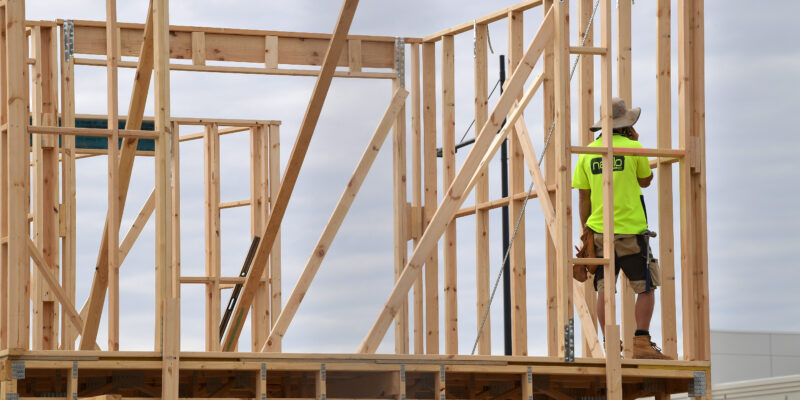
Housing requires a 'leave us alone' mentality as Victoria tries to improve the supply of more new homes.

WHEN it comes to November’s Victorian election, the message to all political parties regarding the housing sector is simple: do no harm.
That’s the view of Keith Ryan, the Housing Industry Association’s executive director Victoria.
He said the least expensive and most effective policy available to any future Victorian Government is to provide stability and certainty by avoiding further changes that add cost, complexity, and uncertainty to doing business.
“Victoria needs more homes. To get these homes we need stronger business confidence and higher productivity,” Ryan said.
“The best place to start is by stopping the constant stream of new taxes, regulations, reforms and compliance obligations and letting businesses get on with business.”
Ryan said home building is one of Victoria’s largest industries and is dominated by small and family-owned businesses that are doing it tough amid rising costs, workforce shortages, weak consumer confidence and an increasingly complex regulatory environment.
“Every government policy should be judged by a simple test: will it help deliver more homes more efficiently and at a lower cost?
“Too often, well-intentioned policy changes end up making housing more expensive, reduce productivity and create additional burdens for the businesses responsible for delivering new homes.”
Ryan said Victoria’s housing affordability and supply challenges cannot be solved without restoring confidence to the thousands of builders, tradies, subcontractors, suppliers and manufacturers operating across the state.
“Businesses need confidence to invest, train apprentices, employ, purchase equipment and take on new projects,” he said.
“Constant change creates uncertainty. Uncertainty discourages investment. And when investment slows and confidence drops, so does housing supply.”
Ryan said the cumulative impact of ongoing building reforms, delays in planning and other approvals, increasing compliance requirements and broader challenges facing Victorian businesses is continuing to weigh heavily on the sector.
“Builders are spending more time navigating red tape and less time building homes,” he said.
“At a time when Victoria needs more housing, greater productivity and stronger economic growth, governments should be focused on removing barriers, not creating new ones.”
Ryan added all major parties should use the election campaign to demonstrate how they will improve the operating environment for housing and small business rather than add further complexity.
“Victoria doesn’t need more disruption. It needs stability, certainty and a period where business can focus on what it does best,” he said.
“The home building industry wants to invest, employ, train apprentices and deliver more homes for Victorians.
“Sometimes the most effective policy is also the simplest.
“The best commitment any Victorian government now, and in the future, can make to housing, small business and economic growth is to do no harm.”