
Escaping to the country affected by market slowdown
Data firm says 'softer buyer demand is becoming more evident, with fewer markets recording the strong growth seen earlier this year'.
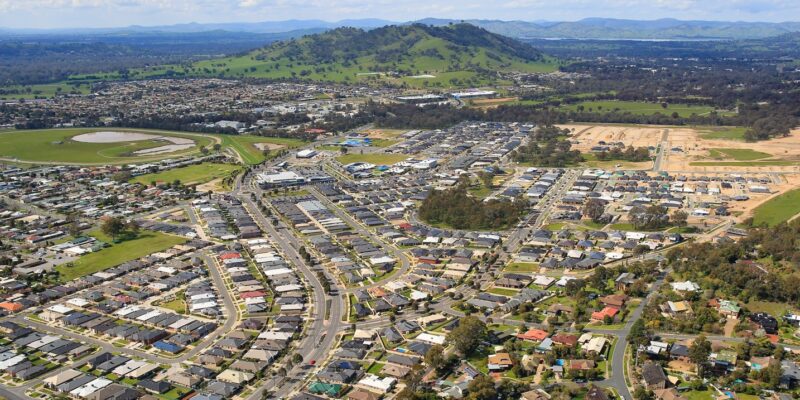
AFFORDABILITY is attracting more people to regional housing markets, a new property report has found.
Data analysts Cotality have released their Regional Market Update, finding regional dwelling values eased by 0.1 per cent in the three months to July 2026, a modest decline when compared with the 2.5 per cent fall across the combined capitals over the same period.
Regional markets have outperformed the capital cities since late 2025, when housing conditions began to soften.
Momentum has slowed across regional Australia, with 47 of the 50 largest Significant Urban Areas (SUAs) recording weaker growth rates in the three months to July (when compared with the previous three months to April), with 22 of these areas seeing home values contract over this period.
Even so, relative affordability has continued to support demand in many regional markets, attracting internal migration from the major capitals as housing conditions have weakened.
“Even regional markets are now being impacted by the broader market slowdown,” Gerard Burg, head of research at Cotality Australia, said.
“Relative affordability continues to attract buyers to many regional markets and support internal migration from the capitals.
“However, softer buyer demand is becoming more evident across the country, with fewer markets recording the strong growth seen earlier this year.”
Trends in regional home values were highly diverse across the country.
By state, regional South Australia and Western Australia saw the strongest conditions in the three months to July, increasing by 2.1 per cent.
The strength in South Australia fell largely outside the major SUAs, with Port Pirie increasing by 6.7 per cent.
Kalgoorlie-Boulder (6.4 pert cent) and Geraldton (3.8 per cent) saw the largest increases in WA, with growth in the previously robust south-west starting to fade.
In contrast, regional Queensland recorded no growth in the three months in July, with declining values for the Gold Coast, Cairns and Sunshine Coast offset by growth in Maryborough, Gladstone and Townsville.
The weakest conditions have been in regional NSW and Victoria, consistent with their respective state capitals recording the steepest declines since the start of the downturn.
Falls in NSW were led by Coffs Harbour, Goulburn and Nelson Bay but there was continued strong growth in deeper inland regions, such as Dubbo, Tamworth and Albury-Wodonga.
Similarly, in Victoria, there were sizeable falls in Warragul-Drouin and Geelong, while home values in Traralgon-Morwell and Warrnambool rose comparatively strongly.
Annual growth rates remain dominated by Western Australia.
In the 12 months to July, Kalgoorlie-Boulder home values rose 32.7 per cent, followed by Albany (22.1 per cent) and Geraldton (20.7 per cent).
Wagga Wagga and Dubbo in NSW (19.6 per cent and 19.5 per cent) rounded out the top five for the largest SUAs.
Bowral-Mittagong and Batemans Bay declined in the year-on-year terms.
Selling conditions have remained strongest in Western Australia and Queensland, however recent trends have broadly weakened across the country.
The median time on-market for the past three months increased in 44 of the 50 largest regional SUAs.
Regional market rental growth was marginally softer than that of the combined capitals in the three months to July, increasing by 1.1 per cent (compared with 1.2 per cent for the capital cities).
The rate of growth has also been easing, with rents rising by 1.8 per cent in the three months to April.
The strongest increases in rents in the three months to July were recorded in Albany (three per cent) followed by Toowoomba (2.9 per cent) and Kalgoorlie-Boulder (2.8 per cent).
Seven SUAs saw a decline in rents in the three months to July, led by Hervey Bay (down 1.1 per cent), Mildura-Buronga (0.7 per cent) and Maryborough and Mount Gambier (both down 0.5 per cent).
On an annual basis, rents in regional markets matched those of the combined capitals, increasing by 5.9 per cent.
The largest increases were recorded in Albany (up 13.4%), Launceston (13.1%) and Devonport (10.2%).
In contrast, Hervey Bay, Albury-Wodonga and Nowra-Bomaderry recorded rental growth below one per cent over the last year.
Across the regional markets, rental vacancy rates sat at 1.9% in July, marginally higher than the 1.7% observed across the combined capitals.
“Rental growth has moderated alongside broader housing market conditions, but vacancy rates remain relatively tight across many regional centres,” Burg said.
“Limited rental supply continues to support rents in many markets, even as demand has become more balanced.”