
Regional Victoria bucking the trend with house prices
Real estate expert says 'it’s vital Victoria has policy settings that encourage participants to buy, sell and invest with confidence'.

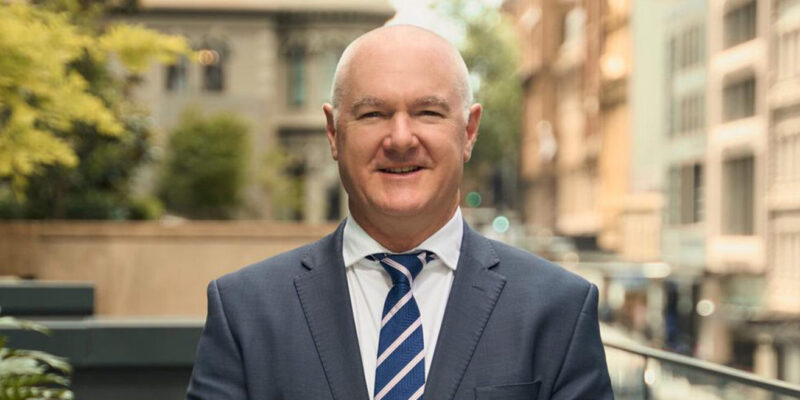
THE housing market in country Victoria is “proving resilient”, according to Real Institute of Victoria boss Toby Balazs.
Regional Victoria’s residential property market continued to strengthen in the third quarter of 2026, with both houses and units recording price growth, while Melbourne saw a mixed but resilient performance, REIV said.
According to the latest quarterly median data published by the REIV, regional house prices rose 1.2 per cent to $673,500 and units increased 0.2 per cent to $469,500.
Growth was spread across the state, with the Shire of Moira recording a 9.1 per cent rise, driven by Cobram, which climbed 9.3 per cent to $470,000.
In Gippsland, houses in the City of La Trobe rose 6.5 per cent, led by Morwell, up 7.6 per cent to $424,900; Churchill, up 5.9 per cent to $513,000; and Traralgon, up 4.5 per cent to $660,000.
With successive interest rate rises reducing borrowing capacity, demand grew for the relatively more affordable homes.
Balazs said the latest data showed Victoria’s property market was holding up well in response to national policy and macro-economic changes.
“This is the first full quarter showing the market’s response to changes in federal tax policy and recent increases to the cash rate,” Balazs said.
“While transaction volumes have softened, it’s clear Victoria’s property market is resilient, with regional towns and many Melbourne suburbs even showing capacity to rise.
“Broader market conditions are still challenging and, in this market, it’s vital Victoria has policy settings that encourage participants to buy, sell and invest with confidence, particularly at a time when higher borrowing costs and cost-of-living pressures are weighing on households.
“As a priority, the next Victorian Government must commit to reviewing counter-productive auction and property sale reforms, reviewing first home buyer stamp duty exemption thresholds, easing the tax burden on rental investment and avoiding further regulation that adds unnecessary cost and complexity to property transactions.”
For the September quarter, in metropolitan Melbourne, lower-quartile house prices fell 2.7 per cent compared with a four per cent decline at the upper end, while lower-quartile units fell one per cent compared with 3.1 per cent for the upper quartile.
The annual figures make the trend even clearer, REIV said.
Metropolitan Melbourne’s lower-quartile house prices rose 4.9 per cent over the year compared with 0.1 per cent at the upper end, while lower-quartile units increased 4.2 per cent compared with 1.2 per cent.
In regional Victoria, lower-quartile house and unit prices rose 13.1 per cent and 11.9 per cent respectively.
Overall median prices for both houses and units in Melbourne softened 0.7 per cent over the quarter, with the median house price at $943,000 and unit price at $634,000.
Despite the softer metropolitan result, pockets of growth remained across Melbourne.
Mount Eliza recorded the strongest quarterly house price growth at 9.1 per cent to $1.8 million, followed by Brunswick, up 7.8 per cent to $1.25 million, Glen Iris up 7.7 per cent to $2.412 million, Yarraville up 6.6 per cent to $1.2 million and Port Melbourne up 6.3 per cent to $1.53 million.
Over the year, Melbourne also remained in positive territory, with house prices up 3.8 per cent and units and apartments increasing 2.4 per cent, demonstrating continued underlying strength.
Regional Victoria continued to offer a significant affordability advantage, with a median house price of $673,500 compared with $943,000 in metropolitan Melbourne, while regional units and apartments recorded a median of $469,500 compared with $634,000 in Melbourne.