
Why Canberra needs more private investors
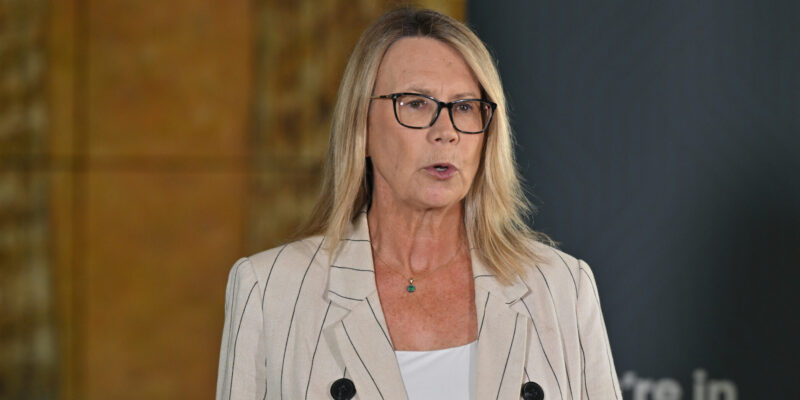
REI ACT boss Maria Edwards says 'we need policy that supports buyers and renters, rather than improving one side of the equation at the expense of the other'. Here she explains what needs to be done in the nation's capital.

THE ACT Government should be mindful to avoid legislating and pricing investors out of the territory’s property market, warns the Real Estate Institute (ACT).
“The ACT needs to be very careful that the cumulative effect of land tax, rates, rent regulation and increasingly prescriptive tenancy legislation does not make residential property investment structurally unattractive,” REIACT chief executive Maria Edwards said.
“Governments understandably look at individual measures separately – rates, land tax, tenancy law, minimum standards, rent regulation, planning charges – but an investor experiences all of those measures together.
“Rental supply will become one of Canberra’s major housing challenges if we fail to maintain sufficient private investor participation.”
Edwards said the future of Canberra’s property landscape over the next five to 10 years included greater density, particularly within established suburbs.
“We will see more townhouses, terraces and low-rise apartments and a greater emphasis on housing diversity,” she said.
“We will also have to deal with an important fiscal question. The ACT has been transitioning away from stamp duty since 2012-13 and replacing that revenue principally through general rates.
“The 2026-27 Budget explicitly continues that approach and that creates a long-term issue for homeowners: what does the ACT’s property tax burden look like when stamp duty has been substantially removed? That is something REIACT will be watching very closely.”
Edwards said the REIACT has backed “elements” of the 2026-27 Budget, including the stamp duty reforms and the incentives around Missing Middle development.
“We particularly welcome removing stamp duty for first-home buyers,” she said.
“It removes a substantial upfront cost and gives first-home buyers greater flexibility about what and where they purchase.
“But housing policy has to work across the entire market. Helping somebody become a first-home buyer is a good outcome.
“Losing a rental property from the market at the same time is not necessarily a good housing outcome.”
Edwards said the ACT’s residential land tax revenue was forecast at approximately $253.7 million for 2026–27, while residential general rates revenue is forecast to increase from $565.7 million to $607 million.
“At the same time, landlords generally cannot increase rent by more than 10 per cent above the increase in Canberra’s rents CPI without agreement from the tenant or an ACAT order,” she said.
“At present this is approximately an increase of one per cent per year. REIACT would like the government to assess whether the total regulatory environment is encouraging or discouraging rental investment.”
The REIACT would also like more transparency around tax reform.
“The 2026-27 Budget says the general rates component of residential bills will increase by an average of eight per cent, although removal of the Health Levy means the average total rates bill increase is capped at five per cent this year,” Edwards said.
“As stamp duty continues to disappear, property owners deserve a clear long-term picture of what is replacing it.”
Focusing on advocating government for “housing outcomes rather than housing announcements”, the REIACT more broadly wants to see:
Housing targets translated into completed homes;
- Greater diversity of housing;
- Planning reforms that actually result in viable development;
- A strong and sustainable private rental market;
- Taxation and regulatory settings that do not discourage investment; and
- Transparency around the long-term impact of the ACT’s transition from stamp duty to annual property taxation.
To keep up with housing demand in the nation’s capital, Edwards said Canberra needs a predictable supply of serviced land, infrastructure delivered alongside population growth, efficient approvals, and planning settings that support sensible infill.
“Canberra needs townhouses, terraces and two- and three-bedroom apartments that work for families and down-sizers,” she said.
“But a housing policy cannot be judged solely on how many people it assists into home ownership.
“We also have to ask whether our taxation and tenancy settings are encouraging people to provide rental housing. We need policy that supports buyers and renters, rather than improving one side of the equation at the expense of the other.”
While Edwards said there was a “substantial pipeline” for housing in the ACT, she emphasised the distinction needed to be made between “housing that has been planned, housing that has been enabled and housing that has actually been built”.
“The government has committed to enabling 30,000 additional homes by the end of 2030 and the Missing Middle reforms create considerably more capacity within established suburbs,” she said.
“That’s positive. But the challenge is converting that theoretical capacity into finished homes that meet actual demand.
“Supply also needs to be considered in terms of housing type. Building another one-bedroom apartment doesn’t necessarily
solve the problem for a family looking for a three-bedroom home, or for a downsizer wanting to leave a detached property without leaving their neighbourhood.
“So I think we need to move beyond asking ‘how many dwellings?’ and start asking ‘what dwellings, where and for whom’?”
Edwards pointed to “feasibility” as the single biggest bottleneck to improving housing supply in the ACT in the current climate.
“We can rezone land, change planning rules and announce dwelling targets but ultimately somebody still has to be able to finance and construct the project and somebody has to be able to afford the finished property,” she said.
“Development charges, construction costs, infrastructure, finance, planning timeframes and buyer demand all affect whether a project proceeds.
“That’s why REIACT welcomed the Government’s decision to temporarily reduce the Lease Variation Charge for eligible Missing Middle development.
“I think the next phase of housing policy needs to concentrate much more heavily on the gap between approval and completion.”