
Less car spaces to lead to more houses
New report says money saved from less off-street parking could help build at least 9000 more new houses.
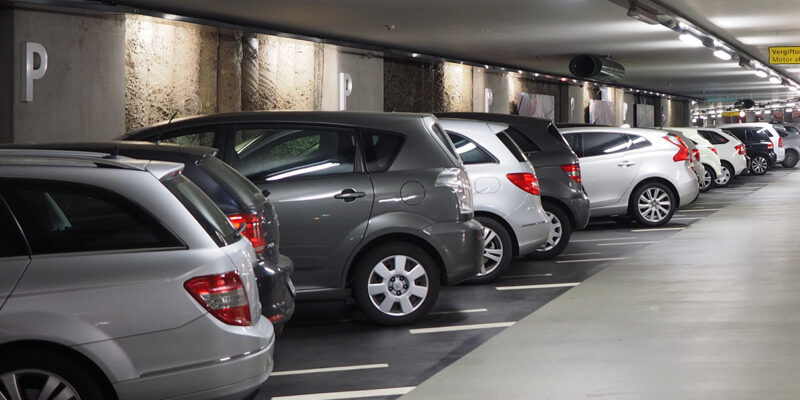
State and local governments typically require new housing to include off-street parking – often much more than residents want, needlessly driving up the price of housing.
This is the view of a recent report from the Grattan Institute, which found many apartment dwellers do not want or need car-parking.
“About 40 per cent of households in studio or one-bedroom apartments, and 19 per cent of households in two-bedroom apartments, do not own a car,” the report said.
“And 58 per cent of households in family-sized apartments with three or more bedrooms have just one car, or none.
“The result is a mismatch between what parking is mandated and what’s needed.”
The report said there are more car spaces in apartments in Sydney and Melbourne than cars.
“Off-street car-parking accounts for 13 per cent of the built floor space of apartments in these cities. And as much as 40 per cent of these spaces sit vacant each night.”
Every year, Australia spends more than $1 billion building off-street car-parking that residents don’t want or need.
This adds $70,000 to the cost of building a typical two-bedroom apartment in Sydney, $62,000 in Melbourne, $113,000 in Brisbane, $137,000 in Perth and $95,000 in Adelaide.
This extra cost acts as a handbrake on new housing.
“State and local governments should remove parking requirements for new housing developments,” the report concluded.
“Home-builders would still provide the spaces that home-buyers want but not at the level currently forced upon them.”
The report found that when cities abroad removed minimum parking policies, new residential developments included parking at around half of the rate, or sometimes less, than previously required.
This change would cut thousands of dollars from the cost of new homes and shave months off the time to construct them.
“It would avoid the cost of constructing more than 86,000 unwanted car spaces nationwide over the next five years – spaces that would otherwise consume $5.2 billion in construction resources that could go toward building more than 9000 extra homes,” Grattan said.
“State and local governments should instead better manage demand for on-street car-parking in high-demand areas.
“Most on-street car-parking is free to use, and is typically occupied by local residents who already have off-street spaces.
“Better managing on-street car-parking via permit schemes, time limits, and user pricing would reduce congestion on our streets.
“Charging for on-street parking would also provide a valuable source of revenue for cash-strapped local councils that could be reinvested in local infrastructure.”
The report said state and local governments should also remove barriers to allowing parking spaces to be purchased or rented separately from housing.
“Unbundling car spaces from homes would give residents greater choice to purchase or rent parking in line with their needs – making housing cheaper for households that don’t want a car space and reducing pressure on on-street parking,” it said.
“Letting Australian homebuyers choose the car-parking they need will make housing cheaper, get more homes built faster and create more walkable, cleaner and better-designed cities.”