
Full steam ahead for controversial new tax measures
Government hopes legislation will pass quickly as it attempts to lay down "overarching framework".
CONTROVERSIAL tax changes that have drawn widespread opposition will guarantee aspiration and fairness for future generations, according to the Labor Party.
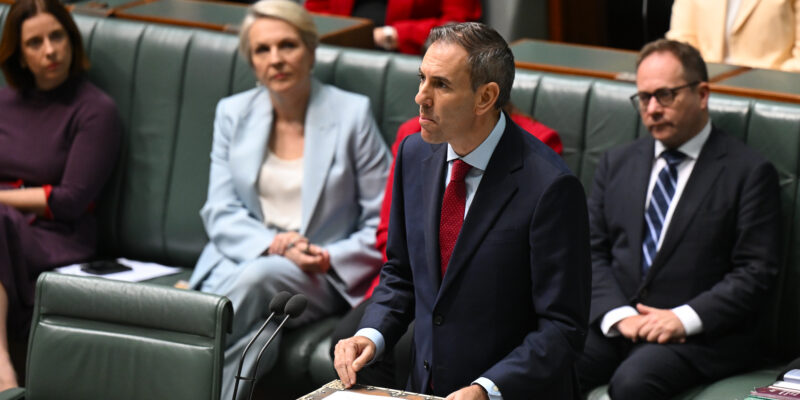
Treasurer Jim Chalmers introduced a landmark bill to parliament on Thursday that includes changes to capital gains tax and negative gearing, as well as a $250-a-year rebate for workers.
“This is a bill for workers, for first home buyers and for future generations,” he told the House of Representatives.
“It will help ensure that aspiration and opportunity are the birthright of every Australian and not just some.”
Labor has argued the changes will help young people who have been locked out of the housing market by a system that taxes income earned from labour at a higher rate than income derived from investments, including property purchases.
Assistant treasurer Daniel Mulino said the government, which is seeking to get the legislation passed in June, was moving fast to provide clarity by laying down an “overarching framework” as quickly as possible.
“It’s very normal that there’d be an overarching framework, and that there’d be consultation on particular issues, which is exactly what we’re doing,” he told ABC News Breakfast.
But the planned axing of a 50 per cent capital gains tax discount – in place since 1999 – has caused widespread consternation, including from many business groups that fear it will discourage investment.
West Australian Premier Roger Cook has become the second Labor state leader after Chris Minns, from NSW, to raise concerns about the tax changes, suggesting the capital gains shift could deter foreign firms from spending money on fledgling mining projects.
Responding to the criticism from Cook, whose state was crucial to Labor’s federal election win, housing minister Clare O’Neil said there would always be opposition to anything “big and difficult”.
While the majority of economists and business groups have acknowledged the need for tax reform, the government has taken flak for replacing the capital gains discount with an inflation-adjusted system.
It would apply to all asset sales, including investments in shares and businesses.
The government has flagged a likely carve-out for startups, which have low initial costs but have the potential for rapid growth, and is consulting on other changes with industry groups.
Australian Chamber of Commerce and Industry chief executive Andrew McKellar called on Labor to keep the tax overhaul confined to housing.
He warned the tax changes would result in less business investment.
“That will be bad for productivity. That will be bad for competitiveness. It will be bad for the future growth of the Australian economy,” he said.
Capital gains exemptions already exist for small businesses with turnover below $2 million.
But that in effect punishes successful businesses that go from paying little or no capital gains tax to a relatively high tax rate because of rapid growth, UNSW professor of economics Richard Holden said.
Opposition frontbencher James Paterson said Labor had the process “completely backwards”.
“Even they admit their own legislation is so flawed that they will have to fix it in the future but they’re saying ‘just trust us, we’ll rush it through now, and then we’ll negotiate with you afterwards to repair the mistakes we’ve made’,” he told Sky News.
“Well, that’s an outrageous approach to legislating. But I understand why they’re trying to do it because every day this debate goes on, it gets worse for the government.”
Shadow treasurer Tim Wilson accused the government of “knee-capping” small businesses.
“Unless the treasurer’s ambition is to keep small business small … these exemptions simply don’t meet the needs of all small businesses in this country,” he said.
Chalmers said the reason the changes were not ring-fenced to housing was because the government wanted to iron out distortions from the tax system.