
ARTIFICIAL intelligence is helping both businesses and bad actors, setting up a future in which online threats will pit AI against itself rather than humans against machines.
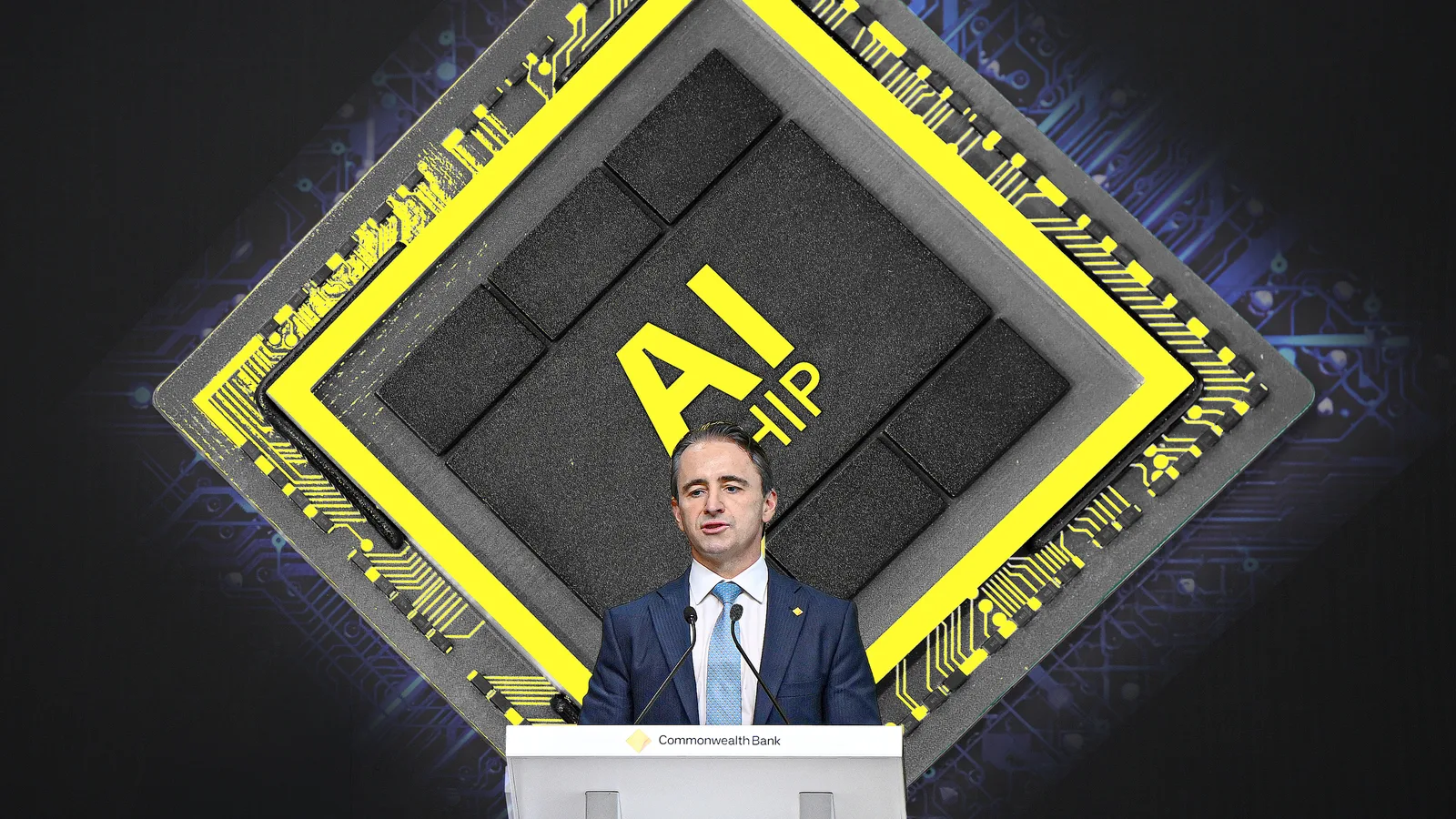
The frightening scenario was raised on Wednesday when the Commonwealth Bank became the first major institution to roll out a free cybersecurity tool and AI harness - or playbook - to help Australian firms uncover flaws in their software.
"Cyber is a national issue," the bank's chief executive Matt Comyn told AAP when asked about online security at a bank-led AI summit in Sydney for business leaders.
"Across the broader economy, I would guess that there will be tens of billions of dollars that would be invested."
§ AI adoption and the threat of outside attacks
Earlier, conference delegates heard from the head of one of the world's most influential computing companies, who warned the potential for outside threats must be considered with the need for ambitious AI adoption.
The warning comes after an autonomous OpenAI agent gained unauthorised access to Australian government and public systems, including health statistics, in June.
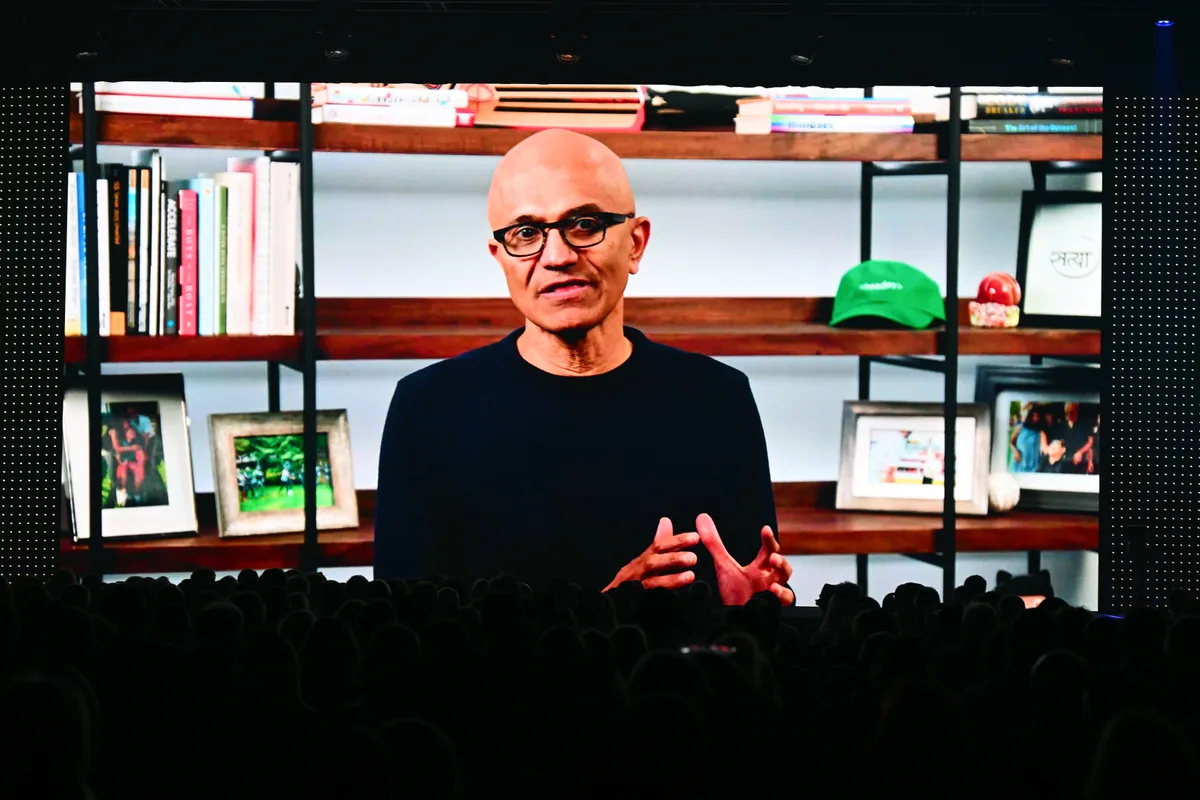
"That's front and centre for all of us," Microsoft chair and chief executive Satya Nadella said in a pre-recorded video conversation with Mr Comyn.
"Attacks are coming, driven by essentially someone sending a Telegram message to a harness that's using open weights - an attack," he said.
"Nation-state attacks can be done by anybody today ... models are getting more and more powerful."
In the past financial year, the Australian Cyber Security Centre sent out 80 per cent more warnings to organisations about potential malicious activity than the year prior.
"There's still a lot more work to be done before we come to grips with how we keep the great benefits and not have the misalignment problem."
Telstra chief executive Vicky Brady told delegates the telco giant was blocking about 24 million calls and tens of millions of malicious domains a month.
Commonwealth Bank analyses 256 billion potential threat signals a week.
Qantas recently told its annual general meeting it was fending off 2.3 million cyber-attacks a month in 2025, but that number had since risen to two billion.
"In some sense, AI safety is an experimental science," Mr Nadella said.
"There's still a lot more work to be done before we come to grips with how we keep the great benefits and not have the misalignment problem."
§ Human oversight and separate trust layers
Businesses also need to ensure human oversight across their own AI agents.
This means that while agents hold the intelligence layer within a firm's systems, the trust layer must be kept separate to ensure they are also protecting networks from agent armies.
"Our architectural approach is to have observability at every layer, starting with the model," Mr Nadella said.
"We need to treat some of these models as insider risk and surround them with very capable layers ... you also have to manage the outside risk, which is people attacking you."
§ Faster attacks and a future of AI versus AI
The fastest successful attack by a criminal group on an organisation, as recorded by cybersecurity group CrowdStrike, took just 27 seconds.
"Now 27 seconds isn't the norm yet, but the average is 29 minutes, and that's already 65 per cent faster than the year before," Commonwealth Bank chief security officer Nicola Nicol said.
"The future isn't human versus machine; the future is increasingly AI versus AI, with humans directing on both sides."
§ CodeCheck helps firms uncover software flaws
The bank's new CodeCheck cybersecurity tool was developed with the help of its technology hub in San Francisco, which engages frequently with OpenAI and rival Anthropic on cyber issues.
The tool can be used as a plug-in by firms writing their own code using OpenAI's Codex and Anthropic's Claude Code and draws on Commonwealth's own AI-enabled software security approach.
Earlier in 2026, OpenAI began allowing large, vetted global corporations access to its frontier cybersecurity models to fix security weaknesses.
Frequently asked questions
What is CodeCheck?
How much did warnings about potential malicious activity increase?
In this story