

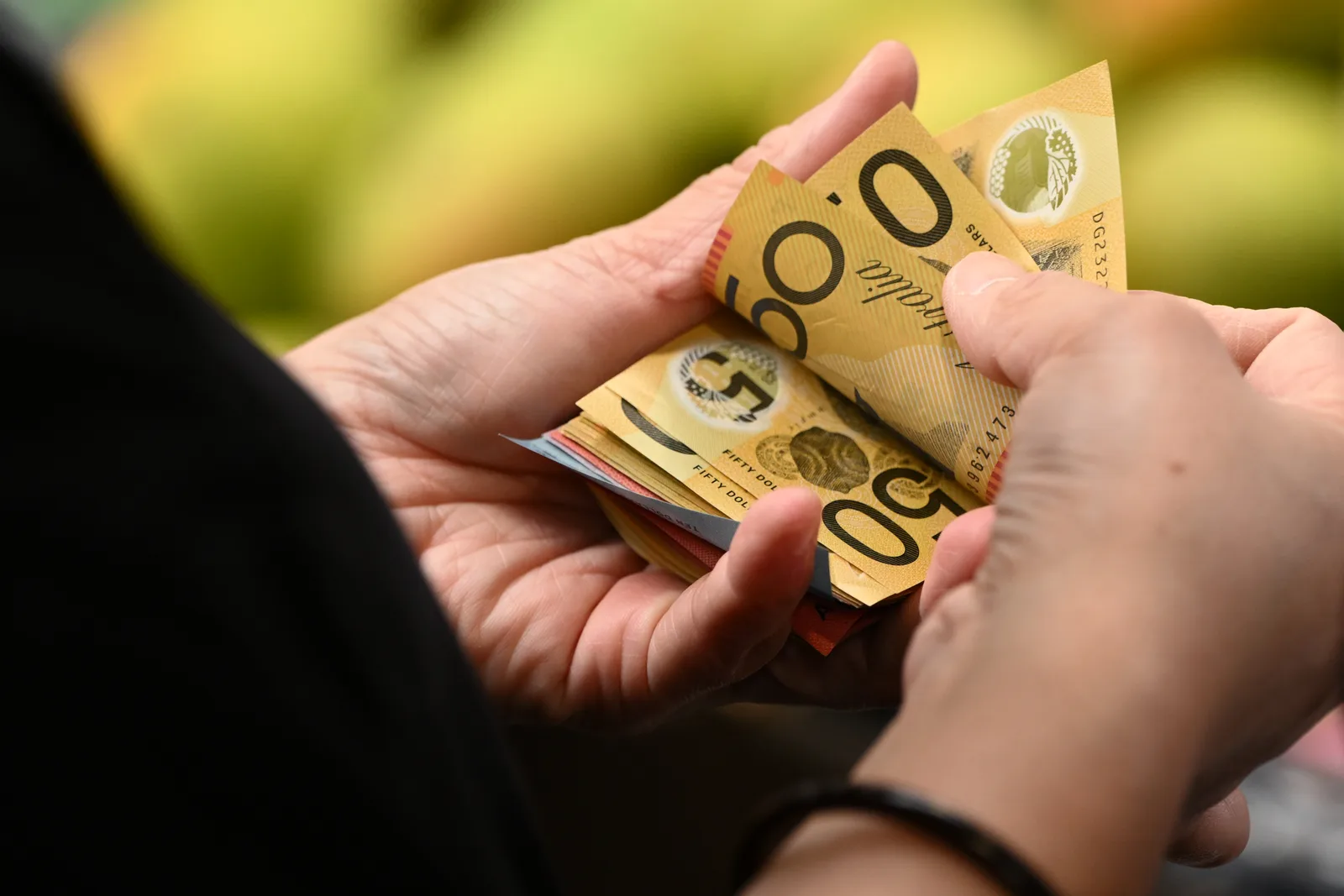
AUSTRALIAN households are expected to carry much of the weight of a sharper and longer economic slowdown as higher interest rates, persistent inflation and elevated energy prices put more pressure on spending.
Commonwealth Bank economists have cut their forecasts for economic growth and the labour market, with annual GDP growth now expected to fall to one per cent by mid-2027, compared with a previous forecast of 1.8 per cent.
The downgrade builds on CommBank's September assessment that the Australian economy had entered a cyclical slowdown.
The slowdown is also expected to last longer. Growth is not forecast to return to its trend rate of around two per cent until the second half of 2028, a year later than previously expected.
§ Households cutting back on spending
“Households will bear the brunt of the needed slowdown in economic activity,” said Belinda Allen, Commonwealth Bank head of Australian economics.
Household spending accounts for the largest part of the downgrade.
CommBank expects annual spending growth to slow from 1.8 per cent in the June quarter of 2026 to just 0.7 per cent by mid-2027 and remain subdued throughout next year.
Weaker income growth is expected to drive much of that slowdown as higher interest rates, inflation and a softer labour market squeeze household budgets.
“Our CBA spending data is showing households are cutting back, with more spending on fuel meaning less spending elsewhere” Allen said.
Australians were also “making deliberate choices about where to maintain spending levels and where to pull back”, she said.
§ Home prices fall as business investment provides support
Housing is already showing some of the clearest signs of the slowdown.
CommBank's daily data shows home prices across the five capital cities have fallen eight per cent from their peak, with another interest rate increase expected to keep conditions soft.
However, business investment is expected to provide some support to the economy, helped by continued investment in renewables and Australia's growing data centre pipeline.
The labour market is also expected to weaken more than previously forecast.
CommBank expects unemployment to rise from 4.7 per cent to a peak of 5.1 per cent at the end of 2027, compared with its previous forecast peak of 4.8 per cent.
It is then forecast to ease modestly to 4.9 per cent by the end of 2028.
Wage growth is also expected to soften as the labour market loses momentum, with annual Wage Price Index growth forecast to slow to three per cent by the end of 2027.
§ Persistent inflation keeps pressure on the RBA
Even as growth slows, inflation is expected to remain high enough to keep pressure on the Reserve Bank of Australia.
Trimmed mean inflation, the RBA's preferred measure of underlying inflation, was 3.7 per cent in the September quarter.
CommBank now expects it to remain at, or above, three per cent until early 2028, about six months longer than previously forecast.
“Inflation has remained too high for too long,” Allen said.
CommBank expects the RBA to lift the cash rate to 4.85 per cent on Tuesday and then leave rates on hold, after changing its November call following the latest inflation data and RBA commentary.
A weaker economy should help bring inflation back towards target over the next 18 months but the economists said weak productivity, higher energy costs and the global AI investment boom were adding to inflation pressure.
“The RBA will be on edge and the risk remains the need for further tightening of monetary policy in 2027,” Allen said.
CommBank continues to have two rate cuts pencilled in for August and November 2027, totalling 0.5 percentage points, although their timing remains uncertain.
“We see high uncertainty over the timing of these cuts given the shifts in the backdrop,” Allen said.
Frequently asked questions
What does CommBank expect for interest rates?
What does the article report about home prices?
Why are households cutting back on other spending?
When is economic growth expected to return to its trend rate?
In this story