
Difficulties lie ahead for buying and selling in Victoria
Property expert says when interest rates are higher, it reduces borrowing capacity and makes it difficult to save for a home.
VICTORIA’s price growth continues to stall, properties are taking longer to sell, rents are continuing to rise at a moderate pace and vacancy rates remain relatively elevated.
This is the result of data provided by the Real Estate Institute of Victoria.
Leading property consultant Cameron Kusher said the May 2026 inflation data found that headline inflation was 0.7 per cent lower over the month but it was still well above the 2.5 per cent annual target, rising four per cent over the year.
“The RBA’s preferred measure of underlying inflation saw an acceleration in monthly and annual growth, 0.4 per cent and 3.6 per cent higher respectively,” Kusher said.
“Both headline and underlying inflation remain well above the target range which means the risk of higher interest rates, especially if growth accelerates, remains.
“The housing group recorded a monthly increase of 0.4 per cent which was its largest rise in three months and was 6.5 per cent higher, up from 6.3 per cent the previous month.
“High inflation makes everything more expensive and subsequently reduces your borrowing power, especially when wages aren’t growing at the same pace.
“It also leads to interest rates being higher for longer, reducing borrowing capacity and making it more difficult for those renting to save for a home deposit.
“Higher inflation and higher interest rates subsequently tend to result in reduced demand for housing, making it more difficult to sell and reducing the urgency to purchase for those buyers active in the market.”
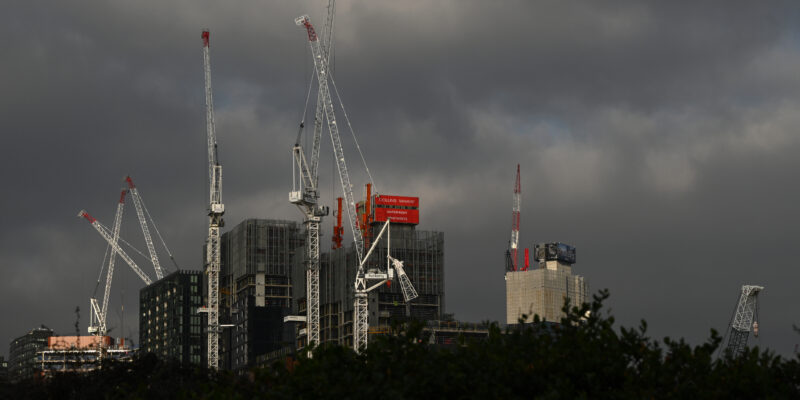
The latest data from ABS for the March 2026 quarter found that in Victoria there were 13,972 dwellings commenced which was the strongest result in the past three quarters.
Commencements were 2.8 per cent higher over the quarter but they were 9.4 per cent lower than over the same quarter last year.
“While there is a high volume of stock under construction, most of it is other residential dwellings (units, apartments, townhouses) which will take much longer to complete than detached houses,” Kusher said.
“The high volume of stock under construction may result in higher completions over the quarter but broader economic conditions of high inflation, high interest rates, a less attractive investment environment and construction costs rising again, will likely see fewer commencements over the coming quarters.
“This will mean that the deficiency of supply will grow and the impacts are likely over the shorter term to be felt in the rental market.”
The latest REIV data has found that in June 2026 the median Melbourne house price was $966,000. The median house price increased by 0.1 per cent over the month and was five per cent higher over the past year.
The median unit price in Melbourne was $650,000 in June 2026 and it has increased by 0.1 per cent over the month and by 3.8 per cent over the past 12 months.
“Growth in both house and unit prices in Melbourne remains much more subdued than growth in the other capital cities,” Kusher said.
“This is despite the fact that growth in prices over recent years has dramatically underperformed those other cities.
“This is making Melbourne look more attractive from an affordability perspective but a weak economy and a high volume of stock continue to weigh on the city’s performance relative to these other markets.”
The median house price in regional Victoria is $651,000 with the price having increased by 0.2 per cent over the month and 8.3 per cent over the past year. The median unit price in regional Victoria has increased by 1.1 per cent over the month and by 9.5 per cent over the year to reach $460,000.
The regional market continues to see stronger price growth than Melbourne fuelled by stronger affordability, better rental returns and a relatively lower volume of stock available for sale.
In Melbourne private sales are taking longer than they were a year ago. In June 2026, the median days on market for a private sale in Melbourne was 42 days, up from 39 days both the previous month and a year earlier.
“For buyers in Melbourne, less competition and a high volume of stock to choose from is seeing purchasers have less urgency, resulting in an increase in days on market, Kusher added.
“I expect we could see further increases in this figure over the coming months. In regional Victoria, I expect fairly steady days on market.
“For sellers, the higher days on market in Melbourne really highlights the importance of getting your pricing right and finding ways to make your property stand out.”
Much like property prices, the cost of renting in Melbourne is relatively lower than other capital cities due to weaker rental growth and higher rental vacancy rates over recent years.
With a rental vacancy rate of 2.7 per cent compared to 2.5 per cent a year ago, vacancy rates are marginally higher over the year and relatively higher than in other capital cities.
“Victoria continues to see weaker growth in prices and rents and lower costs to purchase and rent than other states and territories. Depending on your perspective this could be a good or a bad thing,” Kusher said.
“The good is that shelter is relatively cheaper for renters and those wanting to buy. The bad is that home owners haven’t seen much increase in the value of their largest asset over recent years.
“If you’re looking to sell, conditions are likely to be challenging with fewer buyers and more competing stock.
“If you’re looking to buy, there’s a lot of stock for sale and less competition. But keep in mind, high-quality stock that is well-priced is still likely to see demand and can still be sold quickly.”