

FEDERAL Labor leaders have been warned they would be wrong to downplay their party's catastrophic Victorian election loss as merely the result of state failings.
Victoria has been coloured blue after the coalition swept to victory on Saturday, potentially taking two-thirds of lower-house seats and leaving Labor struggling to form opposition.
Prominent federal Labor representatives, including Deputy Prime Minister Richard Marles and Victorian frontbencher Sam Rae, were quick to discount the loss as being the result of state party woes.
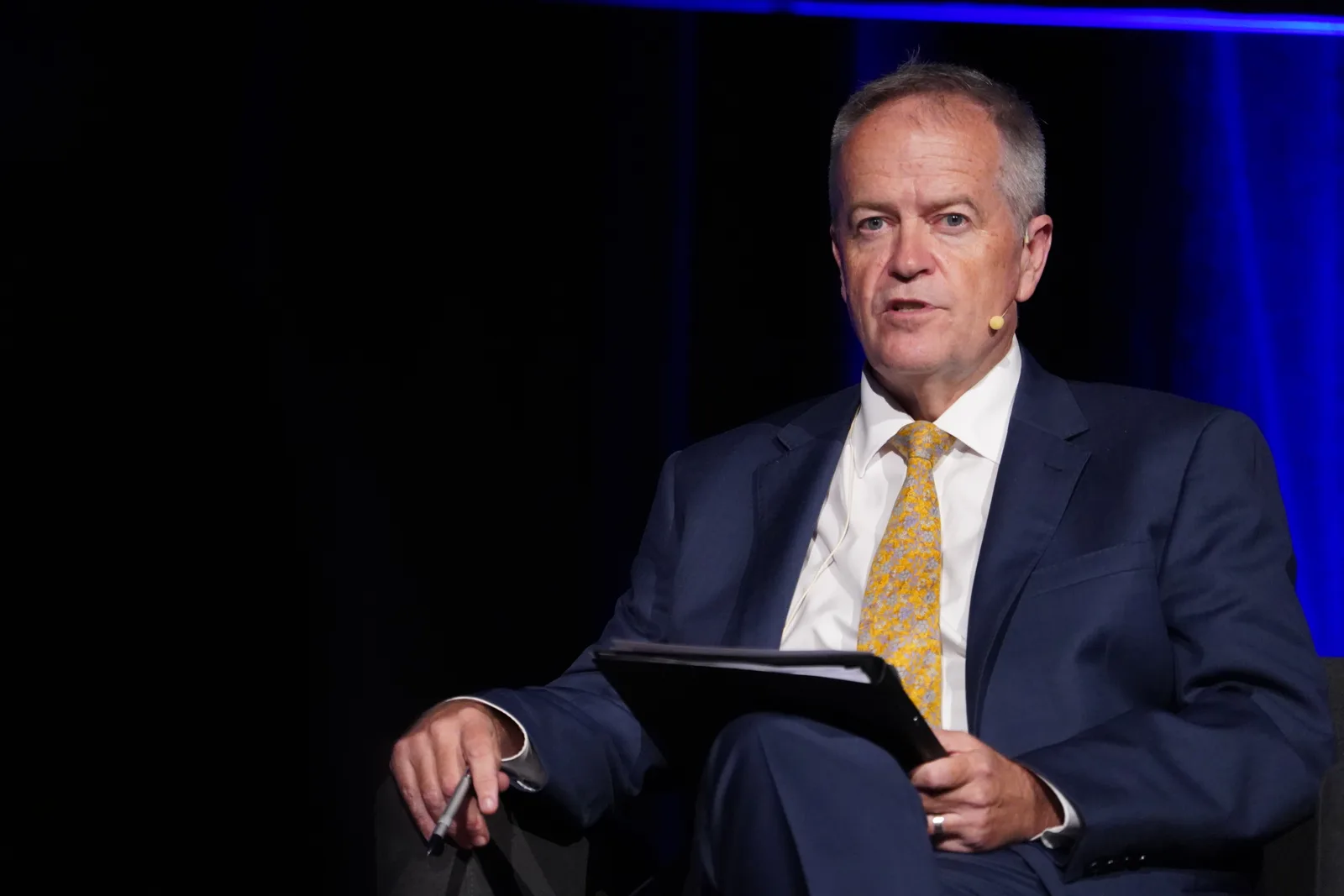
But former federal Labor leader Bill Shorten, who lost the 2019 election after being widely tipped to win, said it was important to recognise the state accounted for a quarter of the nation's population and could act as a bellwether for the next national poll.
"There's no doubt it was largely a Victorian reaction, but the question really is whether there is anything in the way the state was running itself that provides lessons not just for federal Labor, but for all main parties," he said.
"If you draw the conclusion that there is nothing to see here federally, that would be an interesting, possibly brave, interpretation."
Voters expected governments to work for the public rather than themselves and might question huge sums spent on projects such as the Suburban Rail Loop while local potholes went unrepaired, Mr Shorten added.
"If you draw the conclusion that there is nothing to see here federally, that would be an interesting, possibly brave, interpretation," he said.
The election was the first genuine four-way race in Australian history, analysts said, with One Nation picking up 20 per cent of the primary vote and the Greens emerging a close fourth behind Labor.
Much of the coalition's success was due to preference flows as its primary vote of about 36 per cent was low by historical standards.
Disillusioned voters were lending themselves to historically minor parties on a term-by-term basis, Australian National University associate professor Jill Sheppard said, rather than tearing up the two-party system.
"What we are seeing instead is voters increasingly confident they can step away from major parties and vote elsewhere if those parties stop listening to them," she said.
Minor parties were better at speaking to specific economic settings or migrant diasporas than their larger counterparts, eminent political scientist John Wanna said.
"Labor tends to be more generic across electorates, as do the Liberals," he said.
As well as sounding alarm bells for federal Labor, the Victorian election result will bring into sharp focus the battle facing the NSW government in retaining power at the March election.
Frequently asked questions
How did federal Labor figures explain the loss?
What spending concern did Bill Shorten raise?
How do minor parties differ from Labor and the Liberals?
In this story