
Higher tax take puts federal budget on stronger footing
Australia's deficit for the past financial year is smaller than expected, but rising borrowing costs mean the fiscal outlook is still gloomy.
A STRONGER tax take means Australia’s budget is in a better position than predicted a few months ago, but higher interest rates will do the government’s economic credentials no favours.
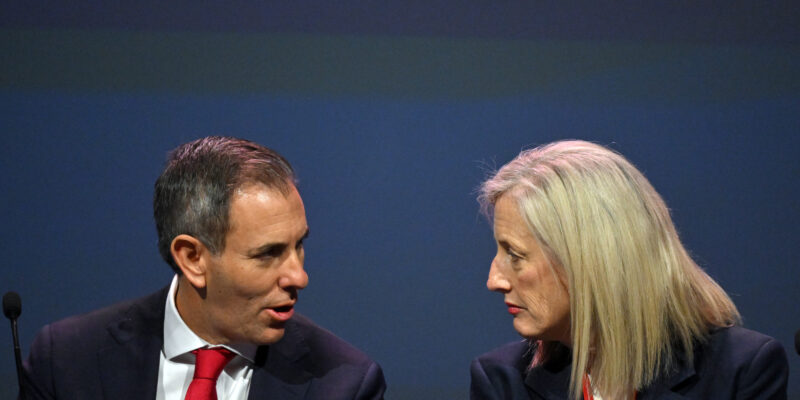
Treasurer Jim Chalmers and Finance Minister Katy Gallagher revealed the underlying deficit came in at $22.3 billion in the last financial year, as they released the 2025/26 final budget outcome on Monday.
The budget bottom line was $6 billion better than projected in May, largely thanks to a $4.6 billion boost to income tax collections.
Stronger superannuation returns, mainly due to higher-than-expected foreign exchange gains, and strong business and investor incomes drove the improvement in government revenue.
Payments were also below expected levels, down by $1.4 billion on budget forecasts.
That was partly because of lower spending in the aged and childcare sectors.
But defence and health expenses were both more than $1 billion above projections.
The result was still a downgrade on the previous year’s final budget outcome, which put the deficit at just under $10 billion for 2024/25.
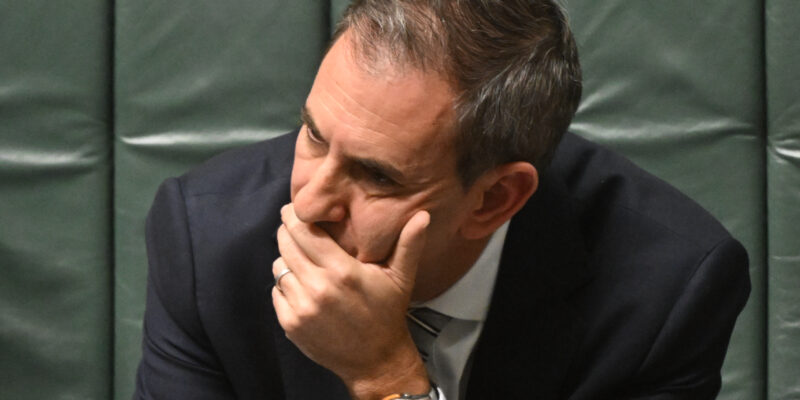
“Despite this very welcome improvement in the budget, we know that pressures are intensifying rather than easing,” Dr Chalmers said.
Like governments around the globe, Canberra faces higher borrowing costs to service its mounting debt, which surpassed $1 trillion in August.
Driven by high inflation, conflict in the Middle East and increasing competition with AI companies for debt, bond yields have climbed to 15-year highs.
“The competition for capital is fierce in the world right now. And the hyper-scalers in the AI world are seeking to raise mountains of capital to fund their investment plans,” Dr Chalmers said.
Public debt interest was $87 million higher than expected at $27.7 billion but is one of the fastest-growing expenditure items in the budget.
The May budget projected interest payments to hit $46.9 billion a year by the end of the decade.
Taxpayers are also struggling with higher borrowing costs.
The Reserve Bank is widely expected to increase the cash rate to 4.6 per cent – the highest level in 15 years – when it wraps up its two-day meeting on Tuesday.
Inflation is still stubbornly above the RBA’s two to three per cent target band, with the Middle East oil shock set to keep price pressures elevated.
Dr Chalmers would not be drawn on whether the government’s fiscal settings would directly impact the expected rate rise.
He instead pointed to global economic strains putting pressure on interest rates, adding his government was taking productivity gains more seriously than any other in decades.
Central banks in the US, Europe and Japan have all hiked interest rates amid rising fuel costs since the RBA met in August.
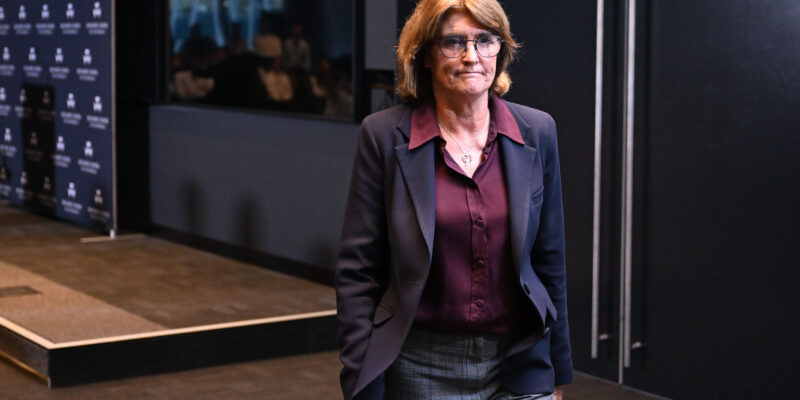
Hawkish comments from Governor Michele Bullock and other top RBA officials in recent weeks have emphasised the bank is losing patience with inflation and is likely to follow suit.
Opposition Leader Angus Taylor sought to pin the inflation spike on government spending.
Spending reached 26.9 per cent – the highest level in 40 years excluding COVID-19 – while tax revenue was 24.1 per cent of GDP, the highest on record except for 2004/05 and 2005/06 at the height of the mining boom.
Tobacco brought in $200 million less than projected at $3.9 billion, the final outlook showed.
It’s the first time the tobacco excise has delivered less than $4 billion since the turn of the century, as the explosion in black market cigarettes and vapes siphons consumers away from legitimate products.
Brent oil futures have risen to $US106 a barrel after peace talks between the US and Iran hit another snag.
Each $US1 dollar increase in the Brent oil price roughly translates to a 1c increase in fuel prices at the bowser.
Those higher servo costs will likely nudge headline inflation from 3.5 to four per cent by the time the Australian Bureau of Statistics reports on Wednesday.